
In Part 3, we explored several “other considerations” that influence not only the wedding ceremony but also the couple’s life together afterward. Among these, dowry stands out as one of the most consequential.
The word dowry traces its roots to Latin, meaning “to give.” It derives from dōs (gift, marriage portion) and dōtāre (to endow), passing through Medieval Latin dotārium, Old French douaire, and Anglo-Norman douarie, before settling in Middle English as the term for the property a bride brings to her husband. It is linguistically related to endow and dower, all of which share the core idea of a “gift” or “portion” associated with marriage.
In Hindu tradition, an analogous but distinct concept is strīdhanā. Strīdhanā refers to a woman’s absolute personal property, including gifts received before, during, and after marriage, such as jewellery, money, and land. Importantly, she retains exclusive ownership and control over these items. Unlike dowry, which historically became entangled with social expectations and coercive practices, strīdhanā is meant to safeguard a woman’s financial independence.
Under modern Indian law, especially the Hindu Succession Act, neither the husband nor his family has any legal claim over strīdhanā. A husband may use it during a genuine emergency, but he has a moral obligation to return it. The woman has full authority to manage, use, or dispose of her strīdhanā as she chooses.
अध्यग्न्यध्यावाहनिकं दत्तं च प्रीतिकर्मणि ।
भ्रातृमातृपितृप्राप्तं षड् विधं स्त्रीधनं स्मृतम् ॥
The Components of Strīdhanā
Classical texts describe several clear forms of strīdhanā, which is property belonging only to the woman. These forms are:
1. Adhyagni – Gifts given to her before the sacred fire (agni) during the wedding rituals.
2. Adhyāvāhanika – Gifts presented at the time of her departure (āvāhana) from her father’s home.
o Medhātithi offers an alternate interpretation: this may also include gifts (dāya) she receives from her parents-in-law upon returning to her parental home.
3. Prititaḥ Dattam – Tokens of affection given with love by the father-in-law or other elders, often to recognise her virtues or accomplishments.
4. Gifts from her brother
5. Gifts from her mother
6. Gifts from her father
All these are explicitly recognised as strīdhanā, belonging solely to the woman.
A seventh category, called ādhivedanīka (compensatory property), is mentioned by Yājñavalkya. This refers to property given to a woman as compensation if/when she is superseded by another wife.
Sage Kātyāyana’s Classification
Sage Kātyāyana provides a detailed explanation of these categories:
Kātyāyana is unequivocal about ownership:
While a woman is alive, neither her husband, sons, brothers-in-law, nor any of her husband’s relatives has any right over her strīdhanā. If they seize it, they must be punished.
Protection of a Woman’s Property
Kātyāyana further stresses:
Manusmṛti identifies six primary categories of strīdhanā as enumerated above and stipulates that a woman’s relatives may inherit it only if she dies childless and without natural heirs. In marriages performed in the Brāhma, Daiva, Gāndharva, or Prajāpatya forms, the husband of a woman who dies without a child is entitled to her strīdhanā.
This framework makes one point unmistakably clear: the concept of dowry, as we understand it today, did not exist in ancient Bhārat. What is now called “dowry” is a later distortion—primarily shaped by colonial-era legal structures and reinforced in post-colonial society.
Ironically, modern marriages have embraced dowry so thoroughly that many brides themselves expect it, even though contemporary law already secures their financial rights. The Hindu Succession (Amendment) Act, 2005, grants daughters equal coparcenary rights with sons. Daughters now inherit ancestral property by birth, regardless of marital status. Supreme Court rulings have further clarified that even if a father passed away before 2005, daughters retain these rights provided the property had not been partitioned earlier.
It is essential to distinguish clearly between dowry and strīdhanā, as the two are fundamentally different in intent, legality, and moral standing:
In essence, strīdhanā empowers, while dowry exploits. The former is a protective institution rooted in ancient law, while the latter is a harmful social practice that modern law seeks to eliminate.
The Rejection of Kanyāśulka (Bride Price)
If dowry is a distortion of strīdhanā, its opposite—kanyāśulka, or bride price—is also explicitly rejected in the Indian textual tradition.
Manusmṛti states:
ज्ञातिभ्यः द्रविणं दत्त्वा कन्यायै चावशक्तितः।
कन्याप्रदानं स्वच्छन्द्यादासुरो धर्म उच्यते॥
Manu states that if a groom pays the bride’s family or the bride herself more than is allowed in an Ārṣa marriage, the union becomes an Asura Vivāha—a marriage held in disrepute. As previously discussed, Asura Vivāha is one of the four forms explicitly discouraged by the scriptures. This context underscores the scriptural aversion to bride price within the traditional Bharateeya framework.
Manu goes further, admonishing the bride’s father:
न कन्याया पिता विद्वान् गृह्णीयाच्छुल्कमण्वपि ।
गृह्णन् शुल्कं हि लोभेन स्यान्नरोऽपत्यविक्रयी ॥
A wise father, he adds, must never take bride price. Doing so for greed is akin to selling his daughter.
Yet, despite these injunctions, history and legend record several instances in which kanyāśulka was accepted—or even required—by the bride’s father, contrary to the prescribed ideals. This raises questions about intent: was it greed, compulsion, pride, or simply the norm of the time, when the powerful could flout the law with impunity?
The Story of King Gādhi and the Thousand Śyāmakarṇī Horses
A notable example features King Gādhi of Kānyakubja, a scion of Chandravaṃśa and father of Viśvāmitra. Known as 'Indra reborn,' Gādhi was approached by Sage Ṛcīka, who sought his daughter, Satyavatī.
Gādhi, skeptical of the ascetic suitor and perhaps wishing to deter him, demanded an impossible bride price: a thousand rare horses, pure white of body with a single black ear.
Ṛcīka prayed to Varuṇa, who answered him. A thousand such horses emerged from the Gaṅgā. Some legends say the river Aśvakṛtā formed from their flow.
Ṛcīka fulfilled Gādhi’s demand and married Satyavatī.
Gādhi later performed a yajña and distributed the horses to Brahmins who officiated during its performance. Several princes later bought some for their stables. Of the thousand, four hundred were lost in a river flood.
The Echo of Kanyāśulka in the Story of Galava
Sage Viśvāmitra, though well aware of the horses' background, later requested eight hundred Śyāmakarṇī horses as guru dakṣiṇā from his disciple Galava. When Galava could not provide them, he sought help from the Puru king, who also did not have the horses. Instead, the king offered his daughter Mādhavī, advising Galava to marry her to worthy kings to acquire the required horses as kanyāśulka.
Thus, even revered figures—kings and sages belonging to legendary lineages—engaged in practices the scriptures disapproved of. These episodes, from before Paraśurāma’s time, show how social norms were evolving and the boundaries of dharma were tested by circumstance, ambition, and human frailty.
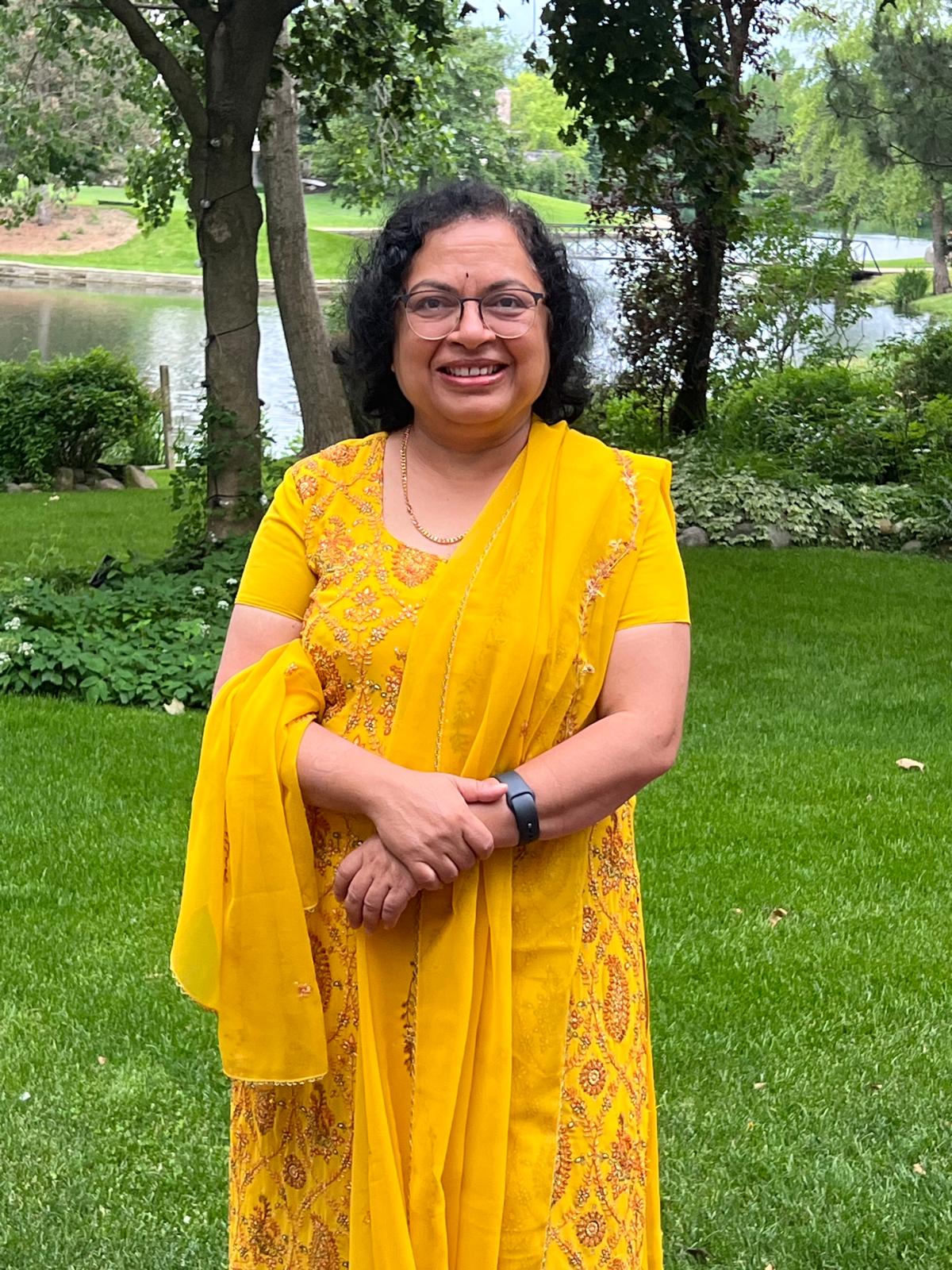 Manjula Tekal is an acclaimed author and translator, best known for her novel Devayani and her translations of historical and political works across Kannada and English. With an engineering background and dual Master’s degrees in management from IIM-Bangalore and UIUC, she transitioned from a career in IT and education to the world of literature. Her diverse body of work includes translating Jagmohan’s My Frozen Turbulence in Kashmir and upcoming English renditions of Savarkar’s novels. She currently resides in Champaign, Illinois, where she continues to bridge cultural and linguistic gaps through her writing.
PREVIOUS ARTICLE

Over the past couple of years, I have had the opportunity to attend several family weddings, both in India and the United States. The experience has b...
Let's take a moment to revisit the meaning of the term “Vivāha”. At its core, it represents the idea of sharing a burden and carrying the weight of li...
After reviewing the different kinds of weddings, we see why ancient texts felt the need to clearly distinguish between forms that upheld social order...

Verandah Club is an initiative by few like-minds of Coimbatore who are interested to share information on various antiquities of Bharat.
Free download our iOS & Android app
© Copyright 2026, All Rights Reserved.