
After reviewing the different kinds of weddings, we see why ancient texts felt the need to clearly distinguish between forms that upheld social order and those that disparaged it. Some forms of marriage were recognised not because they were ideal, but because they existed—and needed to be regulated to prevent harm. In this context, it is tempting to speculate that the swayamvara, though not listed among the eight classical forms, may have evolved as a socially sanctioned way to support the idea of a love match.
However, a swayamvara was feasible only in the highest and most powerful circles. A bride’s choice was meaningful only if her family had the strength and resources to defend that choice. Today, we take legal protections for granted; we forget that there have been times when a woman’s autonomy depended entirely on the military and political power of her kin or her state.
Indeed, history and epic literature record several instances where brides were abducted from the swayamvara itself, even after publicly choosing their groom. One of the most famous examples is the episode involving Bhīṣma and the princesses of Kāśi. Bhīṣma defeated King Śālva—the man Amba had chosen—and carried away all three princesses, not for himself but for his brother Vichitravīrya. It is superfluous to say he had no business to even attend a swayamvara if he had no intention of choosing a bride for himself.
However, to his credit, Bhīṣma returned Amba to Śālva upon learning of her love for him. But Śālva, having been defeated in battle, refused to accept her. This episode raises a host of uncomfortable questions. Was Bhīṣma’s gesture truly honourable, or was it a pragmatic decision? Perhaps he realised that giving Amba—already in love with another man—to Vichitravīrya would doom the marriage from the start. Śālva’s refusal, too, is hardly noble. He may have felt humiliated at the thought of accepting a woman he had “lost” in battle. He may have considered her tainted. Or he may simply have feared Bhīṣma, whose prowess and political stature far exceeded his own.
What is striking is that the Kāśi princesses’ marriage—despite being framed as a swayamvara—ultimately became a Rākṣasa Vivāha, a forcible abduction. Their father had arranged a ceremony that ostensibly allowed them to choose their husbands, yet they had no real agency. Their choice was overridden by brute strength.
This contrast highlights a deeper truth: the swayamvara idealised female choice, but only within the bounds of power. Without societal structures to protect that choice, it could be—and often was—violated.
Trishanku offers another instructive example. Prince Satyavrata, son of King Trayyaruṇa of the Ikṣvāku dynasty, once abducted a bride directly from the marriage maṇḍapa. Outraged, the wedding guests approached the king and demanded justice. Already troubled by his son’s growing list of character flaws, the king imposed a severe punishment: he banished Satyavrata from the kingdom.
Humiliated and resentful, Satyavrata developed a deep hatred for Sage Vasiṣṭha, who had advised the king to take this action. In time, the prince would commit yet another grave offence, earning him the name Triśaṅku, “the man who committed three great transgressions.”
For our purposes, the key point is this: abducting a bride was considered a serious crime, especially when committed by someone in a position of authority. The punishment of banishment underscores how strongly society condemned such acts, recognising the immense harm they caused to the woman, her family, and the social order.
In conclusion, we can see that Rākṣasa Vivāha—marriage by abduction—was regarded as deeply objectionable, even when practiced by powerful men. Likewise, the swayamvara, though idealised as a ceremony of choice, was far from flawless; without the backing of power or law, a woman’s choice could be overridden by force.
The broader lesson is clear: society has always required legal and moral frameworks to protect marriage as an institution and safeguard the rights and dignity of both the bride and the groom. Without such protections, even noble ideals can collapse under the weight of human ambition, ego, and violence.
Child Marriage
Child marriage may have emerged as a social response to the dangers posed by Rākṣasa Vivāha and other disapproved forms of marriage. In this system, the bride and groom were often married at around age eight, the same age at which a boy underwent upanayanam. After the ceremony, the boy would leave for the gurukula, while the girl remained in her parental home until she reached maturity, at which point she was sent to live with her in-laws. In effect, the husband’s family played a significant role in shaping the young bride, ensuring she adapted to their customs and expectations.
There was also a period when fathers were actively discouraged from delaying their daughters’ marriages. A girl who reached menstruation without being married was sometimes labelled a “Vṛśālī,” a term that carried social stigma and pressure.
Yet, interestingly, our epics and classical stories offer very little support for the practice of child marriage. Figures such as Savitri, Sītā, and Draupadī were all of an age where they could think independently and choose—or participate in choosing—their own husbands. Their narratives emphasise discernment, agency, and maturity rather than childhood betrothal.
Over time, as public opinion shifted and society recognised the drawbacks of marrying children, the practice was abandoned with surprising ease. Once it became safer and more acceptable for women to marry later, communities readily embraced the idea that girls should have the opportunity to grow, learn, and exercise judgment in choosing their life partners.
What Traits Should the Bride and Groom Have?
Now we can turn to the qualities traditionally considered essential for uniting a bride and groom in matrimony.
Classical texts preferred that the bride and groom belong to the same varṇa, ensuring shared cultural values and social expectations. Sage Śaunaka adds that the bride should ideally be younger than the groom by up to (a maximum of) nine years.
The most critical requirement, however, was that the gotras of the bride and groom be different. In some cases, this rule was relaxed to allow same-gotra marriages, but identical or overlapping pravaras were strictly prohibited. Sage Baudhāyana goes further, explicitly forbidding marriage between blood relatives, even when the Gotras are different.
But what exactly is a gotra? A gotra is essentially a lineage marker that traces descent through the male line from a common ancestor—usually a revered ṛṣi. This founding sage is known as the Gotrabhida, the progenitor of a spiritual and familial line. Thus, families belonging to the Āṅgirasa gotra or the Sālankāyana gotra trace their ancestry to those respective sages. Each gotra includes a set of distinguished sages, the highest achievers the lineage has produced in its pravara, which is essentially a description of the lineage. If the pravaras of the bride and groom list the same sages, the marriage is prohibited.
The Ideal Qualities of a Bride
Texts describe the ideal bride as possessing the five L’s, expressed in the verse:
पञ्चलकारां भार्यां पुरुषः पुण्याधिकः लभते ।
These five qualities are:
A man is considered truly fortunate to find a bride who embodies all five.
The Ideal Qualities of a Groom
The scriptures also outline the traits most desirable in a groom:
कुलं च शीलं च वपुर्वयश्च वित्तं च विद्याम् च सनाथतां च ।एतान् गुणान् सप्त परीक्ष्य देया कन्या बुधैः शेषम् अचिन्तनीयं ॥
A wise father, the verse says, should look for these seven qualities:
If these seven qualities are present, one should not over-scrutinise or nitpick further.
The Question of Horoscope Matching
Even today, whether in traditional or modern settings, many families look for horoscope compatibility before finalising a marriage. Several factors are examined to determine whether the planetary influences in the natal charts of the bride and groom are harmonious.
One of the key considerations is Graha Maitri, which evaluates whether the planetary positions in the two charts are mutually supportive. Another major factor is Kuja (Maṅgala) Doṣa, an astrological condition that arises when Mars occupies certain positions in a birth chart. Because Mars is associated with fire, aggression, and conflict, such placements are believed to create friction or challenges in marriage. Similar concerns may arise from other planetary doṣas associated with Rāhu, Ketu, and Śani.
A more structured method of assessment is Kūṭa matching, in which the birth stars (nakṣatras) of the bride and groom are compared across multiple parameters. A total of 36 points is possible; a score of 18 or more is generally considered acceptable for a harmonious match.
Certain stars are traditionally considered less favourable in certain combinations. For instance, individuals born under Mūla or Āśleṣā nakṣatras were sometimes matched with partners who had lost a parent. As always, these rules come with numerous caveats, regional variations, and interpretive flexibility.
Other Considerations
Beyond traditional criteria, several other practical considerations influence whether a bride and groom are well-suited for marriage. Serious concerns such as addictions, unmanaged anger, a history of criminal behaviour, or undisclosed financial burdens can make a match fundamentally unsuitable. These issues can undermine trust, stability, and the long-term health of the relationship.
In modern contexts, there are also benign but significant factors that couples must weigh. Differences in geographical preferences, mismatched interests, or divergent personal values may not be inherently harmful, but they can affect compatibility and day-to-day harmony. As society has evolved, these softer considerations have become increasingly important in determining whether two individuals can build a fulfilling life together.
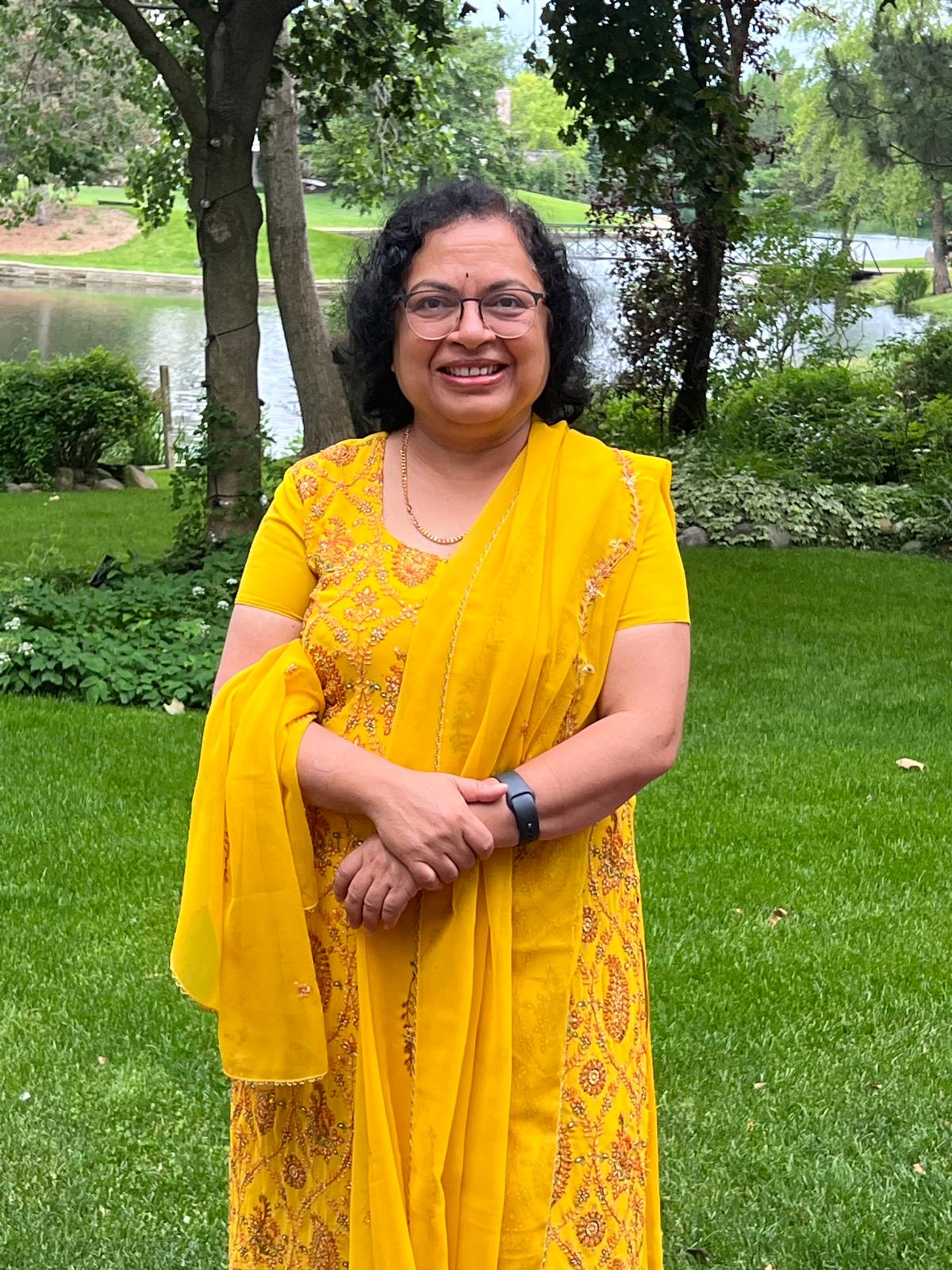 Manjula Tekal is an acclaimed author and translator, best known for her novel Devayani and her translations of historical and political works across Kannada and English. With an engineering background and dual Master’s degrees in management from IIM-Bangalore and UIUC, she transitioned from a career in IT and education to the world of literature. Her diverse body of work includes translating Jagmohan’s My Frozen Turbulence in Kashmir and upcoming English renditions of Savarkar’s novels. She currently resides in Champaign, Illinois, where she continues to bridge cultural and linguistic gaps through her writing.
PREVIOUS ARTICLE

Over the past couple of years, I have had the opportunity to attend several family weddings, both in India and the United States. The experience has b...
Let's take a moment to revisit the meaning of the term “Vivāha”. At its core, it represents the idea of sharing a burden and carrying the weight of li...
In Part 3, we explored several “other considerations” that influence not only the wedding ceremony but also the couple’s life together afterward. Amon...

Verandah Club is an initiative by few like-minds of Coimbatore who are interested to share information on various antiquities of Bharat.
Free download our iOS & Android app
© Copyright 2026, All Rights Reserved.