
Let's take a moment to revisit the meaning of the term “Vivāha”. At its core, it represents the idea of sharing a burden and carrying the weight of life together. This concept is simple yet profound: a husband and wife as equal partners on the journey of life, sharing responsibilities as they move toward their common goals. A traditional metaphor for this is a cart being pulled by two oxen; both oxen must work together to move the yoke forward. Neither can advance alone; progress is only possible through their partnership.
The implication is unmistakable: marriage is a joint enterprise, and the man and woman are equal contributors. At the same time, this partnership leaves little room for radical individualism. Marriage is not a temporary arrangement but a lifelong bond. The word lagna itself means “a knot that cannot be undone.”
The Taittirīya Saṃhitā expresses this beautifully:
अर्धो वा आत्मनः यत् पत्नीः । “The wife is half of the husband’s very self.”
The verse affirms that husband and wife are two halves of the same ātman. They may differ in function, temperament, or role, but they are equal in status and essential to each other’s completeness. Each fills the spaces the other cannot; each enables the other to live fully. So interdependent are they that neither can truly function in isolation.
Different Types of Marriage
Ancient Indian scriptures describe eight forms of marriage, of which the first four are considered appropriate and in accordance with norms. Let us look at the first four, which are most relevant to the Vedic tradition.
1. Brahma Vivāha
This is regarded as the highest and most ideal form of marriage. It takes place when the bride and groom marry with the full consent of their elders, after the groom has completed his brahmacharya.
In this form, the bride’s father selects an educated, cultured young man, envisions the groom as Nārāyaṇa, and honours him accordingly. He then offers his daughter—considered an embodiment of Mahālakṣmī—to him.
Sage Āpastamba adds the phrase शक्तिविषयेणालंकृत्य, meaning the bride is adorned to the best of the family’s ability.
A Brahma Vivāha is typically performed in the bride’s home. The groom arrives, accepts the family’s hospitality, and receives the bride’s hand. The purpose of this marriage is profoundly societal:
Sage Śaunaka states that a child born of a Brahma Vivāha liberates twenty-four generations of ancestors—twelve before and twelve after (द्वादशपूर्वान् द्वादशपरान्). This verse is traditionally recited during the saṅkalpa for kanyādāna, which we will explore later.
2. Daiva Vivāha
In this form, the bride is given in marriage to a Brahmin engaged in Tapasya or profound thought or study. It is considered appropriate but is rarely practiced today.
3. Ārṣa Vivāha
This form survives in a few communities. Here, the groom or his family offers a nominal bride price (kanyā-śulka) to the bride’s father—not as a commercial transaction, but as a symbolic gesture.
The Manusmṛti describes the proper kanyā śulka:
एकं गोमिथुनं द्वे वा वरादादाय धर्मतः ।कन्याप्रदानं विधिवदार्षो धर्मः स उच्यते ॥
“When the bride’s father accepts one cow, or a pair of cows or young bulls, for religious purposes or for the daughter’s welfare, the marriage is called Ārṣa Vivāha.”
The offering is meant for dharma, not profit—either for the father’s rituals or as a gift to the daughter.
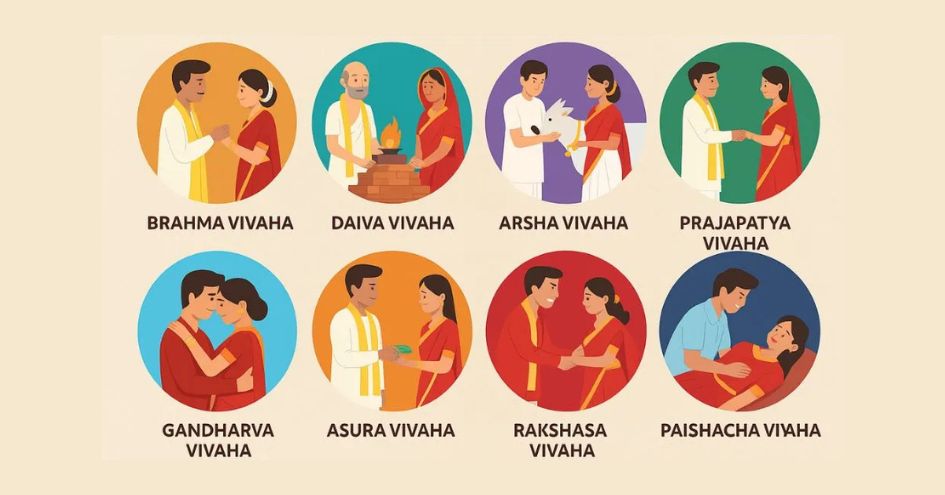
4. Prajāpatya Vivāha
In Prajāpatya Vivāha, the bride is given in marriage not merely as a wife to a prospective groom, but as a new daughter entering the groom’s family. The emphasis here is on mutual partnership and shared responsibility.
During this form of marriage, the bride’s father instructs the groom:
“Neither of you should act without the other’s knowledge and consent. Do everything together. Do not violate the promise of unity in dharma, artha, and kāma.”
Manu describes this form of marriage as follows:
सहोभौ चरतं धर्ममिति वाचानुभाष्य तु । कन्याप्रदानमभ्यर्च्य प्रजापत्यो विधिः स्मृतः ॥
After invoking this vow of shared duty, the father offers his daughter in marriage. One of the defining features of Prajāpatya Vivāha is that the groom may not remarry without his wife’s consent, underscoring the equality and mutual respect inherent in this tradition.
During the ceremony, the bride’s father further instructs the groom:
धर्मे च अर्थे च कामे च नातिचरितव्या त्वयम् ।सहधर्मश्चर्यताम् ।
“Do not transgress the sacred bond of marriage in matters of dharma (righteousness), artha (prosperity), and kāma (fulfillment). Be a true partner in the pursuit of dharma.”
The groom responds with solemn vows:
नातिचरामि । सहधर्मं करिष्यामि । “I will not transgress. I will walk with her in dharma.”
Modern Vedic weddings often blend elements of both Brahma Vivāha and Prajāpatya Vivāha, reflecting a balance of tradition, mutual respect, and shared responsibility.
5. Gandharva Vivāha
A Gandharva Vivāha occurs when a man and woman marry purely out of mutual attraction, without seeking the consent or involvement of their families. Manu describes this form of marriage as one arising primarily from passion. गान्धर्वः स तु विज्ञेयः मैथुन्यः कामसंभवः । “The Gandharva marriage is born of passion and physical attraction.”
Because of its impulsive nature, Brahmins were traditionally discouraged from choosing this form of marriage.
This raises an interesting question: Are most modern marriages Gandharva Vivāhas?
Across history and literature, we find many examples of women choosing their partners independently, sometimes without waiting for parental approval, and sometimes in open defiance of their elders.
Another related institution is the Swayamvara, literally “self choice,” where a bride—usually a princess or a woman of high status—selects her groom from among invited suitors. Often, the suitors must prove their worth through a test of skill or virtue. Sītā’s and Draupadī’s swayamvaras are the most famous examples.
In modern times, the swayamvara has evolved into a more informal system: friends or family introduce potential partners, and the couple chooses from among these referrals. In this sense, many contemporary marriages resemble a modernised swayamvara.
Elopements, too, echo the spirit of the Gandharva Vivāha—marriage by personal choice, independent of family involvement.
Why Was Gandharva Vivāha Looked Down Upon?
A young man once asked why the Gandharva form was disparaged in ancient times. The answer, as always, lies in both its strengths and weaknesses.
The advantages are clear: When two people marry out of genuine affection, they begin their life together with enthusiasm and goodwill. If they are mature and discerning in their choice, such marriages can be highly successful.
But the disadvantages are equally real: A marriage needs a community—parents, elders, and extended family—to support it. When a couple marries without involving their families, they may lose this crucial safety net.
A poignant example appears in Abhijñānaśākuntalam. When Duṣyanta denies having married Śakuntalā, Gautamī, who accompanies her, says:
“Why should I speak now? You did not consult us when you married. Since we had no role in your union, we have no standing when he repudiates you.”
Without the backing of elders, Śakuntalā stands alone at a moment of crisis.
Similarly, children born of such marriages may miss out on the warmth and involvement of grandparents—especially when stubbornness or hurt feelings keep families apart.
6. Asura Vivāha
In an Asura Vivāha, the groom offers wealth to the bride’s family in exchange for the right to marry her. Manusmṛti describes it as follows:
ज्ञातिभ्यो द्रविणं दत्वा कन्यायै चैव शक्तितः ।कन्याप्रदानं स्वाच्छन्द्यादासुरो धर्म उच्यते ॥
This form of marriage occurs when the groom pays as much as he can afford to the bride’s parents or guardians—and even to the bride herself—far exceeding the symbolic kanyā-śulka of an Ārṣa Vivāha. While not considered righteous, it is acknowledged in the texts as a historical practice.
7. Rākṣasa Vivāha
A Rākṣasa Vivāha takes place when a girl is abducted by force and married against her will. Manusmṛti describes it starkly:
हत्वा छित्वा च भित्वा च क्रोशन्तीम् रुदतीं गृहात् ।प्रसह्य कन्याहरणं राक्षसो विधिरुच्यते ॥
This form involves violence, coercion, and the complete disregard of the girl’s consent. Although mentioned in the scriptures as a category, it is clearly condemned and associated with destructive, adharmic behaviour.
8. Paiśācha Vivāha
Paiśācha Vivāha is the most reprehensible of all. It occurs when a girl is violated or married while she is unconscious, intoxicated, or otherwise incapable of giving consent. Its abhorrence is self-evident. Sadly, the fact that such cases still occur in parts of the world underscores the need for strong legal protections and social awareness to safeguard women’s rights and dignity.
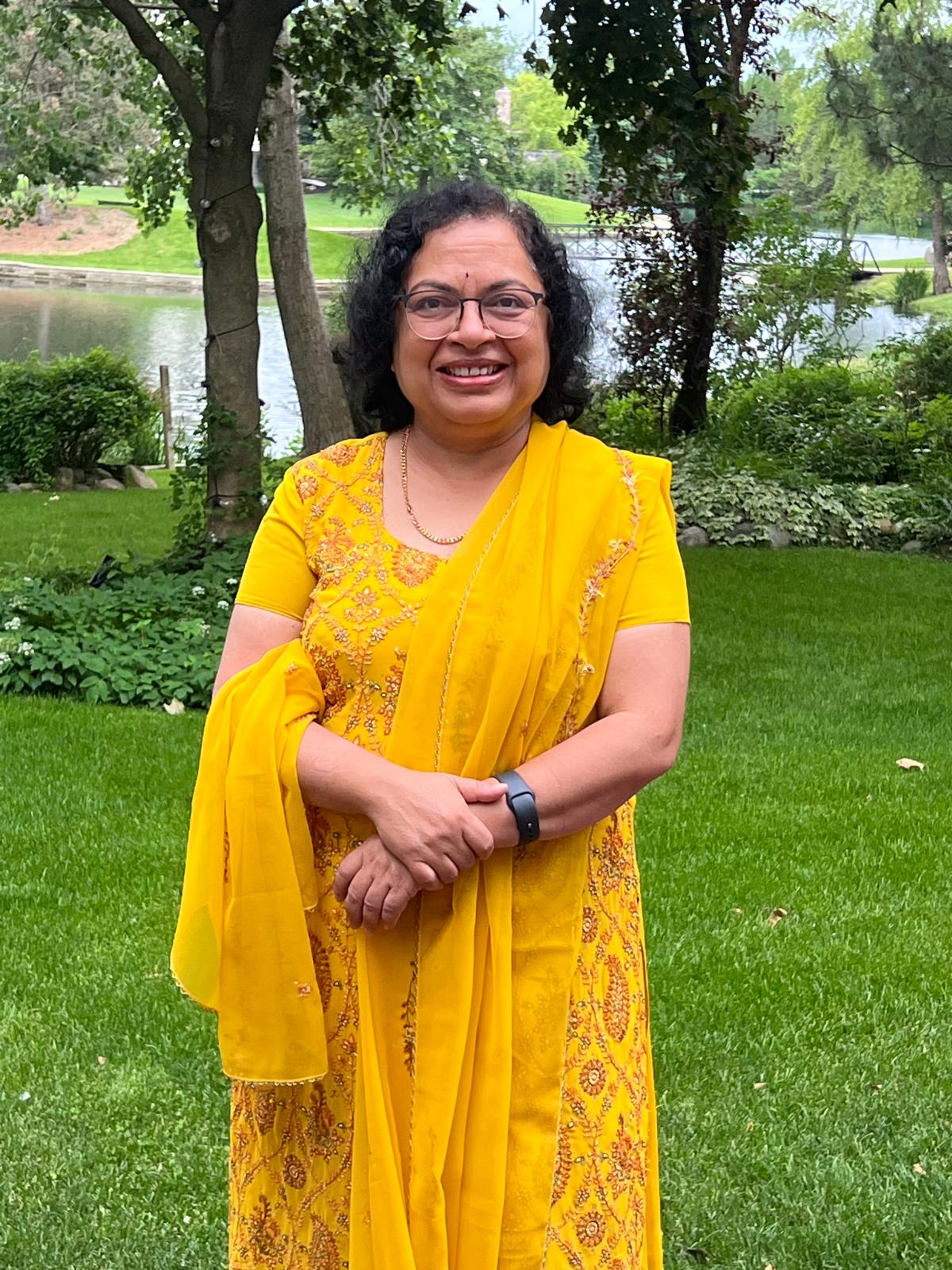 Manjula Tekal is an acclaimed author and translator, best known for her novel Devayani and her translations of historical and political works across Kannada and English. With an engineering background and dual Master’s degrees in management from IIM-Bangalore and UIUC, she transitioned from a career in IT and education to the world of literature. Her diverse body of work includes translating Jagmohan’s My Frozen Turbulence in Kashmir and upcoming English renditions of Savarkar’s novels. She currently resides in Champaign, Illinois, where she continues to bridge cultural and linguistic gaps through her writing.
PREVIOUS ARTICLE
NEXT ARTICLE

Over the past couple of years, I have had the opportunity to attend several family weddings, both in India and the United States. The experience has b...
After reviewing the different kinds of weddings, we see why ancient texts felt the need to clearly distinguish between forms that upheld social order...
In Part 3, we explored several “other considerations” that influence not only the wedding ceremony but also the couple’s life together afterward. Amon...

Verandah Club is an initiative by few like-minds of Coimbatore who are interested to share information on various antiquities of Bharat.
Free download our iOS & Android app
© Copyright 2026, All Rights Reserved.