
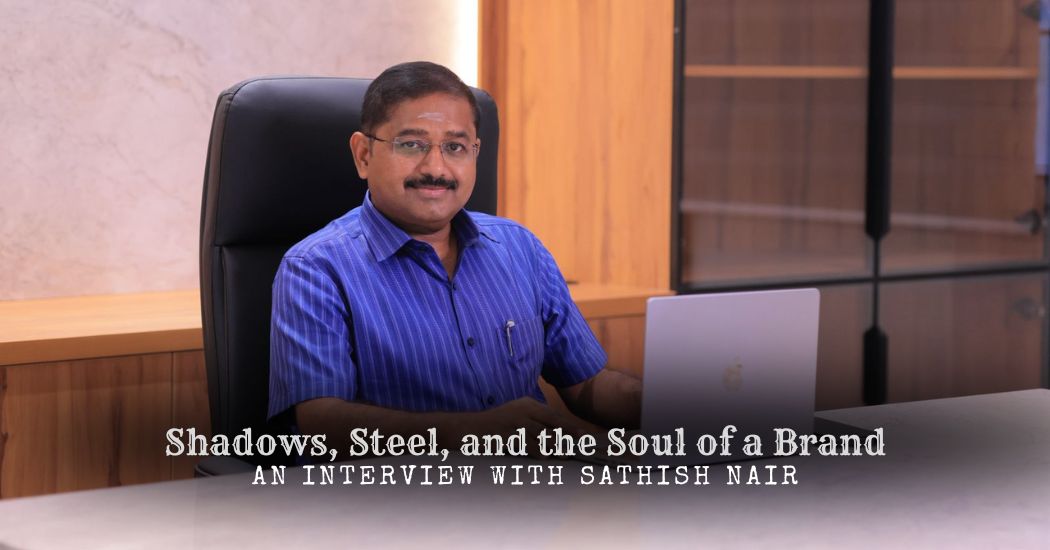
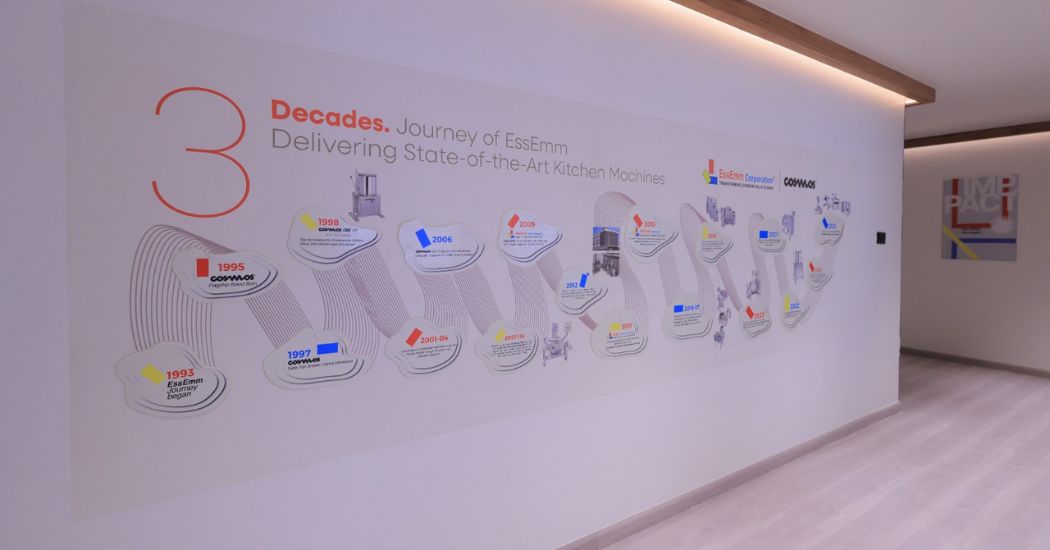
To understand the roots of an internationally respected kitchen automation empire, one must trace the lines of history back to a time long before its inception. The grand narrative of EssEmm Corporation and its flagship brand, Cosmos, does not begin in a sleek modern boardroom. It is a product of determination, clarity, culture, and generational knowledge. The foundation of this commercial powerhouse was poured not in a vacuum, but in the sweat and iron of ancestral persistence. The background begins generations earlier in the industrial heartland of Jamshedpur, amid the echoing clang of heavy machinery at Tata Steel, where Sathish’s grandfather Shri Balakrishna Pillai arrived as a young teenage migrant from Kerala with nothing but raw grit. He was part of a restless generation that saw salvation in industrialized production, running toward the heat of the blast furnaces to carve a future out of nothing.
"I was very blessed to be born into an industrialists' family," Sathish Nair reflects, his voice carrying an innate sense of gratitude as he leans back. "But we—my grandfather, we all came from humble beginnings."
That grandfather was a hardcore technocrat who eventually moved south, anchoring his family's destiny in the industrious soil of Coimbatore. He possessed an almost mystical precision with heavy machinery, becoming renowned as one of the finest technicians of his era for winding massive generator motors and alternators by hand. In his modest workshop, he would take apart imported foreign appliances just to study their internal engineering genius, tracing the circuitry like a map to an unknown country. It was this rigorous, design-heavy environment that shaped Sathish’s childhood, with the family factory sitting right behind the house, making the smell of grease and the hum of testing motors the background soundtrack to his earliest years.
This industrial upbringing laid the groundwork for an evolution. The family business required a fresh infusion of perspective to transition from a technical workshop into a household brand. The technical brilliance of the grandfather needed a bridge to the commercial market, a structural architecture that could communicate quality to the masses. But while the grandfather instilled an uncompromising obsession with quality, it was Sathish’s father—a disciplined military man from the Border Security Force (BSF) in Shillong—who stepped into the business to construct the brand identity of their first family venture, MeenuMix. He brought tactical execution, strict structure, and an eye for aesthetics to the technical playground.
"Parallelly, my grandfather was the technical person. My father was the person who built the brand," Sathish explains, gesturing broadly as if visualizing the two forces aligning. "People who know the face of the brand know that right from the color to the ethos, everything was created by my father."
Sathish grew up as his grandfather’s shadow, walking through searing moulding shops and manufacturing floors, learning how raw material transforms into high-utility tools. He watched the business scale into a regional giant, but he also witnessed the painful fractures that led them to completely exit and sell that original business in 2011. The loss of a legacy business could have marked the end of a line, but for a true builder, it simply cleared the ground for a new structure. As Sathish would later prove when he branched out to establish EssEmm Corporation, an entrepreneur's spirit cannot be liquidated.
The Dark Phase and the Two-Hundred Rupee Capital
The path to founding EssEmm Corporation was forged in intense trial, far removed from the protective umbrella of his family's past achievements. Sathish had deliberately armed himself with global frameworks, determined to view the manufacturing landscape through a highly sophisticated lens. After graduating with a rare distinction in Engineering Management from Coventry University in the UK, Sathish turned down lucrative corporate offers abroad to return home. He knew his calling:
"I came back because I was born to be an entrepreneur."
However, his return coincided with a devastating period that tested that conviction to its absolute limit. A venture into a limited investment firm went awry, leaving the family financially broken and buried under severe liabilities. Simultaneously, the late-90s Coimbatore bomb blasts shook the region, and severe labor unrest brought regional commerce to a complete halt, freezing supply chains and shattering market confidence. With no capital, no backing, and absolute structural negativity dominating the environment, Sathish stood at a terrifying crossroads where most would have chosen corporate safety. It was then that a quiet act of maternal faith changed the course of his life, transforming an ordinary moment into a historical pivot.
"I remember in 1996 or 1997, my mother gave me around ₹20,000 cash as a birthday gift," Sathish says, his voice dropping to a near whisper, the memory still fresh and heavy. "That worked as my capital. That was my seed money."
Armed with two hundred rupees and an undefeated legacy, he founded EssEmm Corporation in 1997. A childhood friend and classmate, Srihari, stepped in to provide financial navigation during those turbulent first months and introduced him to another friend, Vairavan, who helped find a tiny 100-square-foot space next to his office at a very nominal rent. It was an office where you could touch opposite walls just by stretching your arms, but it became the nerve center of a resurrection. Lacking the funds to manufacture independently or purchase raw materials, Sathish relied entirely on building deep relationships with local original equipment manufacturers (OEMs) to white-label heavy-duty commercial equipment, executing orders with precision.
This survival period was not just about making sales; it was the crucible where the permanent ethics of his future company were forged. He realized that when money is scarce, your word must be absolute. For Sathish, this survival period cemented the core philosophies that dictate his entire corporate ecosystem today: "Value systems matter. Our partnerships stay long-term. We don't jump around with everybody just because somebody offers ten rupees less. That has been our very strong philosophy. We work like that, and we also expect others to work like that with us."
Driving Global Automation: 20 Years Ahead
The emergence of EssEmm into the big leagues required a departure from traditional local models, demanding a bold leap into international waters long before global sourcing was common practice. This transition from a localized trader to an automation pioneer was catalyzed by an unyielding curiosity and a refusal to accept the primitive status quo of the domestic hospitality sector. The breakthrough arrived through a mix of audacity and a fax machine. Spotting a magazine advertisement for "Santos," a world-renowned French commercial juicer manufacturer, Sathish boldly faxed them to express interest, treating his small startup with the gravity of an international house. To his delight, the French exporters responded, charmed by his clarity.
The first business import transaction was an unknowing leap into loss — the brutal 55% import tax and associated import costs only revealed itself after the machine had landed and duties were paid. The numbers were wrong, the margins had vanished into a deep loss, yet he never flinched. He delivered the machine to The Residency Hotel Chennai without a word of complaint, then quietly wrote to the CFO, laying out every cost transparently and requesting to cover the cost and it possible to offer a modest 10% margin — since it was his very first sale. They honored it immediately. Some lessons in business arrive early and stay forever.
That single transaction opened the floodgates, proving that Indian commercial kitchens were starving for modernization. Renowned corporate chefs took note of the young man bringing top-tier European technology to Southern India. When he encountered a premier German industrial oven manufacturer at a trade show in Dubai, the export manager was so captivated by Sathish's clarity of purpose that he bypassed larger, established distributors, telling him: "Your ideas seem to be very different. I am ready to work with you."
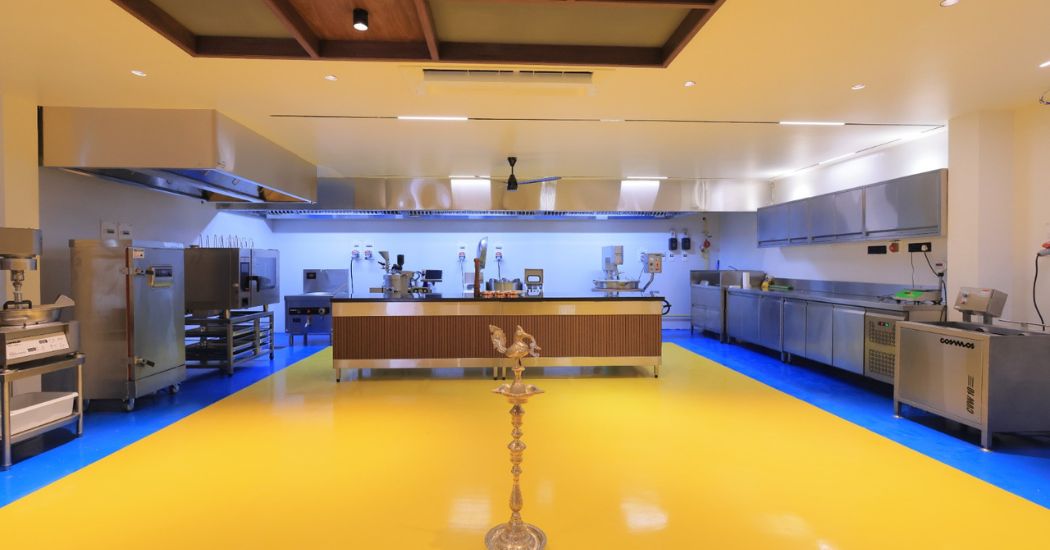
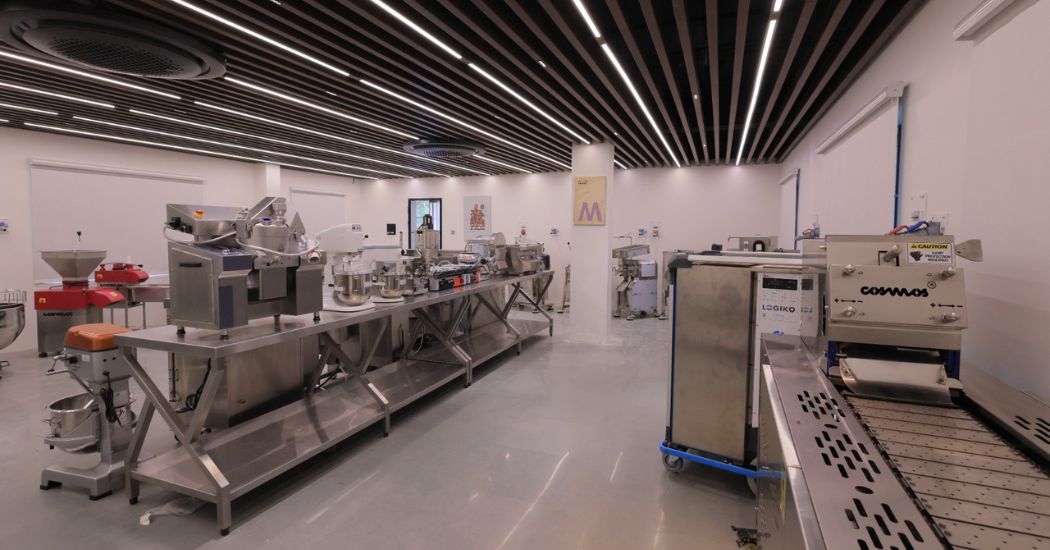
Sathish set up a state-of-the-art demonstration kitchen in Coimbatore, inviting industry leaders to witness the magic of kitchen automation firsthand, letting them watch tomatoes slice perfectly and dough knead flawlessly without human intervention. By 2008, while the rest of the domestic food hospitality industry was operating through primitive, manual methods, EssEmm was already twenty years ahead of its time, deploying custom enterprise software to automate data, track service histories, and manage components.
"We believed that documentation was very important," Sathish notes, pointing out how data structure separates sustainable empires from flash-in-the-pan businesses. "We started bringing in systems where our industry was very primitive. We had everything automated—our service was automated, our data was available. If somebody bought a machine in 2008, today we have the database to know exactly what spare part it needs. Why do we invest in all this? Because we value our customers."
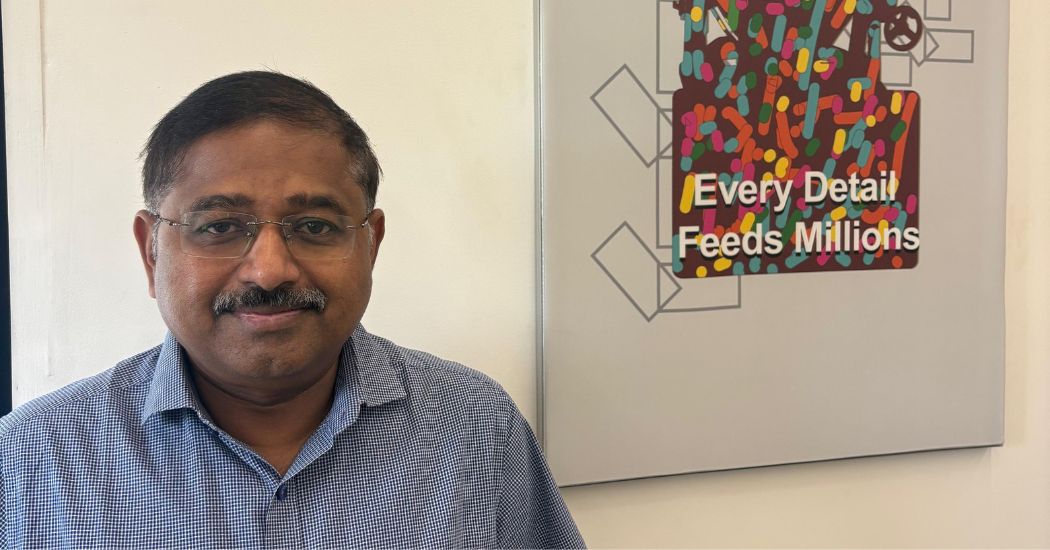
The Silent Architect: Mahesh Nair and the Technology Backbone of EssEmm
Behind every enterprise that scales with precision, there is often a quiet force that few see but everyone depends upon. For EssEmm Corporation, that force is M. Mahesh Nair - Sathish's younger brother, business partner, and the man who quietly built the technology spine of the entire EssEmm Group.
"Mahesh has been one of the strongest pillars of this organisation," says Sathish. "He has always been more than just a collaborator - a technology adviser who saw what we needed before we even articulated it."
Beginning in 2008, Mahesh's company introduced and implemented OIMS - the Office Integrated Management System - a proprietary platform that became the central nervous system of EssEmm's operations. From sales to service, from warehouse logistics to customer relationship management, every division of the EssEmm Group runs on this infrastructure. What began as a digitalisation initiative nearly two decades ago has evolved into a mature, deeply embedded ecosystem that gives EssEmm the operational rigour of an enterprise many times its size.
While Sathish has been the face of EssEmm's market ambitions, Mahesh has been its architectural mind - ensuring that as the business grew across India, the UAE, and Singapore, the systems grew with it. It is a partnership built not on contract, but on trust - the kind only two brothers who have grown up together can sustain across decades of enterprise-building.
Elevating the Indian Brand
By 2015, the disparate successes of various product lines required a unified front, a single brand identity that could carry the weight of international expansion. Sathish realized that to compete globally, his products could not look like cheap alternatives; they had to command authority on visual and functional levels. In 2015, a strategic decision was made to consolidate all food processing, manufacturing, and servicing arms under a singular, powerful global identity: Cosmos. Rebranded in bold, elegant black, Cosmos began partnering with elite global OEMs in Taiwan and China, manufacturing high-end products under strict, customized specifications. Today, the brand has an international footprint spanning Australia, New Zealand, the UK, the USA, and Canada.
Sitting firmly in Coimbatore, Cosmos deliberately positioned itself as a premium player, breaking the stereotype that Indian manufacturing must always mean low-cost options. Their products—like the flagship Cosmos Multi-Utility Grinder (CMG) and the automated CookWok—are unapologetically 30% to 40% more expensive than local competitors, yet they remain the absolute market leader because they calculate cost by life-cycle, not purchase price.
"Quality has to be high, and you have to pay for that," Sathish asserts with fierce pride, his eyes tracking the Cosmos logo across the room. "When you pay for a German product or a Japanese product, why don't you pay for an Indian product? Indian or not, it doesn't matter where it comes from—you are no less. You need a product that meets your standards."
Sathish views this as a core part of his identity as a nationalist entrepreneur, a philosophy anchored heavily in culture building rather than empty slogans. He believes true nationalism lies in product integrity, ensuring that any machine leaving his floor can proudly stand next to European engineering without apology. "We elevated our country's brand to a level at par with international standards. That was very, very important. Being a nationalist doesn't mean that everything has to be done locally if it's too difficult. You work with the best, and you maintain your identity. It is about how you build a brand out of India. The brains, the sales, and the knowledge come from here."
This unyielding focus on premium quality means EssEmm deliberately avoids racing to the bottom on price, leaving the discount wars to companies that don't invest in long-term engineering. Sathish views the market as a shared ecosystem rather than a battlefield to be monopolized, understanding that a healthy industry requires diverse players functioning at different tiers. "Somebody goes to somebody else because they have budget constraints, and they feel that they can buy our product once they grow. We allow that to happen because everybody needs to grow in this business. We cannot take the share of everything. The ecosystem has to survive. We need everybody to survive. We have our space, and we will not go down from where we stand."
The Pillars of the Ecosystem
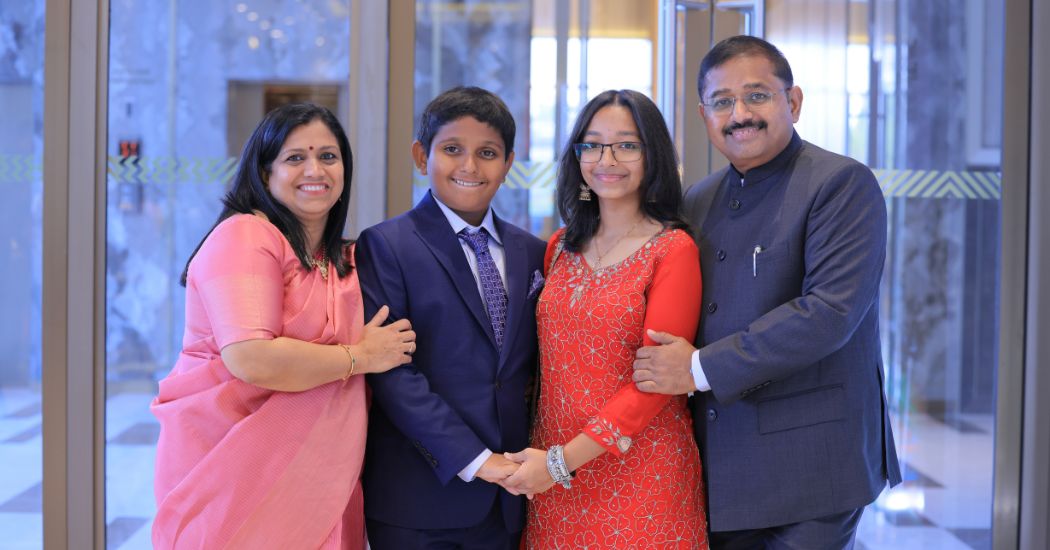
An international machinery brand cannot be sustained by a single individual; it requires a network of deep trust and specialized skill sets operating in perfect alignment. Sathish has intentionally surrounded himself with an inner circle whose personal investment in the brand's culture matches his own. Behind this soaring international success is a tight-knit army of trusted souls. Sathish notes with deep appreciation the pivotal role played by his wife, a brilliant scientist by training. She chose to step away from her research career so they could spend more time together, adapting her rigorous analytical mind to manage and scale the vital service arm of EssEmm.
"My wife has played a very important role in my business," Sathish says softly, his tone shifting to one of deep respect. "She is educated, she is a scientist. So she has been perfectly appointed with a proper corporate package. You cannot take family for granted. She has been very instrumental and grew our service business into a very strong pillar."
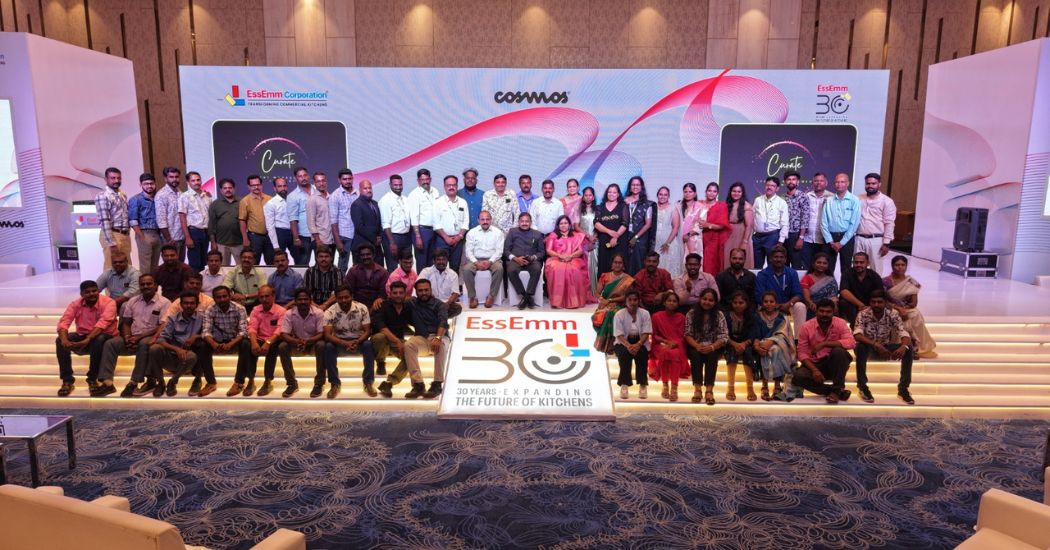
Alongside her stands Krishna Kumar, a trusted general manager inherited from his father's era—a loyal advisor and "trusted soldier" who holds the institutional memory of the enterprise. Tech experts like Mr. Ashley and long-term financial heads have traveled with him for decades, creating a rare culture of lifelong corporate loyalty, alongside his brother, who runs a successful independent IT firm that continuously collaborates on EssEmm's software infrastructure to ensure their digital framework remains impenetrable.
When asked how an enterprise of this scale thrives outside of major metropolitan capitals like Mumbai or Delhi, Sathish credits the spiritual, cultural, and geographic essence of his home region—the Kongu belt, where entrepreneurship is woven into the very fabric of daily life. "We've been blessed with total 360-degree inputs: rare knowledge, family values, good weather, and good food. Unless you have good food, good friends, good people, good air, and good water, your mind and soul will not integrate and work well. Our Kongu heritage is very blessed."
This integration of mind and soul reflects his deeply grounded worldview, proving that industrial automation does not have to come at the expense of spiritual alignment. For Sathish, business is guided by the timeless values of his heritage and an unshakeable faith in a higher power, drawing strength from his ancestral roots and the ancient, protective energy of the Chettikulangara Bhagavathi Temple in Kerala, a sacred heritage his family has guarded for over a century.
His creative energy even led him briefly into the world of cinema and music composition, playing guitar and keyboard, and scoring a crime thriller film to challenge his cognitive boundaries. Yet, true to his analytical nature, he recognized that the chaotic film industry did not align with his precise corporate principles, choosing to keep his art as a personal sanctuary rather than a business pursuit. *"That industry doesn’t suit our wavelength," he admits frankly. "Our principles of business, the way we think, the way we commit—it is definitely wired differently."
The Future Ahead
As EssEmm moves deeper into the century, the company is already engineering its next radical transformation, recognizing that the future of automation is intimately bound to resource conservation. The focus has shifted from mere mechanical speed to ecological footprint, ensuring that global kitchens can run cleanly, efficiently, and with minimal environmental drag. Today, the path forward for Cosmos is illuminated by a sustainable light. The company is actively pivoting toward eco-friendly, green energy products. Having pioneered industrial-scale induction technology for massive kitchens as early as 2017, they are once again steps ahead of the global market.
Sathish Nair's journey with EssEmm Corporation stands as a beacon of what is possible when ancient heritage, uncompromising family values, and cutting-edge automation converge. It is a legacy built to survive, refusing to compromise on quality or engage in short-term corporate shortcuts, proving that values are the ultimate engine of long-term commercial scale.
"Business values are not just about selling," Sathish concludes, looking toward the horizon where the next generation of Cosmos machines will deploy. "It's a long-term story. People who worked with us twenty or thirty years back are still working with us today. There must be a reason they continue working with us. We will continue to grow with these values."
From a birthday gift of Twenty thousand rupees to an automated global empire, the story of Cosmos is a powerful reminder that while competitors can easily copy a machine, no one can ever duplicate the soul, the core values, and the relentless spirit of a true visionary.
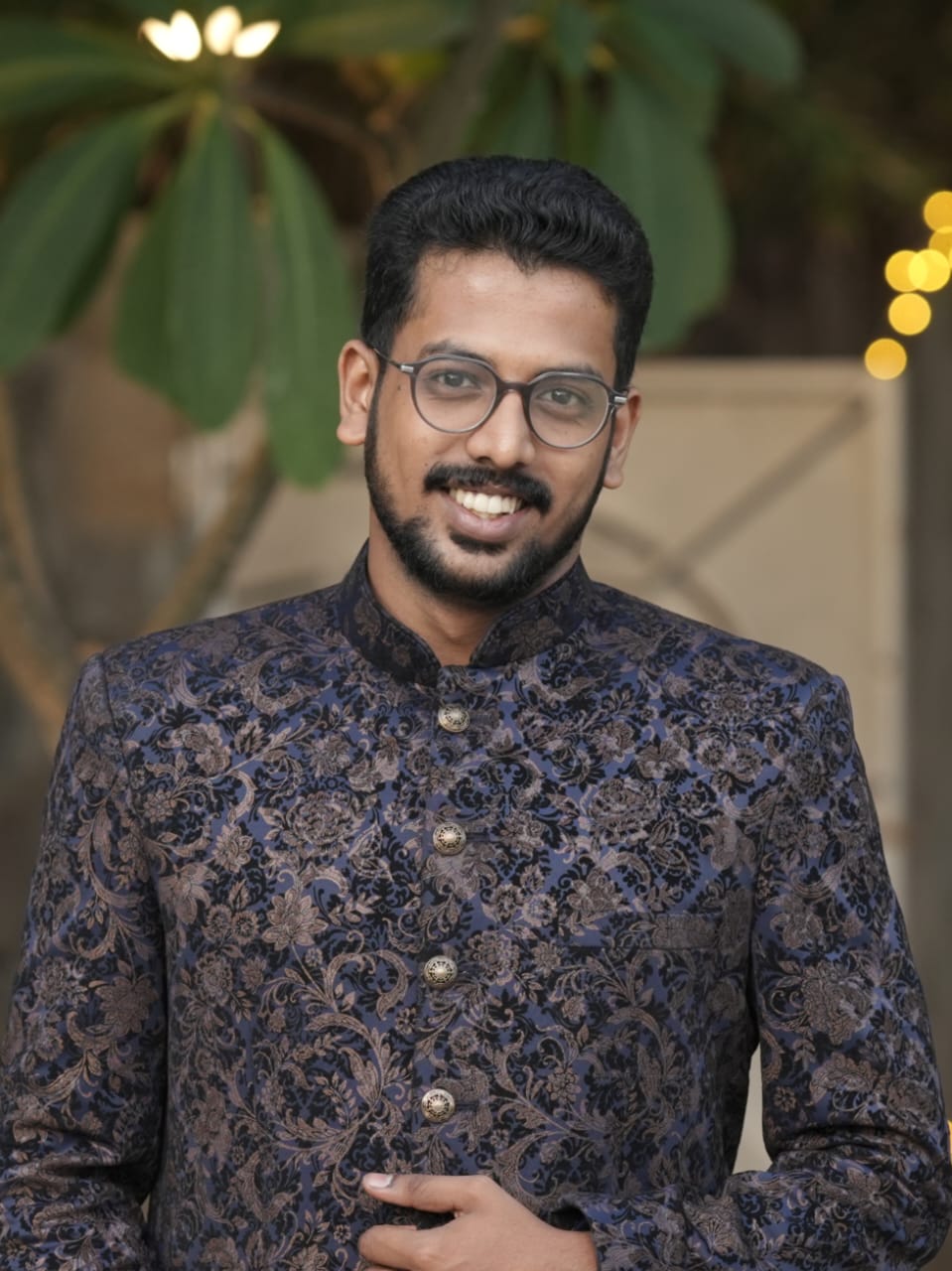 Vigneshvaran, Senior Correspondent of TheVerandahClub.com is a second generational acupuncture practitioner, a story teller, as well as an avid independent writer driven by his passion. His literary talents extend to crafting beautiful poems and captivating short stories including the Sehwag Tales series. In addition to these creative pursuits, he has also authored a book titled "Halahala," which can be found on Wattpad.



"A staggering one in five children in India is pre-diabetic," revealed Mrs. Swathy Rohit, the visionary founder of Coimbatore-based digital health p...
Where a rhythmic cadence of music blends seamlessly with the structured world of auditing, we found Mukund Swaminathan, a 26-year-old maestro who has...
"Life doesn't offer retirement, only professions do. While I've stepped away from my practice, I haven't retired from living. No one truly retires whi...

Verandah Club is an initiative by few like-minds of Coimbatore who are interested to share information on various antiquities of Bharat.
Free download our iOS & Android app
© Copyright 2026, All Rights Reserved.