
Some temples give you peace.
Some temples give you blessings.
But there are a few… where you don’t ask questions—because you might actually get answers.
It was not a temple I had planned to visit, nor was it part of any itinerary that I had carefully mapped out.
There was no prior research, no YouTube videos, no spiritual checklist guiding me here. It was just a name that kept surfacing again and again—Vishnumaya—in conversations that seemed to slow down the moment it was mentioned, as if people were unsure how much they should reveal.
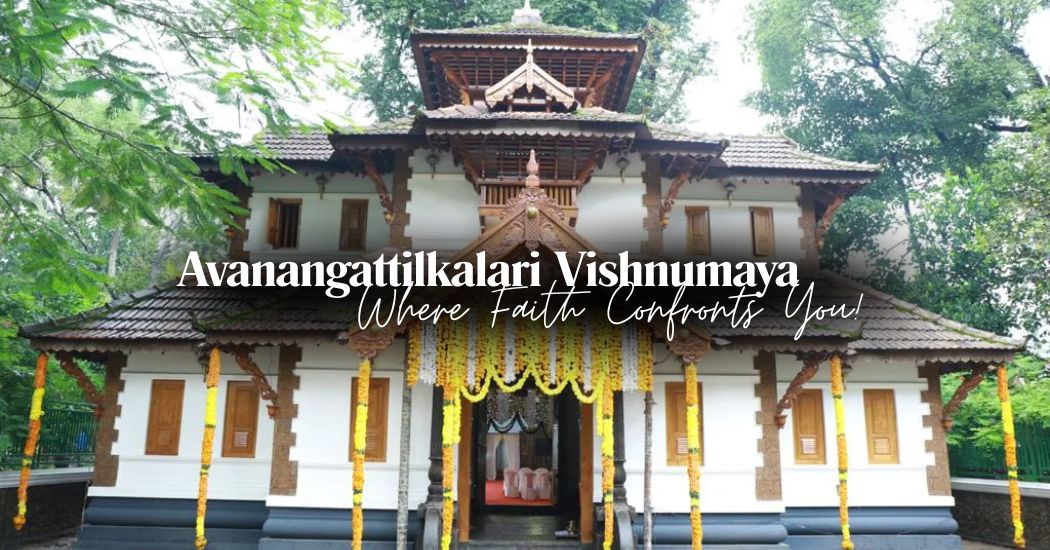
When I finally reached the sacred temple premises of Avanangattilkalari Sree Vishnumaya Temple, the first thing I noticed was not the architecture or the crowd—it was the atmosphere.
It didn’t feel like the usual temple energy that calms you down the moment you step in. There was no immediate sense of peace washing over you. Instead, there was a strange alertness, as if your senses had quietly sharpened without your permission. It felt aware.
What makes this place even more intriguing is its origin.
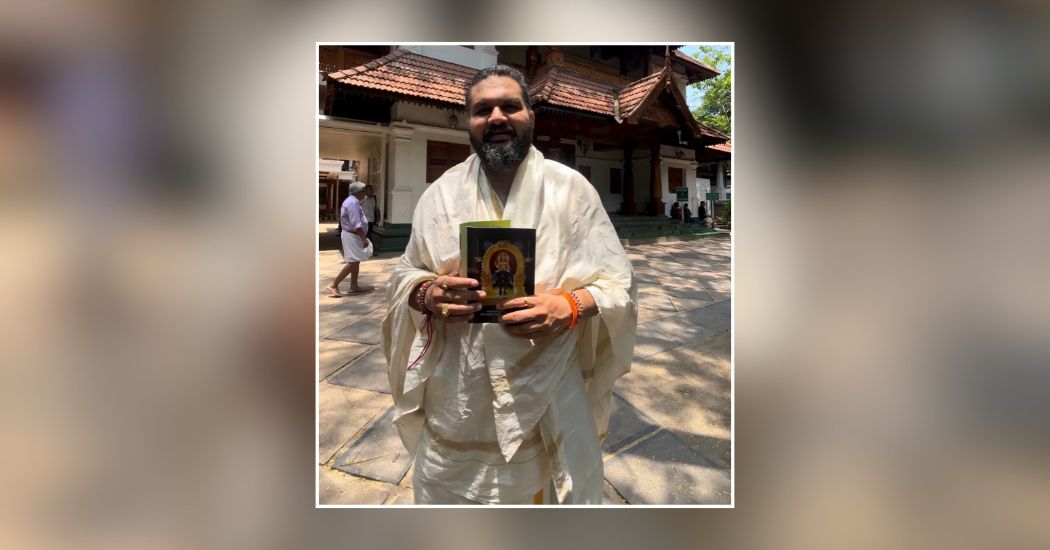
This is believed to be the Moolasthanam of Vishnumaya worship, a sacred space that traces its roots back several centuries to a kalari—an ancient martial training ground—where spiritual practices were deeply intertwined with discipline and energy control. It is said that a revered practitioner Shri Kellunni Panicker consecrated this space, and what began as a localized center of worship gradually evolved into one of the most powerful spiritual hubs dedicated to Vishnumaya.
Even today, that kalari connection doesn’t feel like history. It feels present.
This was not the kind of place where you instinctively closed your eyes in prayer. In fact, I found myself doing the exact opposite—looking around, observing, almost as if I was trying to understand what exactly was unfolding around me.
Because there was an unmistakable feeling that this wasn’t just a place of worship. It was a place of interaction.
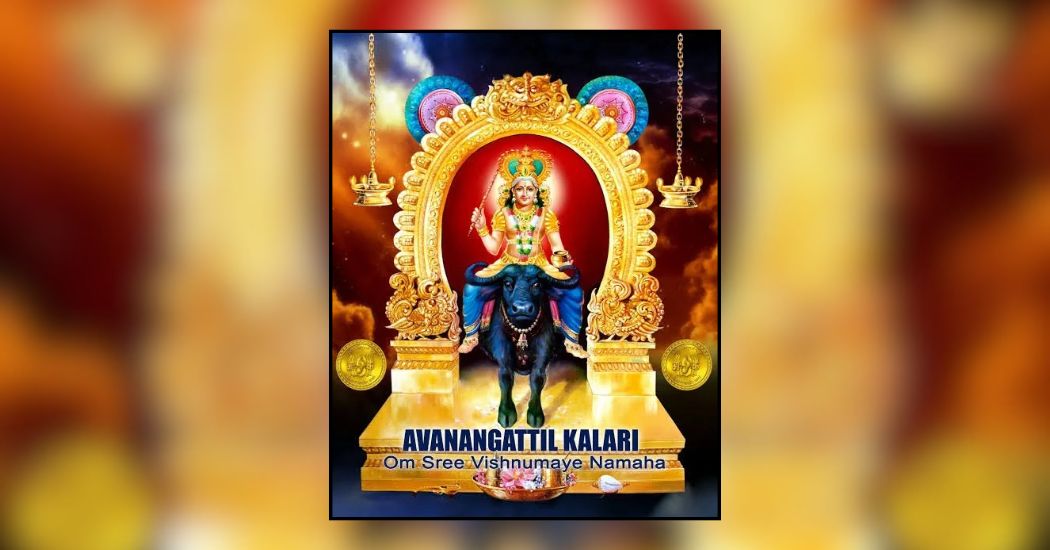
The deity here, Vishnumaya, did not resemble the comforting forms we are accustomed to seeing in most temples. Vishnumaya is believed to embody both the fierce intensity of Shiva and the calm, composed demeanour of Vishnu—making him a force that can both confront and protect.
There was no softness in the expression, no gentle reassurance in the posture. Instead, the form was fierce, commanding, and almost confrontational—mounted on a buffalo, holding what looked less like a symbolic staff and more like an instrument of authority.
It was not a presence that invited you to relax. It was a presence that demanded your attention.
As time passed and evening slowly turned into night, the entire temple seemed to undergo a transformation that was both subtle and deeply vibrant.
The lamps began to glow brighter against the darkness, casting flickering shadows that seemed to move even when nothing else did. The chants grew louder, more rhythmic, more intense, and the air itself began to feel heavier—as if it was carrying something unseen within it.
There was a build-up. You could feel it - Not outside, but within.
And then the rituals began.
What I witnessed next was not something that can be easily explained as just tradition or symbolic worship. The “Guruthi Pooja” unfolded with offerings of deep red, flowing in a way that felt almost too visceral to be merely ritualistic.
There was a rawness to it, an intensity that did not try to soften itself for the comfort of the observer. It wasn’t trying to be understood. It was simply happening.
But what truly stayed with me was something else.
A man stepped forward from the crowd. At first, there was nothing unusual about him—he looked like any other devotee who had come seeking something beyond the ordinary.
However, within moments, there was a visible shift.
His body began to tremble in a way that did not seem voluntary. His expressions changed, his eyes carried a different intensity, and when he spoke… it did not feel like his voice anymore.
I later came to know that this was called “Niyogam”- a state where the deity is believed to speak through a human medium.
Strangely, amidst all the intensity, it felt like a homecoming for me—reminding me of the Bhoota Kolas of Dakshina Kannada, where the divine doesn’t just reside in the sanctum, but walks, speaks, and reveals itself through the living (I am going about it in depth in my forthcoming blogs).
What struck me the most was not just the ritual itself, but the people who had gathered there.
These were not visitors who had come out of curiosity or routine devotion. These were individuals carrying burdens—problems that had perhaps resisted logic, solutions that had failed to materialize, questions that had remained unanswered despite every effort.
They stood there with a kind of intensity that was hard to ignore.
They were not waiting for blessings. They were waiting for resolution.
Because this temple, I realized, is not centered around comfort. It is centered around intervention, where Vishnumaya is believed to command 396 Bhoota Ganas—forces that act with a speed and precision likened to thunder and lightning, arriving not just to comfort, but to resolve.
As I stood there, trying to absorb everything that was unfolding in front of me, one thought kept returning again and again.
Perhaps spirituality is not always meant to soothe you.
Perhaps there are spaces where it is meant to confront you, to shake you, to pull you out of the illusion that everything can be explained or controlled.
When I finally stepped out of the temple, the night outside felt unusually quiet.
The kind of quiet that doesn’t necessarily bring peace, but instead leaves you with your own thoughts—louder than before.
And as I walked away, I couldn’t help but feel that something had shifted.
Not around me.
But within me.
Remember this temple “Avanangattilkalari Vishnumaya”
 Rithwik Subramanya is a Content creator and public speaker known for his relatable short-form videos on life, spirituality and dharma. He is also the founder and proprietor of Subbu Publications.
PREVIOUS ARTICLE

In the lush, green heart of Kerala lived an elephant who became a living legend - a tale of an elephant turned into a bakth. His name was Keshavan, bu...
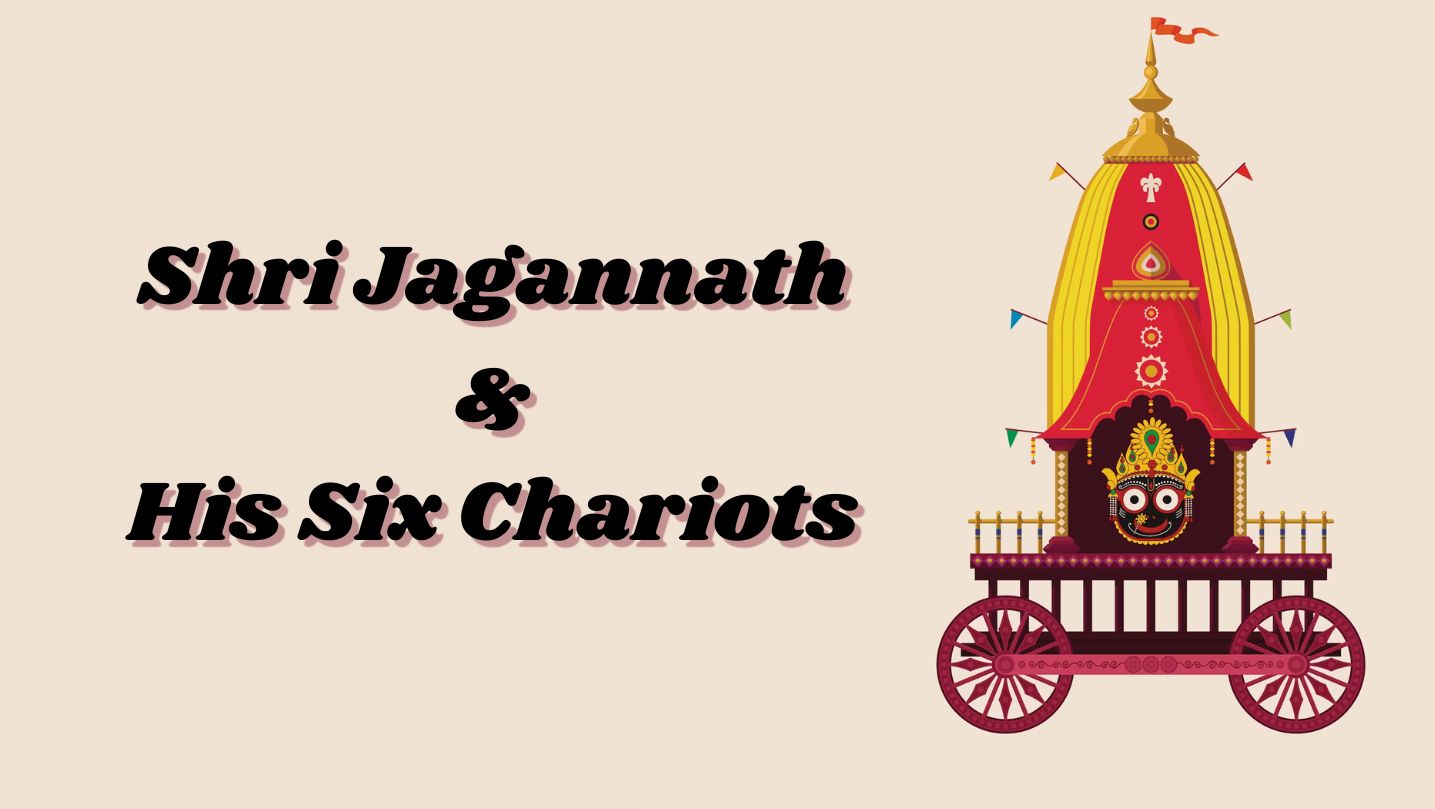
The Chaitanya Charitamrita by Shri Krishna Das Kaviraj provides a vivid description of the operations management of Shri Gundicha Yatra during the tim...
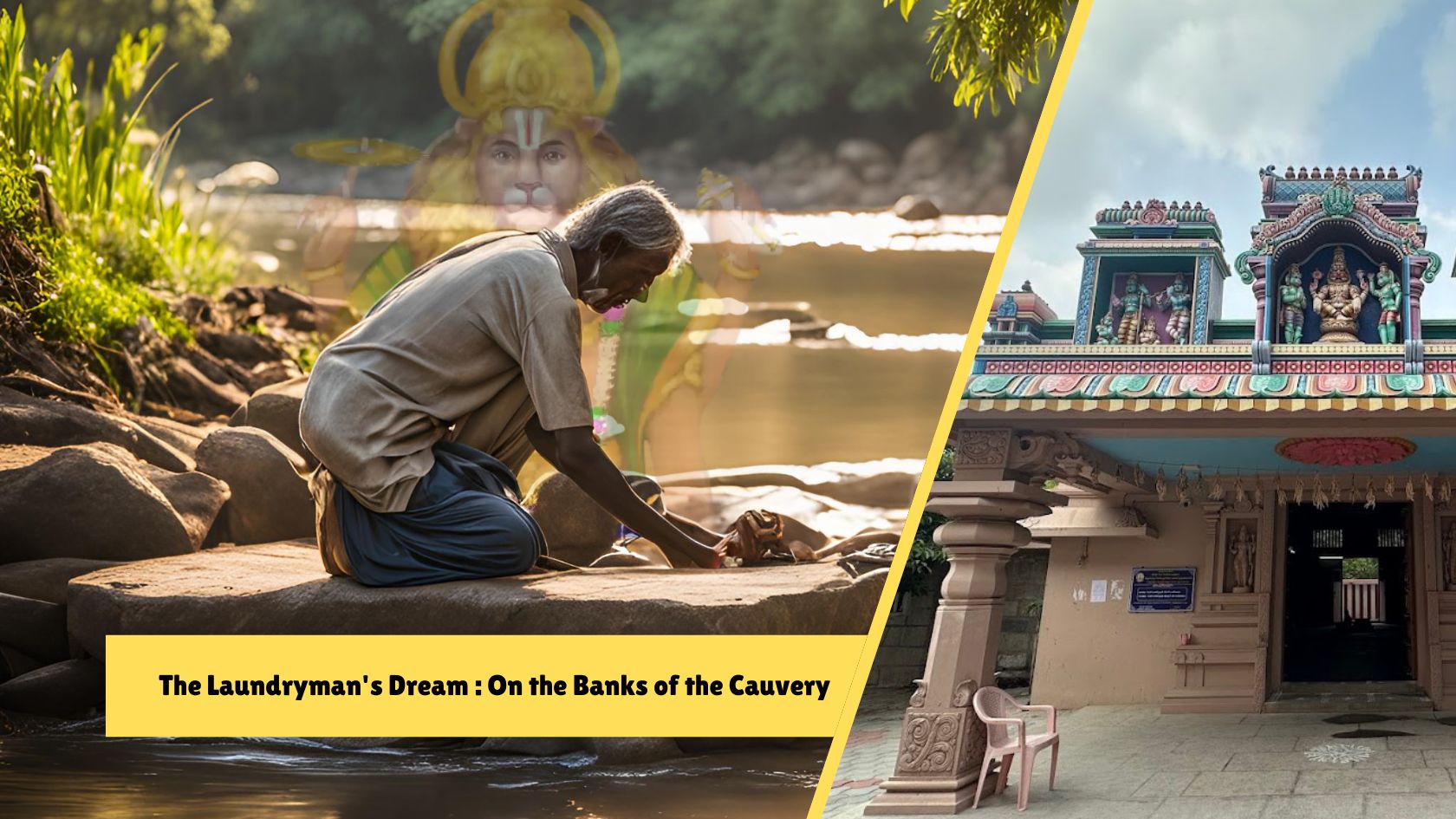
The sun beat down on my back as we stepped out of the car, the air thick with the humidity of rural Tamil Nadu. Chinthalavadi, a small village nestled...

Verandah Club is an initiative by few like-minds of Coimbatore who are interested to share information on various antiquities of Bharat.
Free download our iOS & Android app
© Copyright 2026, All Rights Reserved.