
732 Hanuman Idols across South India. Yes, 732 — and this is the “First” of the 732. This is the monumental contribution of Sri Vyasaraja, the revered Guru of Sri Krishnadevaraya of the Karnataka dynasty.
Today, I am taking you to the Janmasthal of Hanuman at Hampi.
After completing his Sandhya Vandana on the banks of the Tungabhadra River, Vyasaraja would draw an image of Hanuman on a rock and perform pooja. But by the time he finished his prayers, the image would mysteriously disappear.
This continued for 12 days.
Disturbed and deeply yearning, he prayed with all his heart for Hanuman to reveal Himself. Moved by his devotion, Bhagwan Hanuman appeared and instructed Vyasaraja to bind Him within a Shat-Kona (hexagonal yantra) and build a temple around it.
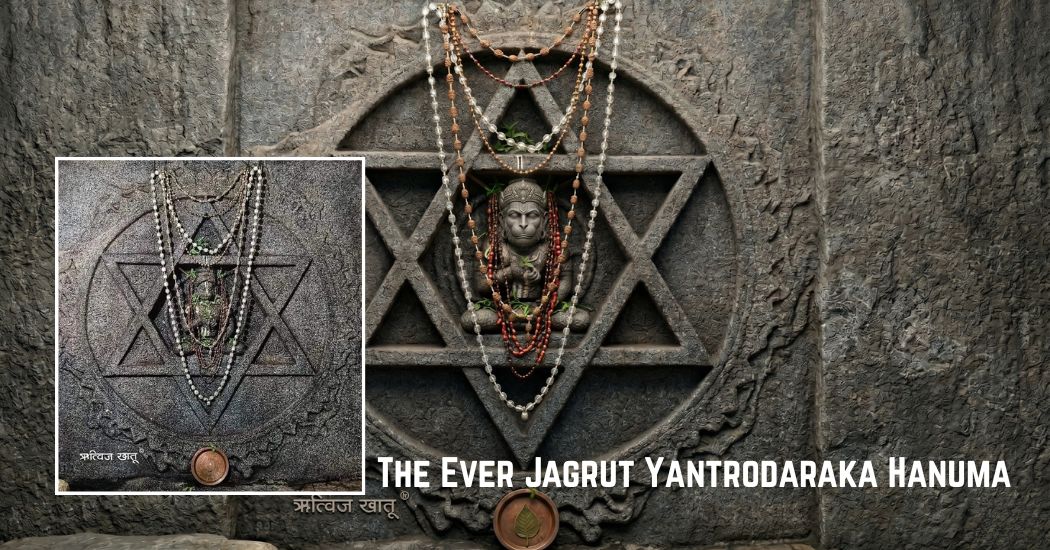
Following this divine guidance, Vyasaraja first inscribed the Shatkona Yantra, then sculpted Hanuman in a deep meditative posture—unlike the usual standing or flying forms—to anchor Him within the yantra. He then enclosed it with a circular boundary to strengthen the spiritual containment.
Surrounding this sacred geometry are 12 Hanumans carved into the rock, each holding the tail of the one before—forming a mystical protective chain.
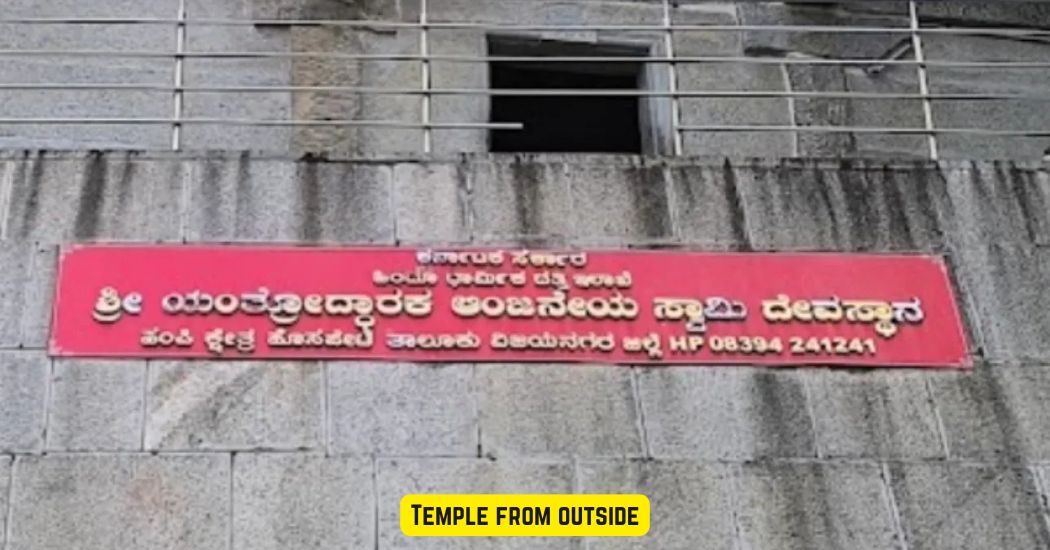
This temple stands atop Chakrateertha Hill, believed to be the very place where Sri Rama first met Hanuman.
I used to visit this temple often while setting up my café in Toranagallu at JSW Township.
The first time I saw the 8-foot monolithic Hanuman, I was overwhelmed. Unlike most idols where Hanuman looks sideways, here He gazes differently—striking something deep within you instantly.
The place feels intensely Jagrut—alive.

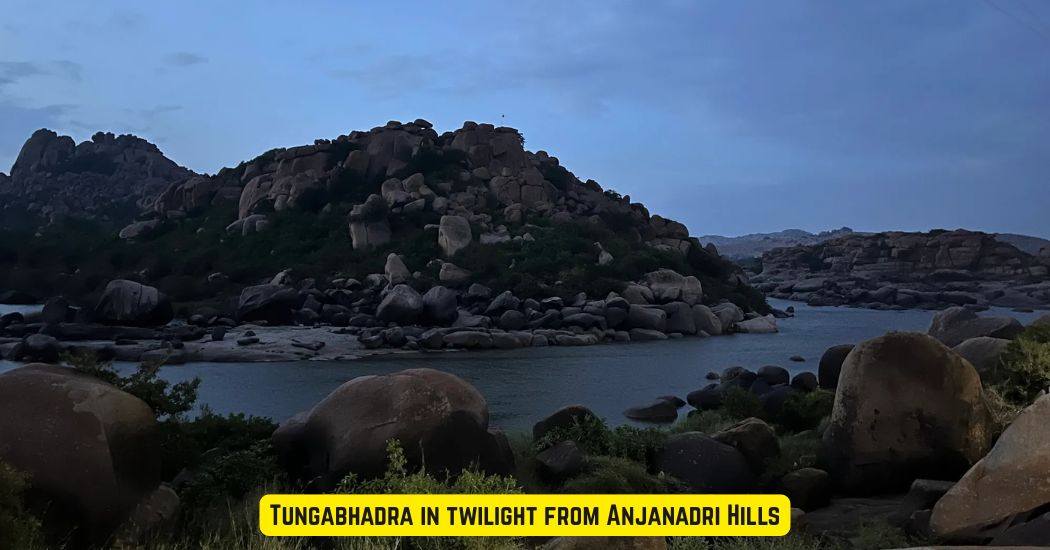
From the temple balcony, you can see the sacred Anjanadri Hills, believed to be the birthplace of Hanuman.
Below the temple lies another sacred shrine—the Kodandarama Temple, believed to be the very place where Shri Rama coronated Sugriva as the king of Kishkindha.
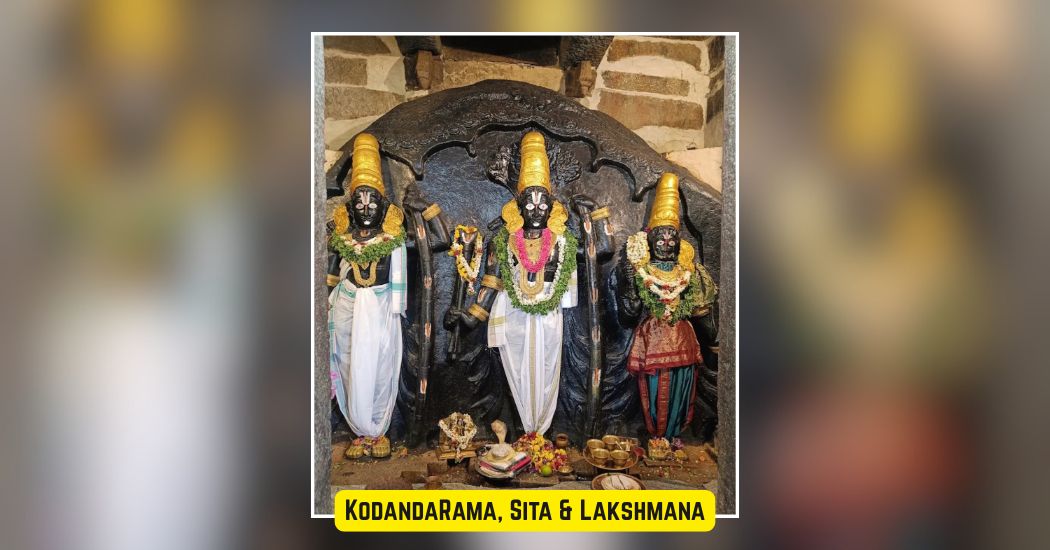
The sanctum features massive, 15-foot-tall standing idols of Lord Rama, Sita, and Lakshmana, all carved from a single, large natural boulder.
During the rainy season, the Tungabhadra River enters the garbhagudi and gently touches the feet of Shri Rama—as though she herself is bowing in reverence at His lotus feet.
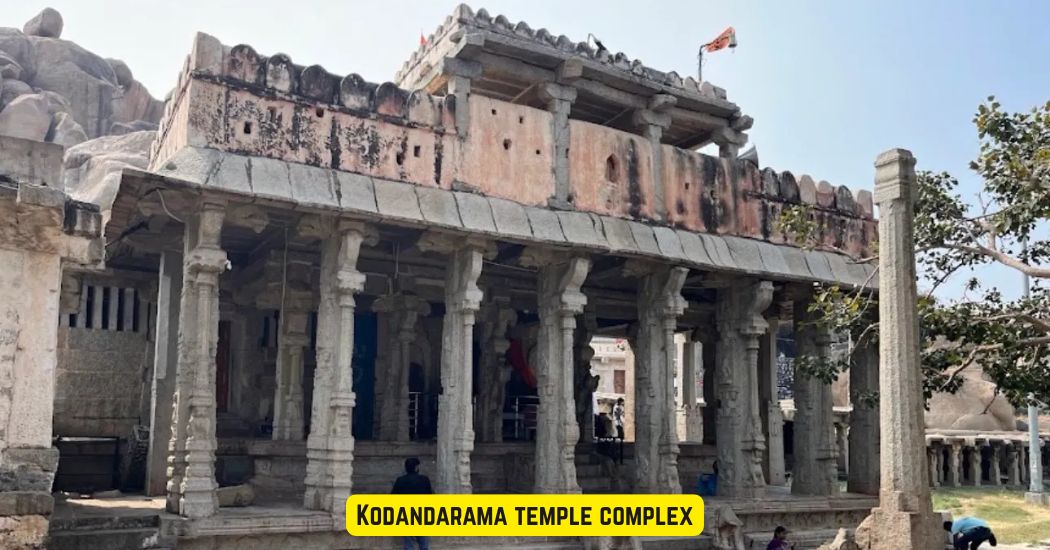
What’s even more fascinating is that these temples have miraculously survived the onslaught of the Battle of Talikota—also known as the Rakkasa Tangadi—when five Deccan Sultanates completely ransacked Hampi.
If you want to experience Ganesha, go to Maharashtra.
If you want to experience Kali, go to Bengal.
If you want to experience Shiva, go to Tamil Nadu.
But if you truly want to experience Hanuman, come to Karnataka.
Here, He is everywhere—
In every village, every town, every city—
Listening, protecting, and responding to every bhakta.
He is known as Vayudevaru, Pranadevaru, Mukhyaprana, Anjaneya, Hanumanta, Hanuman…
And perhaps, who knows—He might even be well-versed in Kannada, just as He is in Sanskrit.
Buddhir Balam
Yasho Dhairyam
Nirbhayatwam Arogatah
Ajaadyam Vaak Patutvamcha
Hanumat Smaranaat Bhavet
Ever falling at the lotus feet of Hanuman
 Rithwik Subramanya is a Content creator and public speaker known for his relatable short-form videos on life, spirituality and dharma. He is also the founder and proprietor of Subbu Publications.
PREVIOUS ARTICLE

In the lush, green heart of Kerala lived an elephant who became a living legend - a tale of an elephant turned into a bakth. His name was Keshavan, bu...

The Chaitanya Charitamrita by Shri Krishna Das Kaviraj provides a vivid description of the operations management of Shri Gundicha Yatra during the tim...
The sun beat down on my back as we stepped out of the car, the air thick with the humidity of rural Tamil Nadu. Chinthalavadi, a small village nestled...

Verandah Club is an initiative by few like-minds of Coimbatore who are interested to share information on various antiquities of Bharat.
Free download our iOS & Android app
© Copyright 2026, All Rights Reserved.