
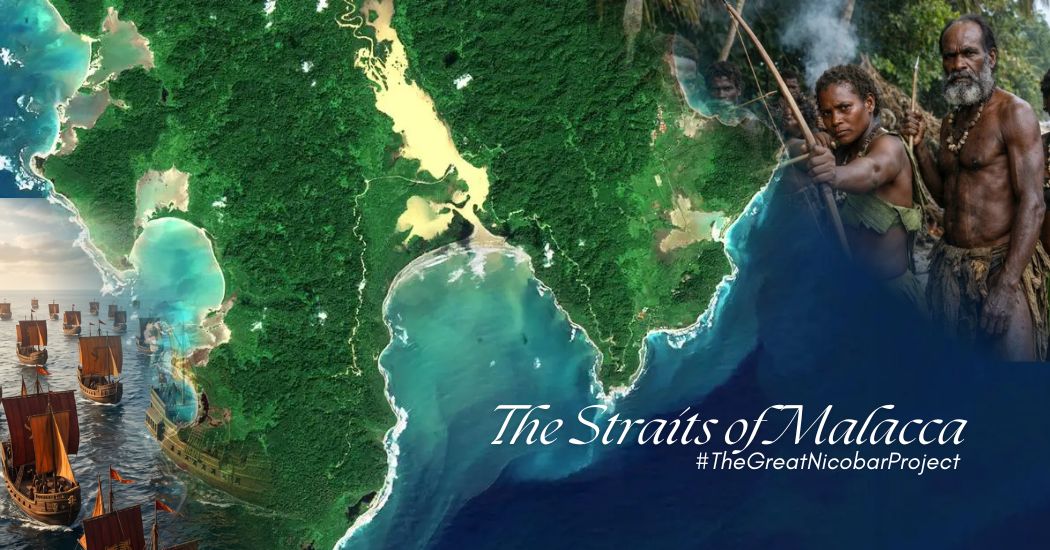
The world took note of a war when the USA stepped into the Iran-Israel war in February 2026. We watched as different targets all over the Middle East were targeted by drones and missiles as Israel and Iran traded firepower and the USA stepped in to escalate matters. But the whole world took note of the war’s effects on the world only when Iran established and tightened its control over the Strait of Hormuz. Oil and chemical tankers were attacked, leading to sinking ships and missing crew. After one move after another made by the opposing parties in this war, the war escalated over control of a significant shipping route vital for world trade shook us to our core.
Suddenly, it wasn’t just the Middle East caught in the crossfire, but the whole world, with countries like Japan in the far east facing the brunt of a war raging in West Asia. Civilians found their pockets emptied due to rising oil prices and households were hit by a drought in LPG deliveries.
In what was the biggest oil and gas disruption since the 1970 energy crisis, India along with the rest of the world found itself in the grip of the war’s economic impact where initially it was being waged to de-neutralise Iran’s nuclear missile capabilities, but was now being waged simply to re-open the strait! Now we have the ceasefire in place and talks are on with all the parties sitting at the negotiation table with their representatives and mediators. It was not until the world was made to feel the economic shocks of the war that negotiation became possible. When it comes to money the greatest of world powers take note. The USA has launched a blockade of the Strait under contention, issuing threats of renewed war for the release of Iran’s chokehold upon the waterway, while talks are underway. As of April 18, 2026, both parties appear to have arrived at a mutual yet partial consensus to open the Strait up to the rest of the world.
What does this tell us? That no matter how great the humanitarian fallout caused by a war is, no action will be taken unless we face and pay its economic price. History is witness to the fact that where major powers get into skirmishes over commerce and trade routes, war is bound to change the economic status quo in the region, with wider consequences for the world and the future. However, it also tells us that countries do step up to defend themselves when their interests are on the line.
Just like how the capture and blockade of Strait of Hormuz shocked us out of our stupor, the world’s sights have turned upon another strait, one which connects Western shipping routes to that of the East, linking three major continents — Europe, Asia and Africa — for over a millennium.
We are talking about the Strait of Malacca!
It is a narrow waterway located between the Malay Peninsula and the Indonesian island of Sumatra, connecting the Indian Ocean with the South China Sea and the larger Pacific Ocean. Over 1,00,000 ships pass through this strait, making it the busiest strait in the world and one of the most disputed stretches of water in history — from the Srivijaya Thalasocrassy to the subsequent Sultanates of Malacca and Johor, British powers and Singapore respectively staking claim to it, throughout its historical relation with humanity. Today carrying about a quarter of the world’s traded goods, including oil, Chinese manufactured goods, coal, palm oil and Indonesian coffee, this strait is of paramount importance to world trade and therefore in the limelight again.
Now with the revelation dawning upon us that trade and manufacturing monopolies count for nothing when strategically placed water channels are seized and blockaded by powers in the region, worldwide economic disruptions are easy to cause due to the globalised nature of trade and commerce. But do you know globalisation is nothing new. The ancient and medieval world were globalised too, connected by land based and maritime superhighways, revolving around Asian powers like China and India.
Now while the Strait of Malacca is far across the Indian Ocean to India i.e. Bharat’s east, there has been a moment in our history when India seized the Known World’s stage and announced to the world that we had the might to safeguard our interests.
This was the time of the Imperial Chozhas.
Nearly a millennium ago when the Strait of Malacca became a contested region between the Srivajaya Thalasocrassy, which was the maritime power in control of this narrow water channel, monopolising its use, and the Imperial Chozhas were a growing empire in South India.
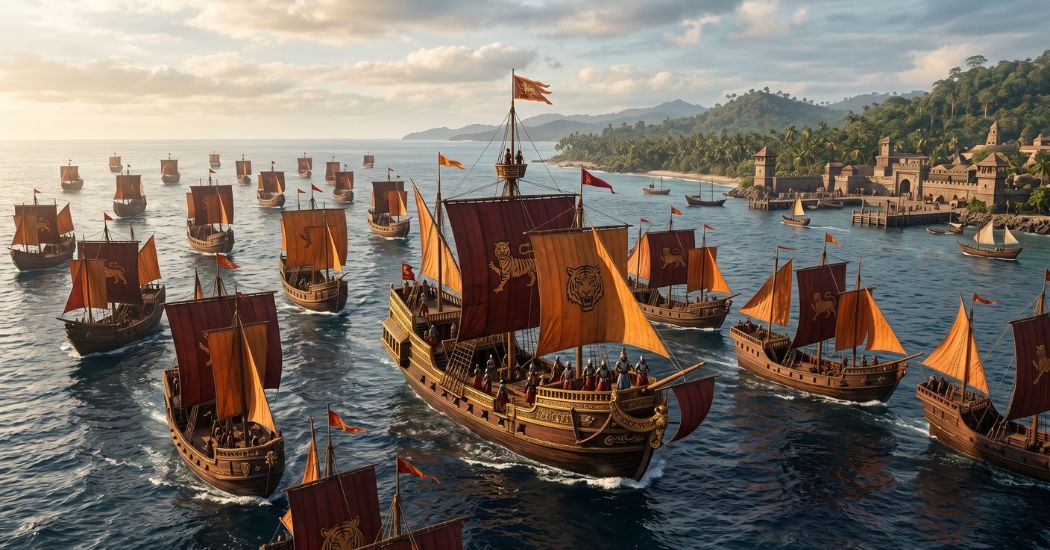
At this point in time, the Chozhas had established their dominion over the Bay of Bengal, conducting naval raids into Sri Lanka and the Maldives, bringing these islands into the Chozha realm of influence. Powerful trading guilds like the Ainnuruvar and Manimangalam, backed by a favourable Chozha Crown, were travelling all the way across the Indian Ocean to distant China and Southeast Asia for trade purposes, exporting luxury goods such as spices, pearls, textiles (cotton), ivory, and incense and importing high-value goods like Chinese ceramics, silks, and copper coins. The Srivijayans were the middlemen in this transaction, levying a form of toll for the ships that passed through these straits, much like Iran started levying a toll of a dollar each upon each oil barrel to fill its war treasury against the USA and Israel.
The Srivijaya Empire wielded its control of this strait like a weapon in the 11th Century C.E., cultivating its influence as a trading super power of the early medieval world and spreading that influence to curry favour from major manufacturing and trading powers like China and India. It was a well-known player in Southeast Asian circles, with major powers like the Khmer empire (large parts of Cambodia), Champa (Parts of modern Vietnam) watching it steadily rise on the back of trade and commerce. The Indian merchants, on their part, kept the ears and pockets open, paying this toll to Srivijaya for right of passage through Malacca’s waters.
However much like Iran today has established control over the Strait of Hormuz to press its advantage in war against the USA, and by extension the world, Srivijaya began capitalising on its control over two maritime entry points into the realm of Southeast Asian influence i.e. the Malacca Strait and the lesser known, riskier Sunda Strait. While the Malacca Strait was widely acknowledged as an important part of the maritime Silk Route, its lesser known sibling, the Sunda Strait was, while controlled, largely overseen due to its strong currents, shallow waters and narrower passage.
Srivijaya did not start off on the wrong foot with us. There are records of them having close ties to the Pala dynasty of Bengal, sharing the common Hindu-Buddhist heritage that had spread throughout Southeast Asia on the backs of our merchants, monks and travelers. The Srivijayan emperor had even dedicated a monastery to the Nalanda Mahavihara in the 9th Century C.E. Further, the Srivijayan emperor was also on friendly terms with Emperor Raja Raja Chozha, commissioning the Chudamani Mahavihara in Nagapattinam (seen in blockbuster film — Ponniyin Selvan: II!) in the 11th century C.E.
This attitude seems to have undergone a change in the reign of Emperor Rajendra Chozha I, for the Srivijayans appeared to have commenced exploiting their position that they possessed in the Southeast Asian trading ecosystem, leveraging it against the Chozhas of Thanjavur and other neighboring powers.
With Srivijaya flexing its influence in the region, manifesting hegemonic tendencies, the Khmer empire took note of this. Further, whispers seemed to have arisen in the Chinese Tang Court that the Chozhas were subservient allies of the Srivijayans, something carried back to the Chozha Court at Gangaikonda Chozhapuram by the Tamizh merchants who had traded in China.
Now this brings us to the present day. What did the Chozhas do in response to Srivijaya’s growing stranglehold over the Malacca Strait? They did not wait and watch. Emperor Rajendra Chozha I launched one of the most audacious naval campaigns of the medieval world, sailing his fleet across the Bay of Bengal in 1025 C.E. and striking at the very ports and polities that formed the backbone of Srivijayan power. Port after port fell to the Chozha navy. The message was received loud and clear across the maritime world of the time. Bharat’s interests were not to be trifled with. This was a country that would sail to the ends of the known world to keep its sea lanes open.
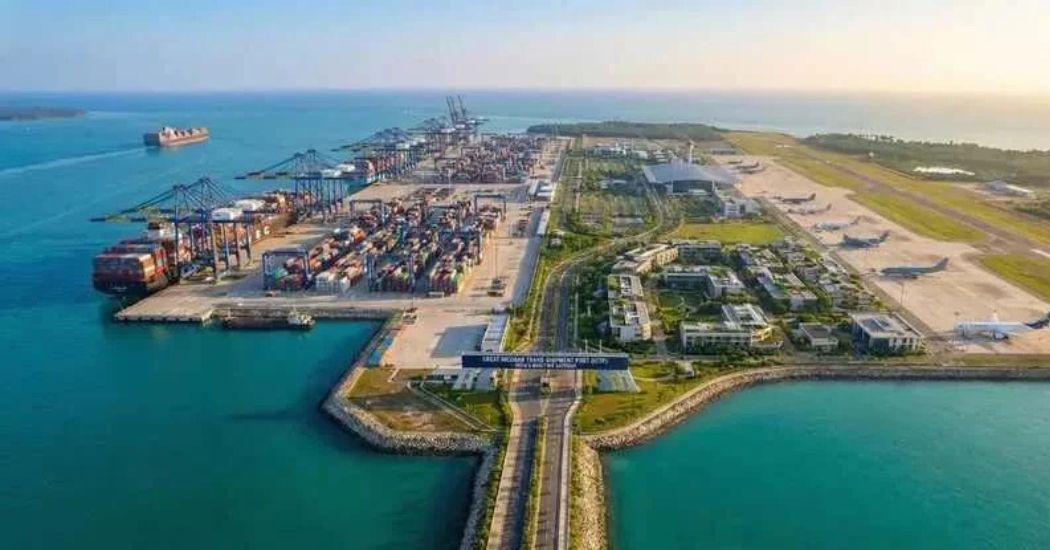
Now we do not have an Emperor Rajendra Chozha I to sail our navies into the Strait of Malacca today. But we do have a government that has looked at a map and understood what that emperor understood a thousand years ago. That when the sea lanes are not yours, your economy is never fully yours either. And in response to this understanding, India’s Government approved one of the most ambitious and consequential infrastructure projects in independent India’s history.
We are talking about the Great Nicobar Project!
Now, Great Nicobar Island is the southernmost island of the Andaman and Nicobar archipelago, sitting roughly 40 nautical miles from the critical East-West international shipping corridor, i.e. the lane that carries a quarter of the world’s traded goods. For most of independent India’s history, this island has been little more than a remote stretch of forest and coral, home to barely 8,000 people and some of the most extraordinary biodiversity on the planet, its strategic value largely unappreciated or at least unacted upon. That is now changing.
The Government of India, through NITI Aayog and the Andaman and Nicobar Islands Integrated Development Corporation (ANIIDCO), has conceived the Holistic Development of Great Nicobar Island. Approved by the Union Cabinet in 2021 and carrying a revised estimated cost of Rs. 81,000 crore (over $10 billion as of 2025), the project is to unfold across three phases stretching from 2025 all the way to 2047, covering a total development area of 166.10 square kilometres on the island. So what does this project actually involve? It involves four major things.
First, an International Container Transshipment Terminal (ICTT) at Galathea Bay, with a planned capacity of 14.2 million TEUs (Twenty-Foot Equivalent Units) annually. Now why does this matter? Because right now, India’s large cargo ships are dependent on foreign ports like Colombo in Sri Lanka, Singapore, and Port Klang in Malaysia to transship their goods because we simply do not have a deep enough port of our own near these shipping lanes. The bay at Galathea has a natural water depth of over 20 metres, which is the kind of depth the world’s largest container ships require. Building this port means that cargo which currently passes through foreign hands on its way to and from India will instead pass through Indian ones.
Second, a Greenfield International Airport with a runway capable of handling wide-body aircraft. But this is not simply an airport for tourists or business travellers. This is a dual-use facility, meaning the Indian Air Force can use it to deploy aircraft, troops, and supplies at speed into the eastern Indian Ocean in the event of any crisis in the region.
Third, a 450 MVA Gas and Solar Power Plant to make the island self-sufficient in energy. You cannot run a strategic military and commercial hub if its electricity comes through a cable that can be cut, so energy independence is a non-negotiable part of this plan.
And fourth, a planned township spanning 16,610 hectares to house the workers, administrators, and residents who will sustain all of the above, with the island’s population projected to grow to over 3.5 lakh people across the project’s 30-year span.
Now there is a very important strategic question here that we need to address. Why Great Nicobar specifically? Why this island, this project, at this time?
The answer lies in what has been happening in India’s maritime neighbourhood and the fact that we have not been paying enough attention to it. China has, over the past two decades, been steadily building what defence analysts call the String of Pearls, i.e. a network of ports, naval facilities, and strategic footholds stretching across the Indian Ocean. Gwadar in Pakistan, Hambantota in Sri Lanka, Chittagong in Bangladesh, Kyaukpyu in Myanmar — each of these is a node in a web that, taken together, forms a ring of Chinese influence around India’s maritime borders. These are not just commercial ports. They are potential military footholds in waters that we have historically considered our own backyard.
Now India is responding to this. In 2015, Prime Minister Narendra Modi articulated India’s maritime philosophy through the SAGAR doctrine, which stands for Security and Growth for All in the Region. The idea was to position India as a cooperative net security provider in the Indian Ocean, a country that its neighbours and trading partners could rely on for stability rather than fear for its dominance. In March 2025, this vision was expanded further into what is now called the MAHASAGAR initiative, i.e. Mutual and Holistic Advancement for Security and Growth Across Regions, deepening India’s maritime commitments across the Global South, from the island nations of the Indian Ocean all the way to the littoral states of Southeast Asia.
But doctrine without capability is just words. And this is where Great Nicobar becomes so important. The island sits right at the point where the Indian Ocean meets the approaches to the Pacific. Any naval vessel coming out of the Malacca Strait and entering the Indian Ocean passes close to Great Nicobar. The island is also near the Six Degree Channel, another significant maritime passage used by shipping coming from further south. A military airfield and a naval facility here gives India’s armed forces a vantage point and a reach in the eastern Indian Ocean that we have simply never had before. It does not merely improve response times. It changes the strategic calculation for any power that wants to move through these waters without India’s knowledge or consent.
You see the parallel with Rajendra Chozha I coming into focus now, don’t you? Just as the Chozha emperor understood that Srivijaya’s chokehold over the Malacca Strait was a threat that had to be answered, India today understands that China’s growing naval presence in the Indian Ocean is a challenge that cannot be talked away. The Chozha response was military with simultaneous attacks on the coastal cities of the Srivijaya Thalasocrassy to relieve their chokehold on that geological gateway and economic corridor for the Tamizh interests.
India’s response now is to build, not to conquer, but the underlying logic is the same. A country that wants to be taken seriously in the world cannot leave the sea lanes its economy depends on unguarded and uninfluenced.
But now we need to have an honest conversation. Because the Great Nicobar Project is not without its costs, and those costs are serious and need to be understood.
Great Nicobar Island is not simply a strategic asset sitting empty and waiting for development. It is one of the most biodiverse ecosystems anywhere on the planet. The island is home to the leatherback sea turtle, the world’s largest turtle species, which nests right on the beaches of Galathea Bay, i.e. the very site where the transshipment port is to be built. It shelters the Nicobar megapode, a bird found nowhere else in the world, as well as the saltwater crocodile and the Nicobar macaque. Scientists have also noted that we have not yet finished cataloguing what lives on this island. A new species of wolf snake called Lycodon irwini was formally described only in 2025, and a new species of crake (a type of bird) remains undescribed even as of 2026. We are, in other words, proposing to transform an island whose full biological inventory we have not even completed.
The environmental clearance for the project, granted in November 2022, itself acknowledges that the impact on the island’s endemic flora and fauna is, and we quote, “mostly unknown.” The Ministry of Environment, Forest and Climate Change has estimated that approximately 9.64 lakh trees will be affected by the project’s forest land diversion. The government proposes compensatory afforestation of 97.30 square kilometres, but conservationists have rightly pointed out that planting trees in the scrublands of North India is not the ecological equivalent of preserving an ancient rainforest growing on an island that was shaped by millions of years of isolation and evolution.
Then there is the matter of the people who call this island home. The Shompen are one of India’s last Particularly Vulnerable Tribal Groups (PVTGs), a community of barely 300 people who have chosen to remain largely uncontacted, living on their own terms, on their own island, for generations. The Shompen Policy of 2015 was put in place specifically to protect this way of life. In February 2024, 39 genocide experts from 13 countries issued a warning that the projected population explosion on the island from 8,000 people today to over 3.5 lakh in the future would expose the Shompen to diseases against which they carry no immunity. The Nicobarese, the island’s other indigenous community, also have ancestral coastal habitations that fall within the project’s footprint.
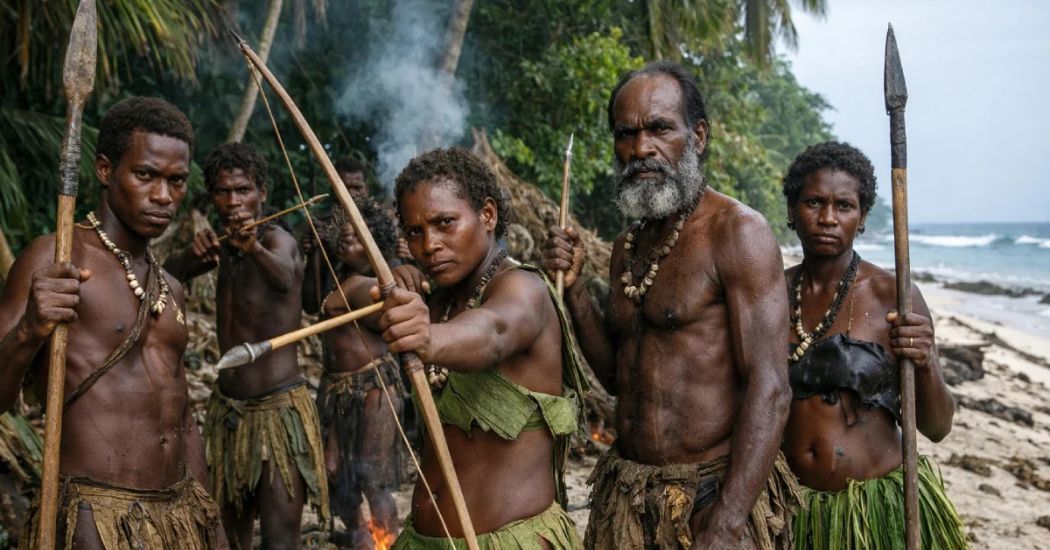
The Government’s position is that no displacement is planned and that tribal welfare is central to the project’s design, with monitoring committees set up and welfare measures being worked out. But as of late 2024, the detailed welfare plans had still not been made public, and geo-fencing that has been proposed as a buffer around Shompen habitation areas has been criticised by former members of the island’s own tribal welfare committee as a violation of the community’s freedom of movement.
And we have not even talked about the earthquake risk yet! Great Nicobar sits atop an active seismic fault line. The epicentre of the 2004 Indian Ocean earthquake that triggered the tsunami killing over 2,30,000 people across India, Indonesia, Sri Lanka and Thailand was approximately 80 miles from this island. On that same day, Great Nicobar’s southern tip sank by about 15 feet into the ocean. The island’s coastal settlements were wiped out. Building a city, a major port, and a military airfield on this island without fully accounting for this geological reality is not a small risk to be managed. It is a civilisational bet that future generations will inherit.
Now, none of this means India should abandon the Great Nicobar Project. What it means is that India should pursue it with the seriousness and the accountability that a project of this magnitude, and a location of this sensitivity, demands.
Because the larger story here is an important one. India has for too long been a land power that merely told itself the story of being a maritime civilisation. We have 7,500 kilometres of coastline. We have one of the world’s oldest seafaring traditions. Our geography places us right at the centre of the Indian Ocean, the world’s most important trading sea. And yet we have for decades underinvested in the naval and maritime infrastructure that would allow us to actually exercise the influence that geography entitles us to. The Great Nicobar Project, whatever its complications, is a departure from that long pattern of underreach.
If the Galathea Bay terminal succeeds, India will for the first time have a deep-water port capable of receiving the world’s largest container ships, positioned right on one of the world’s busiest shipping lanes. That changes the economics of India’s trade and it changes the leverage India carries in any conversation about how the Indian Ocean is governed and who gets to use it on what terms. The Andaman and Nicobar Command is India’s only tri-services command, bringing together the Army, Navy and Air Force under one roof, covering 572 islands across nearly 800 kilometres of ocean. A fully operational military hub at Great Nicobar extends that command’s effective reach dramatically. And within the QUAD framework, i.e. India’s security partnership with the USA, Japan and Australia, a stronger Indian presence in the eastern Indian Ocean is something all four partners have a stake in, as a counterweight to China’s growing naval footprint in these waters.
What does all of this bring us to, then?
It brings us back to Rajendra Chozha I, standing on the shores of the Bay of Bengal a thousand years ago, watching the Srivijayan grip on the Malacca Strait tighten, and deciding that Bharat would not simply accept the role of a paying passenger on someone else’s sea. He did something about it.
The Srivijayans knew this strait was power. The Chozhas learned it and acted on it. The Portuguese who captured Malacca in 1511 knew it, with their commander Afonso de Albuquerque reportedly saying that whoever holds Malacca holds the hands of Venice. The British knew it, which is why they built Singapore into an empire’s cornerstone. And China knows it today, which is precisely why its naval strategy is designed to extend its influence across the Indian Ocean towards the very waters we are discussing.
Now India knows it too. And the Great Nicobar Project is how we are saying so.
The question that remains is the one that always remains when Bharat stands at a historical crossroads. Do we have the will, the execution capacity, the courage, and the wisdom to see this through properly? History does not give credit for good intentions. It gives credit for action, for follow-through, and for the wisdom to carry out great ambitions without destroying the things we should be protecting in the process.
A thousand years ago, the Chozha navy set sail into an uncertain ocean, because the alternative was not an alternative at all.
The waters are the same. The moment has come around again. India must decide how it sails.
 Vignesh Ganesh is a lawyer and writer. He is interested in ancient history and Itihasa and this interest culminated in his first book, "The Pallavas of Kanchipuram: Volume 1", which he co-authored with Mr. K. Ram, a fellow enthusiast of Indian history and culture.
PREVIOUS ARTICLE
NEXT ARTICLE



The Venkateshwara Swami Temple in Tirupati is among the holiest places in the world for Hindus. Millions of people throng the temple every year to get...

It is a sad reality that our Itihasa and Puranas have been subject to severe distortion over the years. This is not surprising considering how even th...
The holy land of Bharat follows Sanatana Dharma. The word Sanatana Dharma is a Sanskrit word meaning, “Eternal law”. It is the indestructible ultimate...

Verandah Club is an initiative by few like-minds of Coimbatore who are interested to share information on various antiquities of Bharat.
Free download our iOS & Android app
© Copyright 2026, All Rights Reserved.