
From my childhood days, I always felt a strange attraction towards Thrissur Pooram and the sacred city of Thrissur. The pull became even stronger when I watched the famous composition “Kaanta” on Music Mojo aired by Kappa TV.
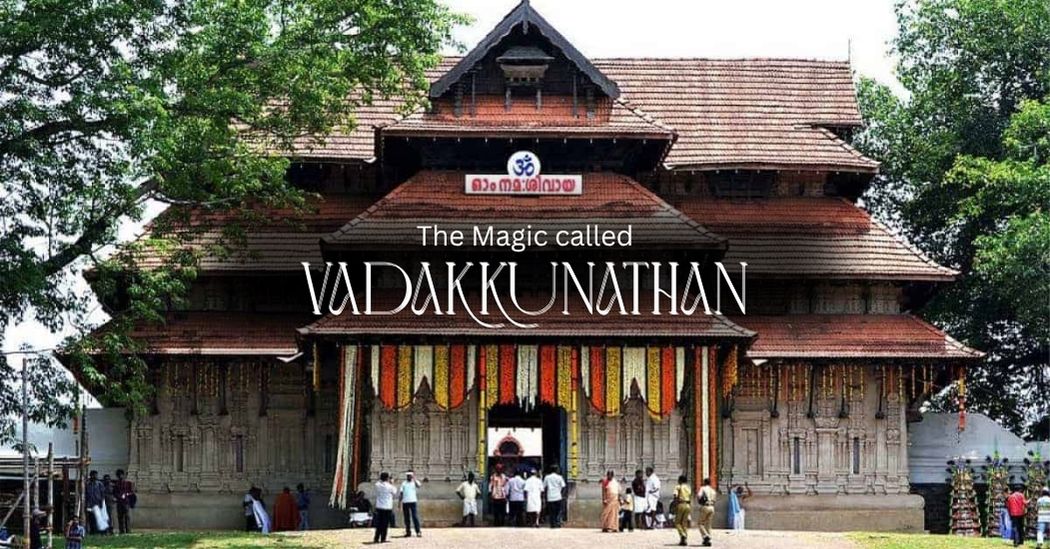
That performance stirred something deep within me. Soon curiosity led me to learn more about Thrissur Pooram, and that is when I discovered that the grand celebration unfolds at the legendary Vadakkunnathan Temple. From that moment, the thought of visiting Thrissur quietly began taking shape in my mind.
Every year I make it a point to attend the Western Ghats Lit Fest in Coimbatore, usually conducted around October or November. In 2025, I had the opportunity to conduct a session there on Temple Tradition. As soon as the festival concluded, I decided to follow the long-standing call of my heart and headed straight to Thrissur.
As I approached the city, embraced by the lush landscapes of the Western Ghats, there was only one thought in my mind — Vadakkunathan.
The temple stands majestically right at the centre of Thrissur city. Its entrance is both mesmerizing and gigantic. If one approaches the temple with awareness of the sookshma sharira, the subtle body, the energy of the place strikes you even before you step through the gateway.
After offering prayers at the parivara devatas within the temple complex, I joined the long queue for the darshan of Shiva as Vadakkunathan.
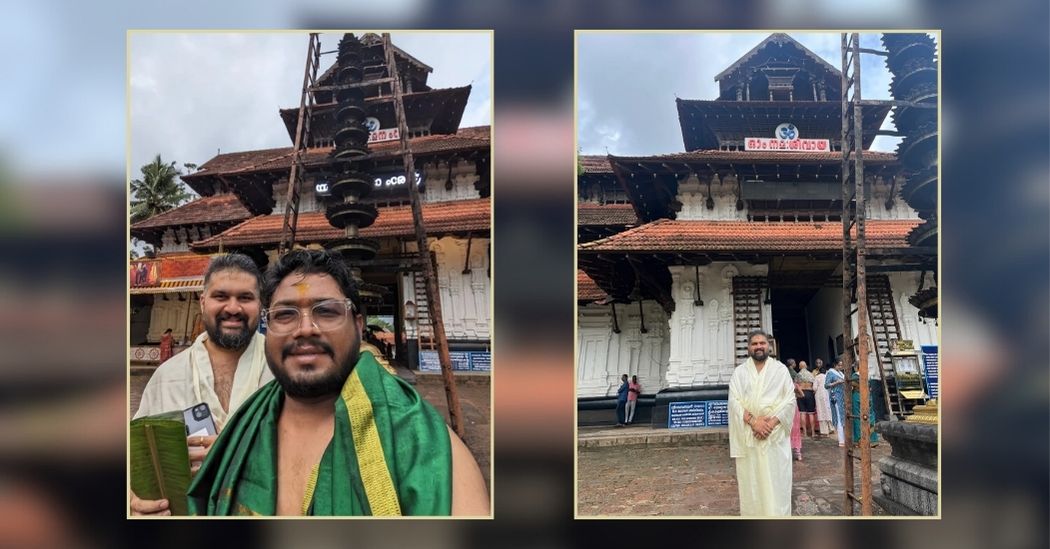
Temples in Kerala have a character of their own. The architecture, the layout of the complexes, the rituals performed by priests, and even the devotional practices of devotees carry a distinctive rhythm that is different from temples elsewhere in India.
While standing in the queue, I noticed a fascinating practice. Many local devotees would take a coin or a currency note in their right hand and rotate it around their head three times in a clockwise direction before placing it in the hundi or the aarati plate. It was a simple act, yet it carried an unmistakable sense of surrender and devotion.
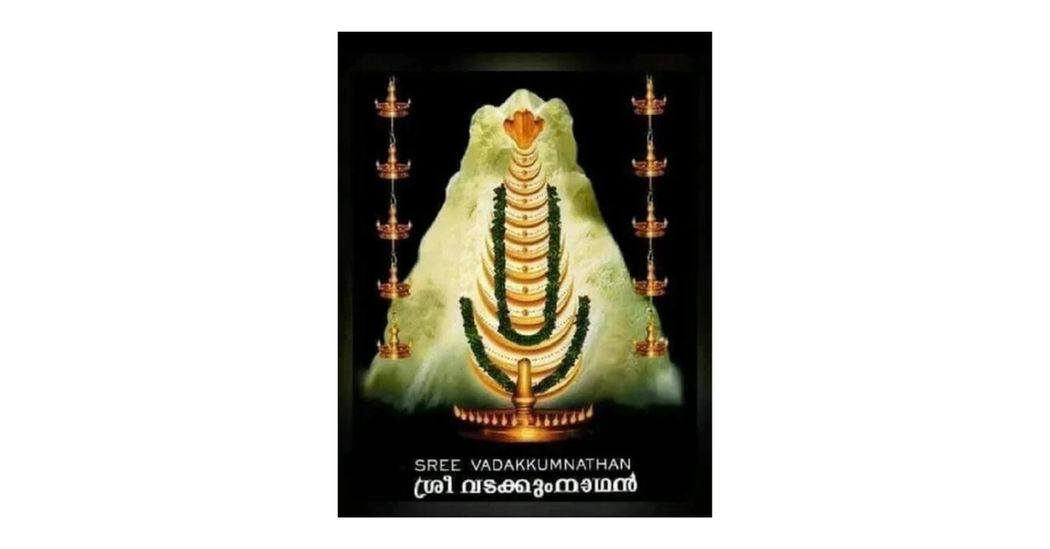
Slowly the queue moved forward. As I neared the garbhagudi, my eyes eagerly searched for the sacred Shiva Linga. But when I peeped inside, I could see nothing but a large mound of yellowish-white paste covering the entire sanctum. My eyes and soul were searching for the form of the linga, but all I could see was that mysterious coating.
For a moment I wondered if I had somehow missed the darshan. Before I could fully understand what I had seen — or perhaps what I had not seen — the impatient crowd pushed me forward and I was already outside.
My friend and I began speaking in Kannada, trying to make sense of the experience.
“Did you see the linga?”
“Or was that something else entirely?”
Still confused, we walked towards a counter where theertha was being served to devotees.
The man distributing the theertha overheard us speaking Kannada. Out of curiosity he leaned forward and exclaimed,
“Nimdu yaava ooru?!”
(Which town are you from?)
We replied somewhat pale-faced,
“Hubli, Karnataka,”
still carrying a sense of disappointment because we felt we had seen nothing inside.
He smiled warmly and responded in Kannada,
“Come… I’ll take you back again. This time you can have another glimpse — and for longer.”
He seemed equally excited when he told us that he was from Yellapur, barely seventy kilometres from Hubli.
As he guided us back towards the garbhagruha, he patiently explained something remarkable.
The Shiva Linga inside thesanctum is completely covered by a massive mound of ghee that has accumulated over centuries through a ritual known as Neyyabhishekam. Devotees offer ghee to the deity as an act of devotion, and these offerings gradually form a sacred mound believed to symbolize Mount Kailash, the eternal abode of Shiva. This makes Vadakkunnathan Temple perhaps the only Shiva temple where the linga itself is not directly visible to devotees.
He also explained another unique practice of the temple. Unlike most Hindu temples where circumambulation is done clockwise, devotees here perform pradakshina in an anti-clockwise direction around the sanctum.
Thanks to his kindness, we were able to stand directly in front of the garbhagruha for nearly fifteen to twenty minutes. During our first darshan we had only a fleeting glimpse of a few seconds, but now we stood there quietly absorbing the presence of that majestic mound which symbolized Kailash itself.
The experience became even more fascinating when I learned about the mystery surrounding it.
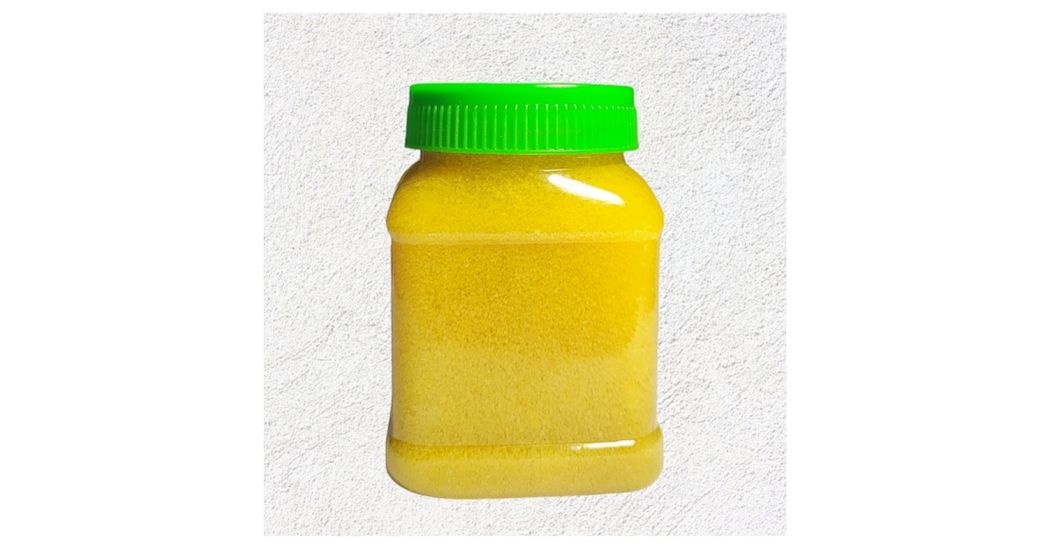
Despite the humid tropical climate of Kerala, the ghee mound never melts. The sanctum remains warm with oil lamps burning constantly, yet the mound retains its solid form. Occasionally, priests remove small portions from the outer layers and distribute them as sacred prasadam to devotees.
Even more astonishing is that the ghee never turns rancid and does not produce any unpleasant smell — something that would normally happen in such climatic conditions. For devotees, this is not merely a physical phenomenon but a sign of the divine presence of Shiva in this sacred kshetra.
Standing there in silence, gazing at that mysterious mound representing Kailash, I realized something profound.
Here, Shiva is not revealed through form.
He is experienced through presence.
And in that quiet sanctum of Vadakkunnathan, surrounded by centuries of devotion layered like the sacred ghee itself, I felt as though I had briefly touched the stillness of Kailash.
As we finally stepped away from the sanctum, our hearts were filled with gratitude. We silently thanked Parashurama, who is believed to have established this temple, for blessing us with such an extraordinary experience at the very energy centre of the temple. Even to this day I feel as though Parashurama had orchestrated the encounter — sending that kind Kannada-speaking temple staff from Yellapur to guide us back to the sanctum and help us experience the true essence of Vadakkunnathan Temple. He was even more kinder to give us two small bottles of the ghee as Prasadam to carry it back to our homes.
What had begun as curiosity had transformed into something far deeper, an encounter with the silent, timeless presence of Shiva. 🙏
 Rithwik Subramanya is a Content creator and public speaker known for his relatable short-form videos on life, spirituality and dharma. He is also the founder and proprietor of Subbu Publications.
PREVIOUS ARTICLE
NEXT ARTICLE

In the lush, green heart of Kerala lived an elephant who became a living legend - a tale of an elephant turned into a bakth. His name was Keshavan, bu...

The Chaitanya Charitamrita by Shri Krishna Das Kaviraj provides a vivid description of the operations management of Shri Gundicha Yatra during the tim...
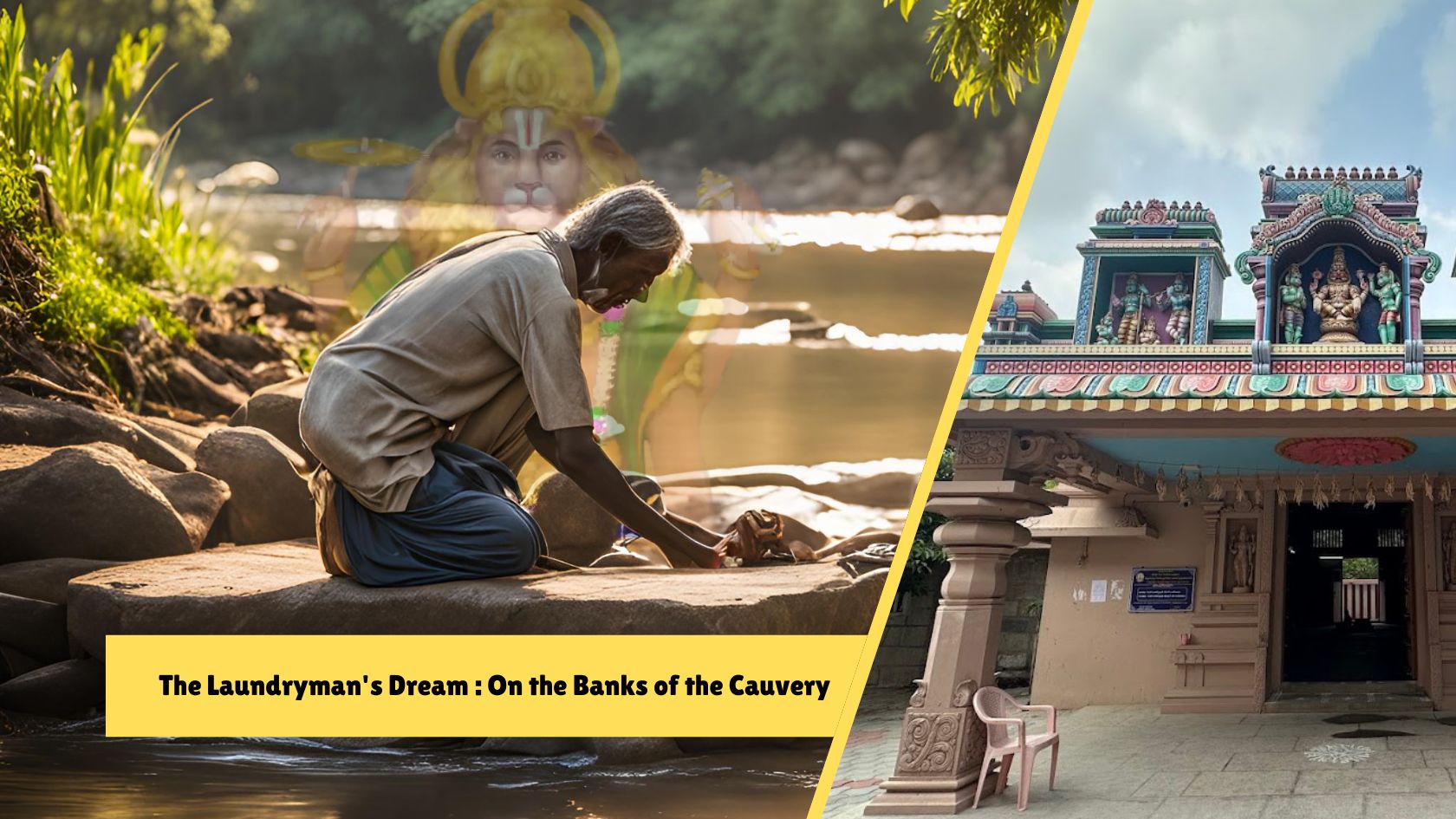
The sun beat down on my back as we stepped out of the car, the air thick with the humidity of rural Tamil Nadu. Chinthalavadi, a small village nestled...

Verandah Club is an initiative by few like-minds of Coimbatore who are interested to share information on various antiquities of Bharat.
Free download our iOS & Android app
© Copyright 2026, All Rights Reserved.