
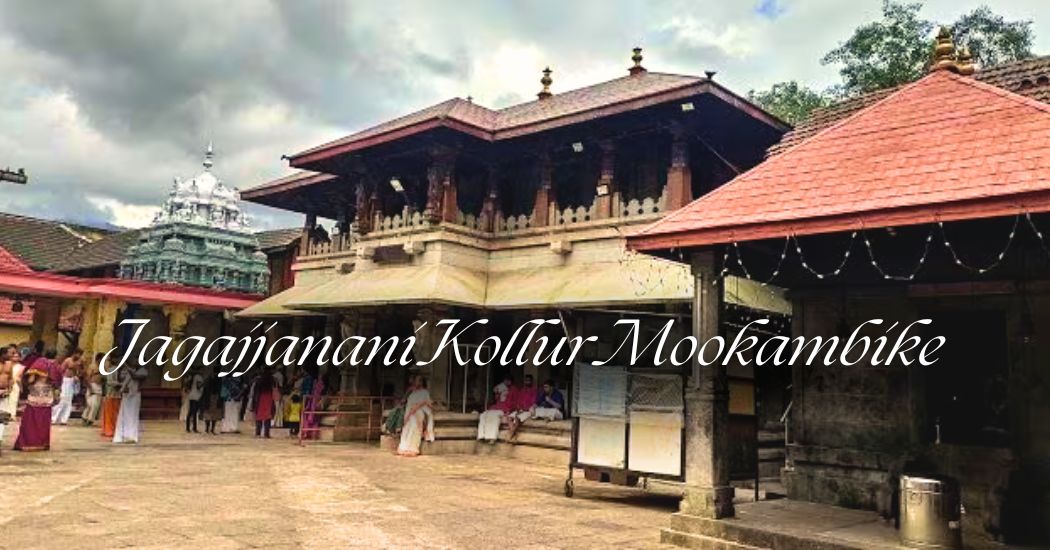
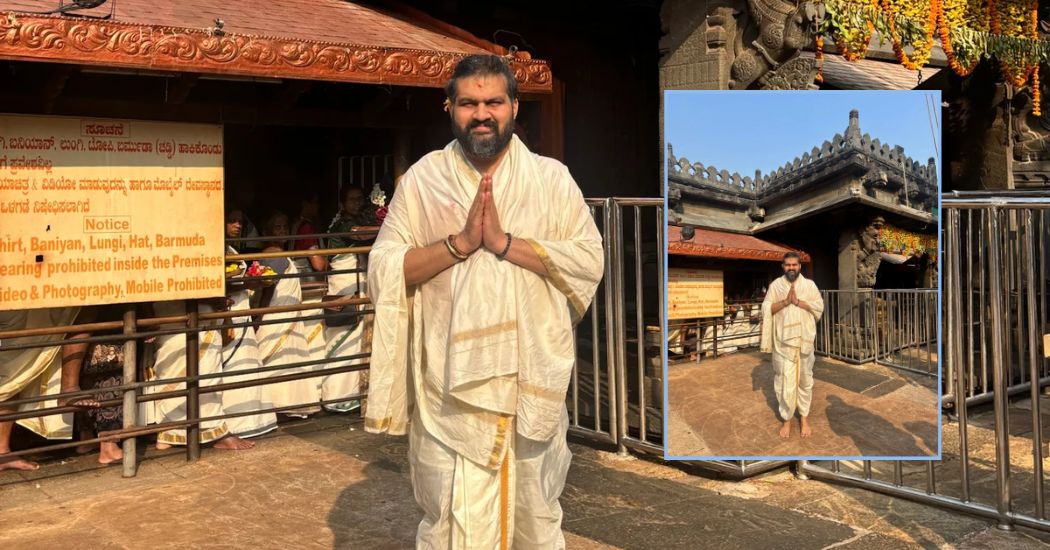
My visit to the sacred Kollur Mookambika Temple was not just a pilgrimage — it felt like returning to the very source of Shakti.
Kollur is revered as one of the Sapta Muktikshetras of the sacred Parashurama Kshetra, and the spiritual aura here is believed to have been established by none other than Adi Shankara.
The presiding deity is an Udbhava Linga, a self-manifested form. One of the most fascinating aspects of this Linga is the golden chain that vertically divides it into two halves. On the left side of the Linga is the subtle presence of MahaLakshmi, MahaSaraswati and Mahakali, while on the right side reside the Trimurtis — Brahma, Vishnu and Maheshwara. The left represents Shakti, the primordial energy, and the right represents Shiva, the supreme consciousness — together symbolizing the eternal balance that sustains the cosmos
She is worshipped here as Mookambika, the embodiment of Adi Parashakti, the source of all creation and power. The temple’s daily worship beautifully reflects her cosmic nature.
In the morning she is venerated as Mahasaraswati, the giver of wisdom; in the afternoon as Mahalakshmi, the bestower of prosperity; and in the evening as Mahakali, the destroyer of evil.
Legend 1
The legend behind this sacred place is equally powerful. It is said that the demon Mookasura (originally called Kaumasura) wanted to obtain invincibility by performing penance to Shiva, especially after witnessing the destruction of Mahishasura by Maa Durga.
To prevent him from completing his austerities, Saraswati in the form of Vagdevi removed his power of speech, rendering him mute. From that moment he came to be known as Mookasura — the silent demon. Enraged by this, he unleashed destruction across the three worlds.
To restore cosmic balance, the energies of the Trimurti and the Tridevis united, manifesting as Adi Parashakti.
According to the Skanda Purana, the Goddess mounted a lion, performed a Marana Homa, and ultimately destroyed Mookasura. From that moment she came to be revered as Mookambika.
Later, when Adi Shankaracharya arrived here, he had a divine vision of the Goddess at the exact spot where the Garbhagudi stands today. He consecrated the idol of Mookambika upon a Sri Chakra Yantra, establishing this temple as a powerful seat of Shakti. Even today, the rituals here are performed according to the Vijayagama system formulated by him.
Legend 2
Another beautiful legend speaks of Shankaracharya’s devotion. He wished to establish Saraswati in Kerala and performed intense penance requesting the Goddess to accompany him. She agreed, but with one condition — he must walk ahead and never look back while she followed him.
During their journey, the sound of her anklets suddenly stopped. Concerned, Shankara turned back to see if she was still there. At that very moment the Goddess chose to remain at that spot — which is today Kollur.
Moved by his devotion, she later agreed to manifest again in Kerala at Chottanikara Temple. Even today, tradition holds that the temple doors at Chottanikkara open only after the doors of Mookambika temple are opened.
The story of Mookasura also ends with compassion. As he was about to be slain, he realized the divinity of the Goddess and cried out “Amma,” seeking forgiveness and liberation. The compassionate Mother granted him moksha, and his purified essence is believed to have manifested as Brahmalingeshawara at Maranakatte, near to Kollur. Here too, Adi Shankaracharya is believed to have installed a Sri Chakra.
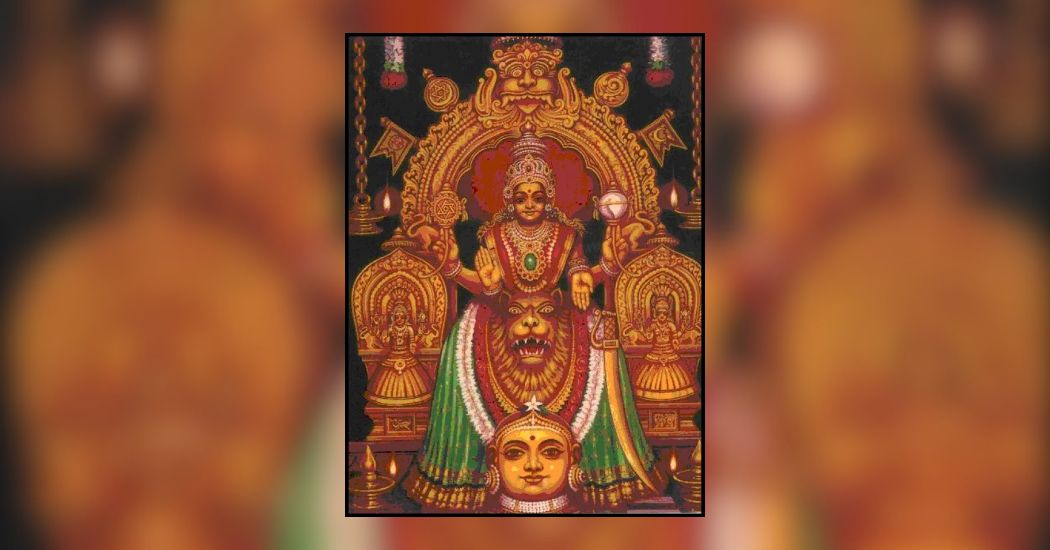
Standing before Maa Mookambika, one cannot help but feel the presence of something profoundly ancient and powerful — a force that is at once nurturing like a mother and fierce like the protector of the universe.
For me, it was not just darshan.
It felt like witnessing the union of Shiva and Shakti — the very heartbeat of creation.
 Rithwik Subramanya is a Content creator and public speaker known for his relatable short-form videos on life, spirituality and dharma. He is also the founder and proprietor of Subbu Publications.
PREVIOUS ARTICLE
NEXT ARTICLE

In the lush, green heart of Kerala lived an elephant who became a living legend - a tale of an elephant turned into a bakth. His name was Keshavan, bu...
The Chaitanya Charitamrita by Shri Krishna Das Kaviraj provides a vivid description of the operations management of Shri Gundicha Yatra during the tim...
The sun beat down on my back as we stepped out of the car, the air thick with the humidity of rural Tamil Nadu. Chinthalavadi, a small village nestled...

Verandah Club is an initiative by few like-minds of Coimbatore who are interested to share information on various antiquities of Bharat.
Free download our iOS & Android app
© Copyright 2026, All Rights Reserved.