
Classical dance has its stages. There are auditoriums built for it, sabhas that nurture it, and festivals where audiences gather specifically to appreciate it. But Indian classical dance has also belonged to another space for centuries—the temple.
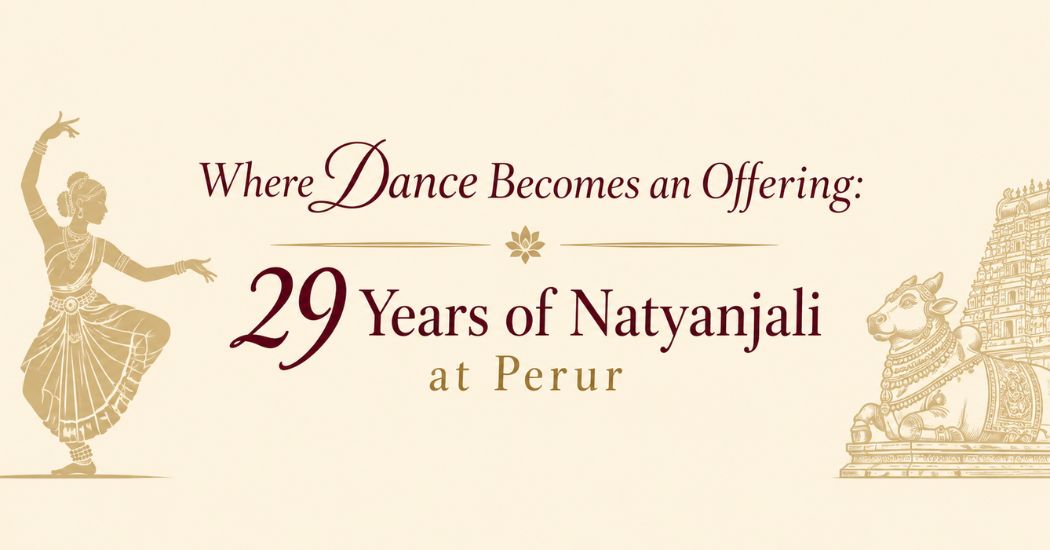
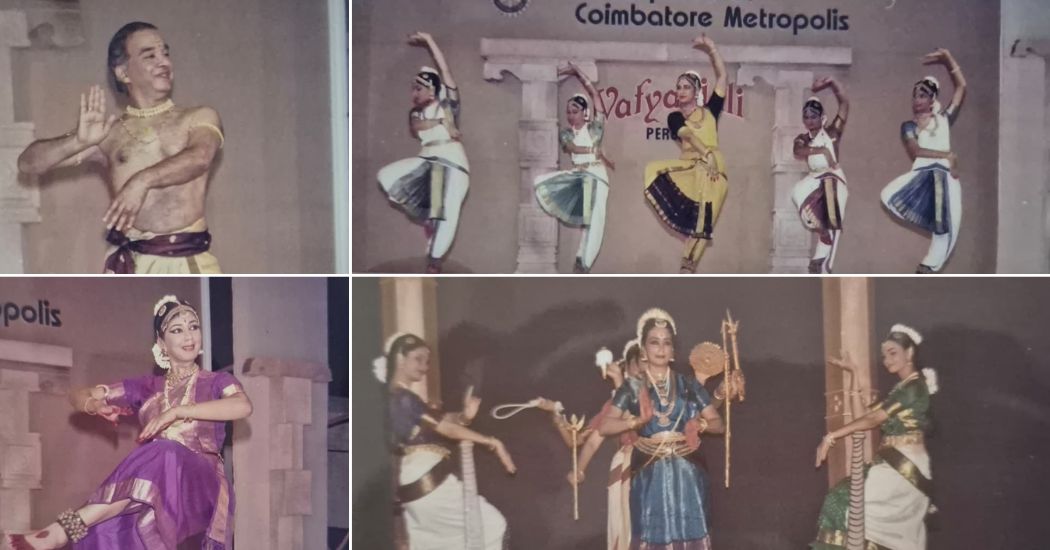
At the ancient Patteeswarar Temple in Perur, that relationship between the temple and dance has been kept alive through Natyanjali for nearly three decades. Every year, dancers from different parts of India arrive in Coimbatore carrying different styles, traditions and schools of thought. Yet, for three evenings, they come together with a common purpose: to offer their art before Nataraja.
This September, the festival returns to the Perur temple for its 29th edition. Behind those 29 editions lies a story that began more than three decades ago, from a journey to Chidambaram and a rather personal conversation between a devotee and his God.
Heritage enthusiast Shri S. Gurumurthy has been associated with Natyanjali from its inception and continues to serve as its Project Chairman. In a conversation with us, he took us through the journey of a festival that has quietly become part of Coimbatore's cultural calendar.
A Question from Nataraja
Long before Natyanjali began at Perur, Shri Gurumurthy had developed the practice of undertaking the Pancha Bhoota Sthala Yatra during Mahashivaratri. He continued the pilgrimage for about 26 years, visiting the temples associated with the five elements.
It was during one such journey, sometime around 1989 or 1990, that he reached Chidambaram while Natyanjali was underway.
Padma Subrahmanyam was performing.
Shri Gurumurthy, by his own admission, is neither a dancer nor someone trained in music. He describes himself simply as a devotee of Shiva. Yet something about the performance held him there. His friends were getting impatient. They were already late and had a long journey ahead. Shri Gurumurthy refused to leave.
“No, no. I want to watch this,” he remembers telling them.
Eventually, he entered the Nataraja Sannidhi for darshan. It was there that something rather unusual happened.
As Shri Gurumurthy sat in prayer, he felt as though Nataraja himself was questioning him.
“You have come all the way here and are watching Padma Subrahmanyam dance. I am there in your own town too. What dance have you shown me there?”
For a moment, Shri Gurumurthy himself did not know what to make of it. He dismissed it as some strange thought that had entered his mind and went on with his journey.
But some thoughts have a curious way of returning when their time comes.
A little later, when Rotarian Krishnan was serving as President of the Rotary Club of Coimbatore Metropolis, the club was looking for a distinctive project—something different from what others were already doing.
Shri Gurumurthy remembered that thought.
“Why not we do this Natyanjali project in Perur temple?” he suggested.
There were several reasons why Perur seemed the natural choice. It was an ancient temple, yet its significance was not widely known beyond Coimbatore. The programme could introduce classical art to a wider audience. It could bring attention to the temple and its heritage. And above everything else, dance there would become an act of devotion—an offering to God.
The club agreed.
The next challenge was finding the dancers.
Shri Gurumurthy recalls travelling to Madras without having an established network in the dance world. They approached Sudharani Raghupathy, who helped them identify artistes and offered her support to the initiative. Narasimhachari and other dancers came on board, while local dance schools were also included.
The first Natyanjali took shape as a four-day festival.
A thought that Shri Gurumurthy had once dismissed at Chidambaram had found its answer in Perur.
Taking Classical Art Beyond the Elite
There was a larger purpose behind Natyanjali right from its beginning.
“Classical art forms are not only meant for the elite people. It is for everybody to enjoy,” says Shri Gurumurthy.
India's classical dance traditions offer extraordinary diversity. Bharatanatyam, Kuchipudi, Odissi and Kathak, among several others, developed in different regions with their own vocabularies, aesthetics and traditions. Yet access to these art forms, particularly a few decades ago, was often limited to those who actively sought them out.
Natyanjali sought to change that in its own small way.
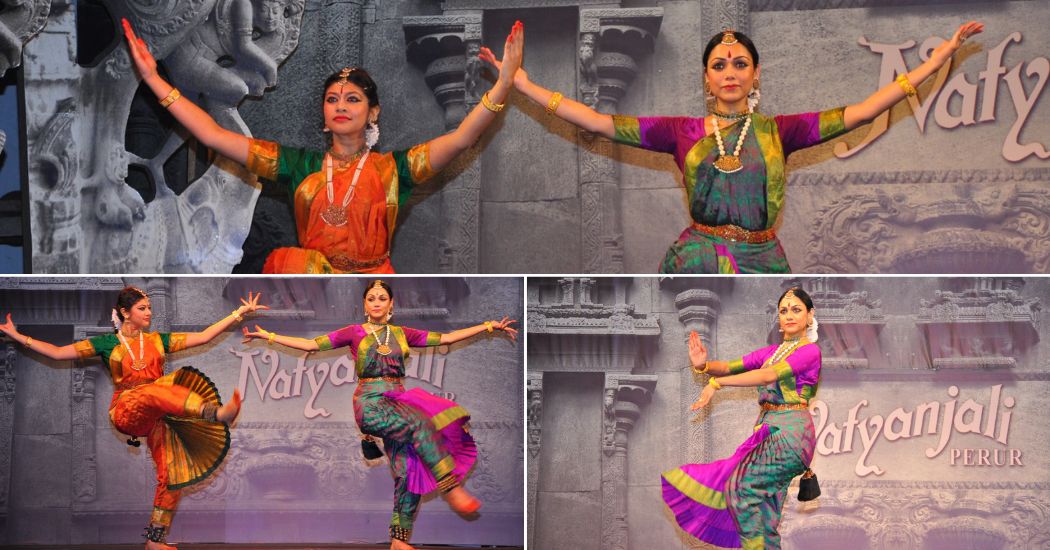
Holding the festival inside a temple meant that it did not need to be restricted to a conventional cultural audience. People could walk in, sit down and watch. Someone visiting the temple for darshan could encounter Odissi. A family unfamiliar with classical dance could watch an accomplished Bharatanatyam artiste. A child could encounter traditions from another part of India without leaving Coimbatore.
For Shri Gurumurthy, this also represented a return to an older understanding of Indian temples.
Temples, he points out, were historically much more than places of worship. Their prakarams and mandapams became spaces where dance, music, instruments, sacred literature, poetry, painting and other forms of art and learning flourished.
“It was a university by itself. A cultural centre,” he says.
Natyanjali therefore became more than a dance festival conducted within the premises of a temple. It was an attempt to reconnect two traditions that had historically grown alongside each other.
When the Dancer Faces Nataraja
There is one aspect of Natyanjali that Shri Gurumurthy repeatedly returns to during our conversation—the experience of the dancers themselves.
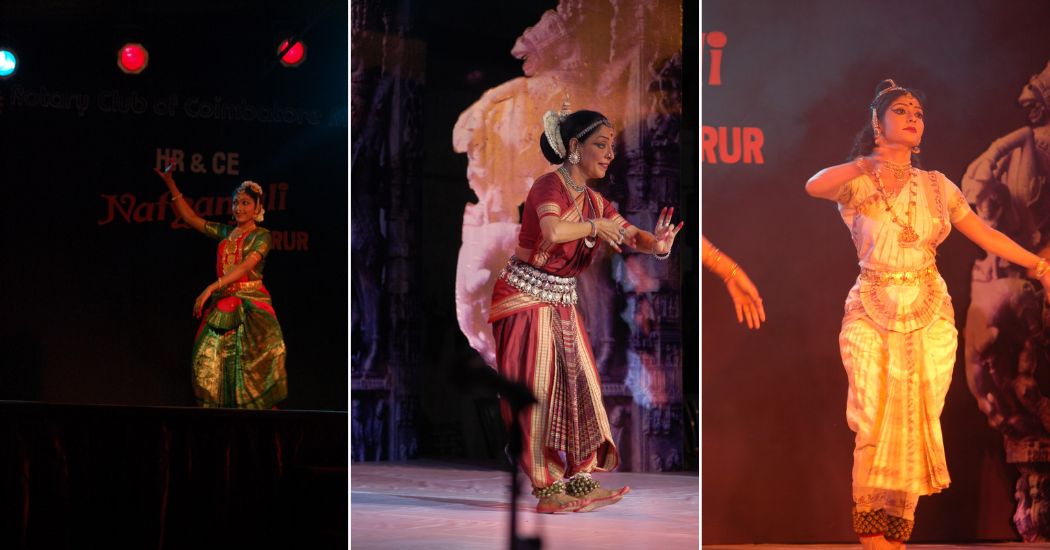
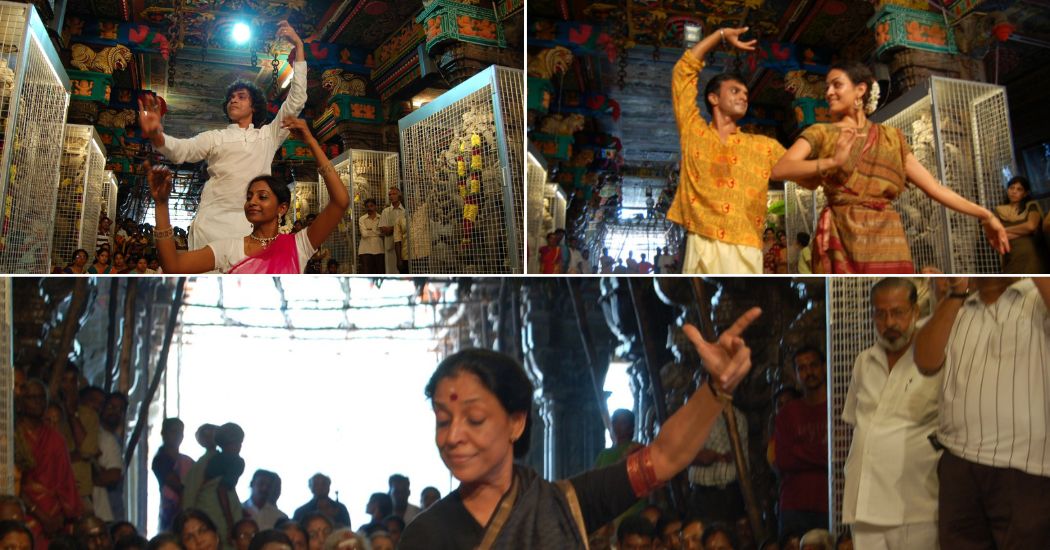
In its early years, the festival included Veda Parayanam and nritya seva in the morning, while the larger performances were held in the evenings. The visiting dancers would make their offering before Nataraja inside the temple before performing for the gathered audience.
For artistes accustomed to stages across India and the world, Shri Gurumurthy says that particular moment could be surprisingly overwhelming.
“Every dancer who comes and dances there in front of Nataraja is shaken,” he recalls.
He has watched dancers visibly tremble. He has seen tears in their eyes.
There is, after all, something unique about a dancer standing before the Lord of Dance. Years of training, rehearsals, applause and accolades suddenly seem secondary to a deeply personal offering between the artiste and the deity.
Perur itself is traditionally known as Mele Chidambaram—the Chidambaram of the West. Shri Gurumurthy says awareness of this association among visiting artistes has increased over the years, partly as generations of dancers have encountered the temple through Natyanjali.
And with them came stories that explain why some artistes return to Perur with an attachment extending beyond another performance on their calendar.
When a Charter Flight Landed for Nataraja
Around a decade ago, Shri Gurumurthy wanted to bring celebrated Kuchipudi exponents Raja and Radha Reddy from Delhi to Natyanjali.
The professional fee quoted was well beyond what the festival could afford.
“I said, ‘Sorry, I can't. We don't have the budget,’” Shri Gurumurthy recalls.
The conversation appeared to end there.
Then came another call. One of their disciples was willing to travel to Perur and perform, and the organisers could simply pay whatever was within their means.
Shri Gurumurthy asked who the disciple was.
Shallu Jindal.
At the time, Shri Gurumurthy admits that he did not know much about her—or the Jindal family for that matter. Arrangements proceeded largely through her secretary. When he asked which flight she would be taking so that the organisers could coordinate her arrival, he was simply told not to worry about it.
Only later did he realise why.
Shallu Jindal arrived from Delhi in a chartered aircraft with her musicians and accompanying team.
Despite the scale of her arrival, Shri Gurumurthy remembers her as remarkably unassuming. She did not insist upon elaborate accommodation and, more importantly, expressed a genuine desire to understand the temple before she performed.
“Gurumurthy, I wanted to know about the temple,” she told him.
He took her around Perur and explained its history and significance.
Then she danced before Nataraja.
After the experience, Shri Gurumurthy recalls her telling him, “I have seen so many things in life, but this one experience which I had here, I will never forget in my life. This I cannot get anywhere. I cannot buy it. It is His call that I have come here.”
She returned to Delhi that very night.
The chartered aircraft makes for an interesting story. But almost three decades of Natyanjali suggest that the more important journey is often the much shorter one—from the stage to the Nataraja Sannidhi.
Shri Gurumurthy says he continues to hear the same sentiment from artistes invited to Perur.
“It is His call. I am coming.”
An Invitation, Not an Open Stage
Natyanjali at Perur developed its own model over the years.
Unlike several Natyanjali festivals associated with Mahashivaratri, where dancers may travel between different temples and offer shorter performances at each venue, the artistes performing at Perur are specifically invited by the organisers.
They are also paid.
The festival cannot necessarily offer the professional fee that an established artiste would ordinarily command. However, the organisers provide an honorarium and contribute towards travel and other expenses. Shri Gurumurthy is particular that artistes should not simply be expected to perform free of cost.
Sometimes the commitment of the dancers themselves far exceeds what the organisers can compensate.
This year, Padma Shri awardee Deepika Reddy returns to Perur with a large Kuchipudi team from Hyderabad. Shri Gurumurthy points out that the amount offered by Natyanjali does not even cover the full flight expenses of the group.
Yet they are coming.
That attachment, built over successive editions, has gradually given Perur Natyanjali a place of its own within the classical dance fraternity.
A Stage that Saw Generations of Masters
Ask Shri Gurumurthy who has performed at Perur over these 29 editions, and the names begin to tumble out.
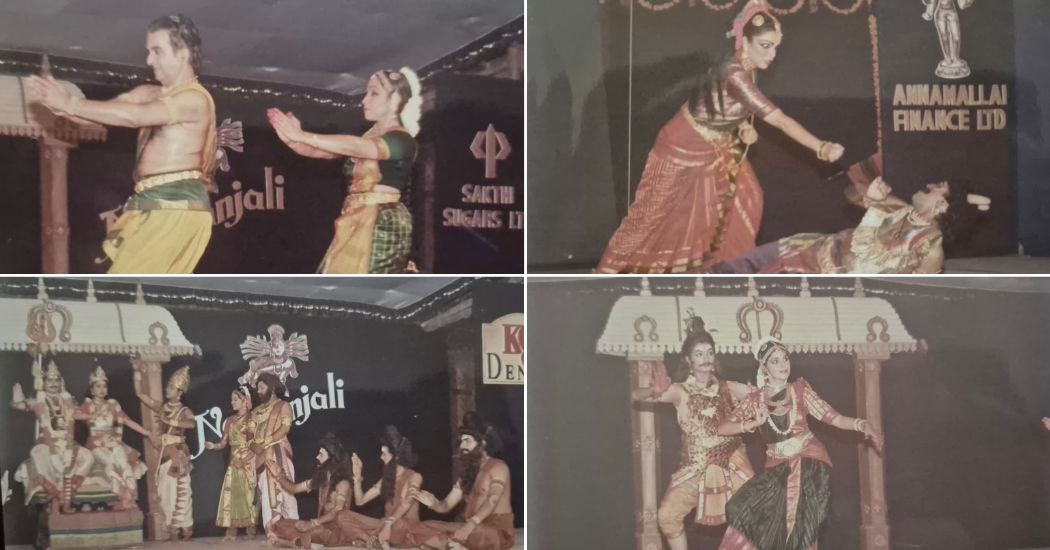
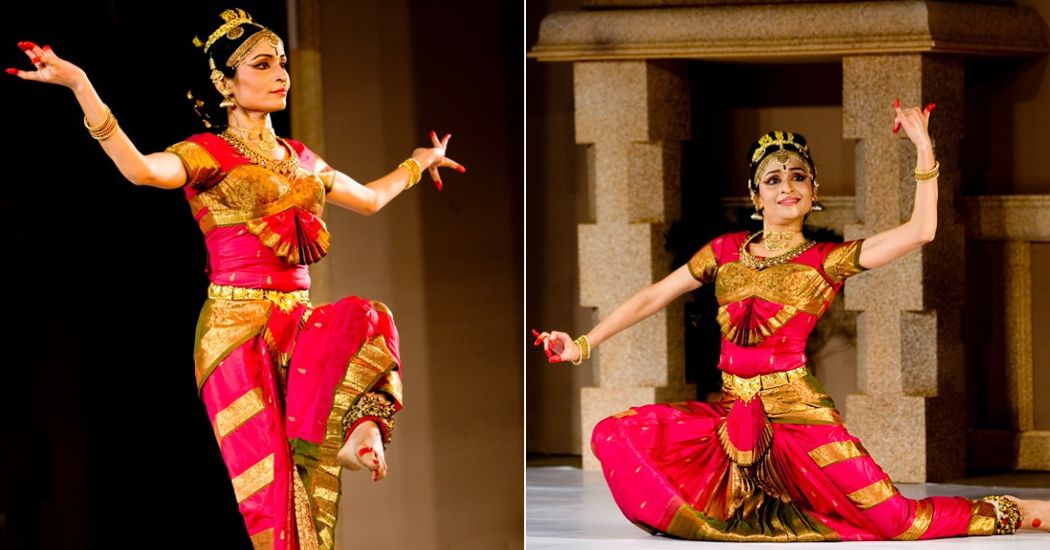
Padma Subrahmanyam. Sudharani Raghupathy. Chitra Visweswaran. Vempati Chinna Satyam. The Dhananjayans. Alarmel Valli. Malavika Sarukkai. Sonal Mansingh.
“Name them!” he says while recollecting the artistes. “There is not a single artist who has not come here.”
Across an edition, the number of dancers can easily cross thirty thousand. Over nearly three decades, that means generations of performers have passed through Perur.
But Natyanjali is not intended to become a museum of established names.
As the stalwarts of an earlier generation have grown older, the organisers have increasingly turned their attention towards promising younger artistes while continuing to invite senior performers.
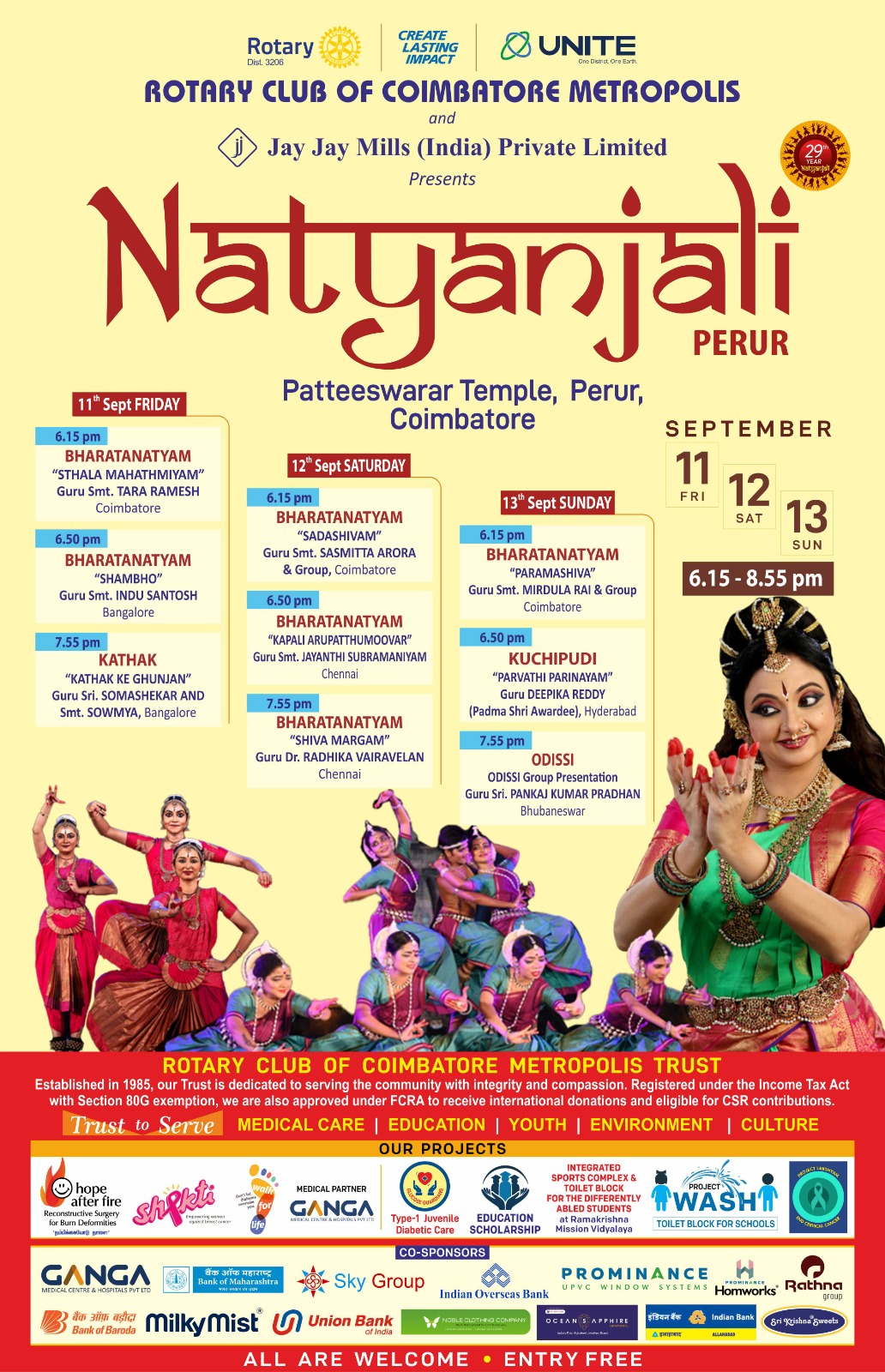
The 29th edition, scheduled from September 11 to 13, 2026, reflects this balance. Bharatanatyam, Kathak, Kuchipudi and Odissi will share the festival across three evenings. Alongside Deepika Reddy and her group from Hyderabad, Dr. Panjak kumar Pradhan and his ensemble travel from Bhubaneswar for an Odissi presentation. Artistes and groups from Chennai, Bengaluru and Coimbatore complete a programme that brings different classical traditions of India together at Perur.
The performances begin at 6 PM each evening and continue until around 9 PM.
From Six Schools to a City of Dancers
The Coimbatore into which Natyanjali was born was a very different city.
“When we started Natyanjali, Coimbatore had only six dance schools,” Shri Gurumurthy recalls.
Today, he estimates that there are around 300.
Of course, no single festival can claim responsibility for such a transformation. Coimbatore itself has expanded enormously. Exposure to classical arts has increased, families have become more willing to introduce their children to dance, and opportunities for training have multiplied.
Yet Natyanjali has been part of this changing cultural environment.
For nearly three decades, a Coimbatorean has not necessarily had to travel to Chennai or another major cultural centre to encounter some of India's finest dancers. They came to Perur.
Local dance schools, too, found a place alongside nationally recognised artistes. Young students could sit in the audience and watch performers representing traditions from across the country.
A cultural festival's impact is difficult to measure by attendance alone. Sometimes its larger contribution lies in creating an audience capable of appreciating what it presents.
Natyanjali has had 29 editions to create such an audience.
The Partnership Behind the Offering
An event that survives for nearly three decades cannot survive on devotion alone.
Each edition requires travel, accommodation, artist honorariums, stage arrangements and a considerable amount of organisation.
For close to two decades, he credits K. R. Murli, Co-Chairman of the project, with being central to keeping the festival financially sustainable.
“Murli takes care of the funds. I take care of the arrangements,” Shri Gurumurthy says.
Through his network with banks, institutions and other supporters, Murli has helped secure the financial backing required for the festival, while Shri Gurumurthy largely handles the artistes and organisation.
“Without K. R. Murli, this would be a big problem,” Shri Gurumurthy readily acknowledges.
The Rotary Club of Coimbatore Metropolis has provided another crucial ingredient—continuity.
Presidents change. Committees change. Yet Natyanjali remains.
There have, naturally, been interruptions. A few editions could not be conducted during its long history, including the unavoidable break during COVID-19. More recently, renovation and Balalayam at the Perur temple meant that the programme could not be held at its traditional venue. For two editions, Natyanjali temporarily moved to the Kikani School auditorium.
This year, it returns to Perur.
Every Year, the Same Decision
There is a rather amusing ritual that takes place after Natyanjali every year.
The performances are over. The artistes have left. The organisers are exhausted.
Shri Gurumurthy and the others tell themselves that perhaps this should be the last one. Twenty-nine years is a long time. Organising it again means another year of phone calls, invitations, travel arrangements, finances and running around.
Then the next Rotary president takes charge.
Soon comes the inevitable question.
“Sir, we have to conduct Natyanjali, don't we?”
And just like that, another edition begins.
That perhaps explains continuity better than any formal institutional statement could.
Traditions survive when people stop asking whether something belongs to an individual and begin assuming that it simply has to continue.
The Child Who Got Lost at Perur
Shri Gurumurthy's relationship with Perur began long before he ever imagined organising Natyanjali.
He was around three years old when his grandparents took him to the temple for Arudra Darshanam. Somewhere amidst the crowd, the little boy became separated from his grandfather.
He found himself in the Kanaka Sabha.
Instead of panicking, he became fascinated by the sculptures around him. One image in particular caught his attention—Gajasamhara Murthy, Shiva emerging from the elephant hide.
A three-year-old obviously knew nothing of its iconography.
He simply stared at it and wondered why God appeared to be coming out of an egg.
A policeman eventually noticed the lost child and asked who he was. Shri Gurumurthy explained that he had come behind his grandfather but could no longer find him. He was taken towards the office, where he soon spotted his grandfather and was reunited with him.
But the image he had seen inside remained.
“So, from that impressionable age, that temple has been very close to me,” he says.
The fascination later grew into a lifelong engagement with temples, sculpture, bronze icons and India's material heritage.
And many years later, in another Nataraja temple hundreds of kilometres away, came that question:
You have come here to watch Padma Subrahmanyam dance. I am there in your town too. What dance have you shown me?
Today, 29 editions provide the answer.
Shri Gurumurthy himself is uncomfortable when too much credit is directed towards him. During our conversation, when someone suggested a rather grand title for his contribution to Perur, he immediately rejected it.
“No, no, don't say that,” he protested.
Then came the explanation that perhaps captures both the man and the festival better.
“All because of my Nataraja, I am here.”
And perhaps Natyanjali is best understood in precisely that spirit.
The names on the programme change. Generations of dancers come and go. Coimbatore grows around the ancient temple. New students learn the art, established artistes pass it on, and another September arrives.
The stage is prepared. The salangai are tied. The audience gathers.
But before the applause and accolades, there remains an older and much simpler relationship.
The dancer.
The dance.
And Nataraja.
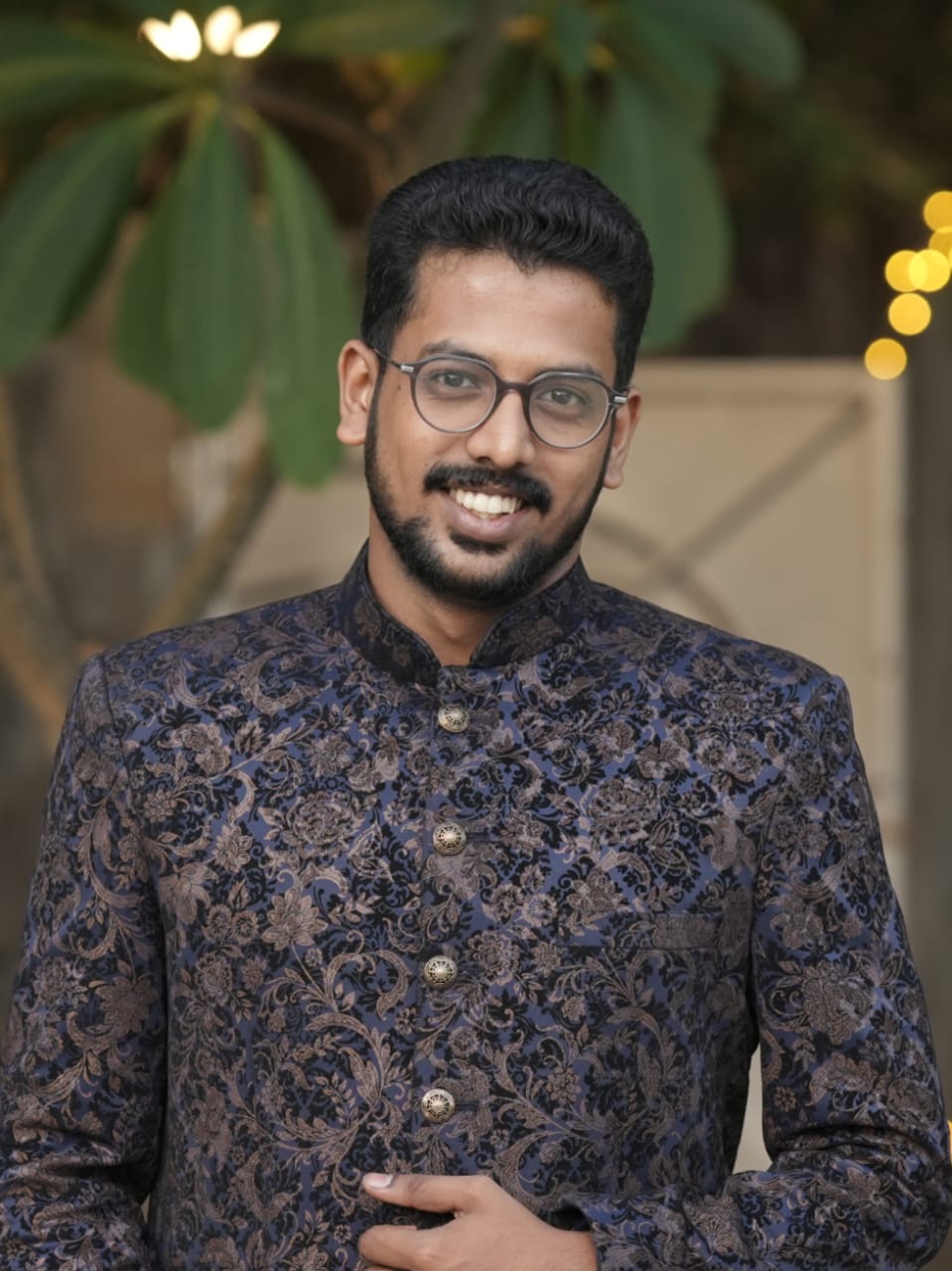 Vigneshvaran, Senior Correspondent of TheVerandahClub.com is a second generational acupuncture practitioner, a story teller, as well as an avid independent writer driven by his passion. His literary talents extend to crafting beautiful poems and captivating short stories including the Sehwag Tales series. In addition to these creative pursuits, he has also authored a book titled "Halahala," which can be found on Wattpad.

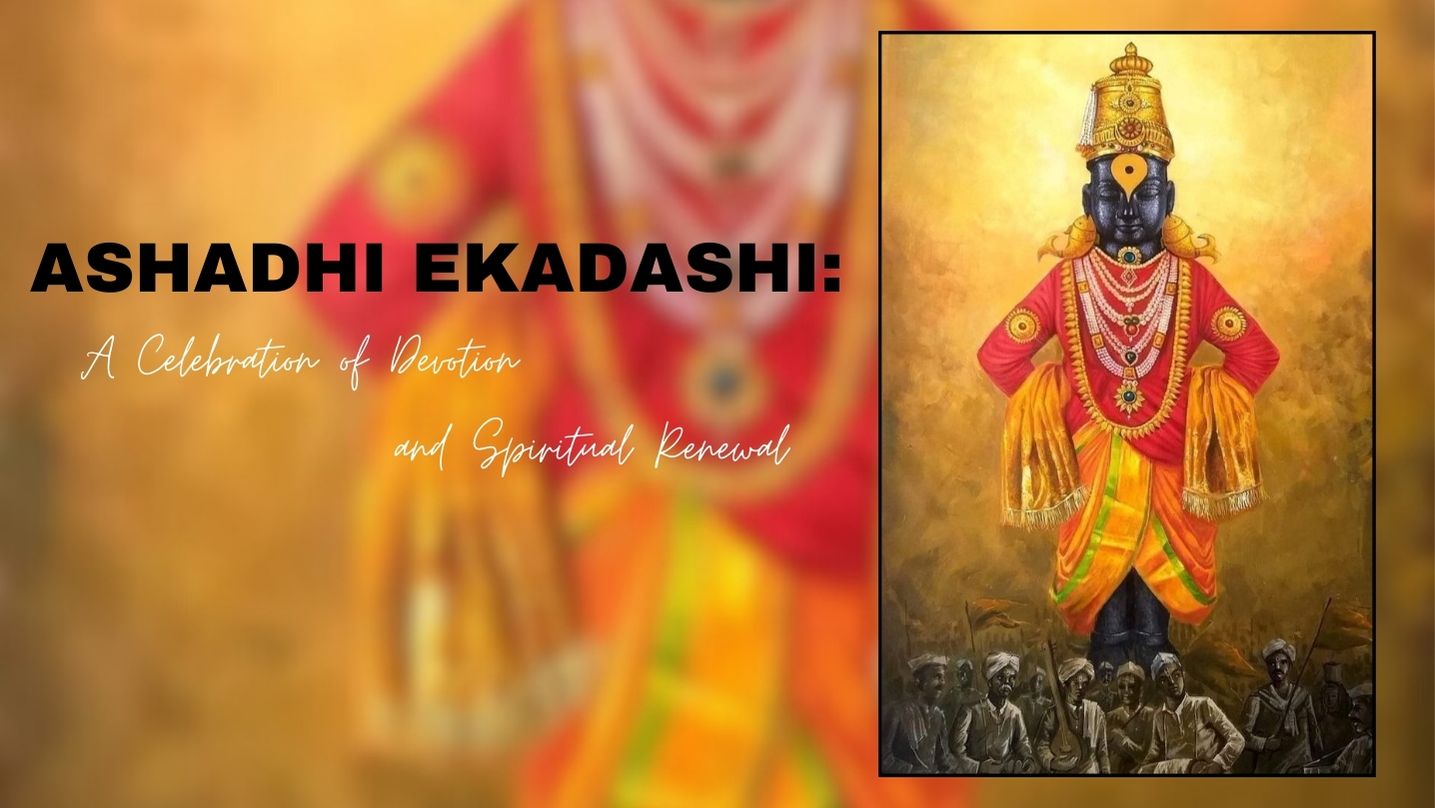
Ashadhi Ekadashi, also known as Shayani Ekadashi, falls on the 11th lunar day (Ekadashi) of the bright fortnight (Shukla Paksha) of the Hindu month of...
Every year, as the monsoon rains dance on the fields of India, an ancient story unfolds in the hearts of millions. It is the story of Krishna, the bel...
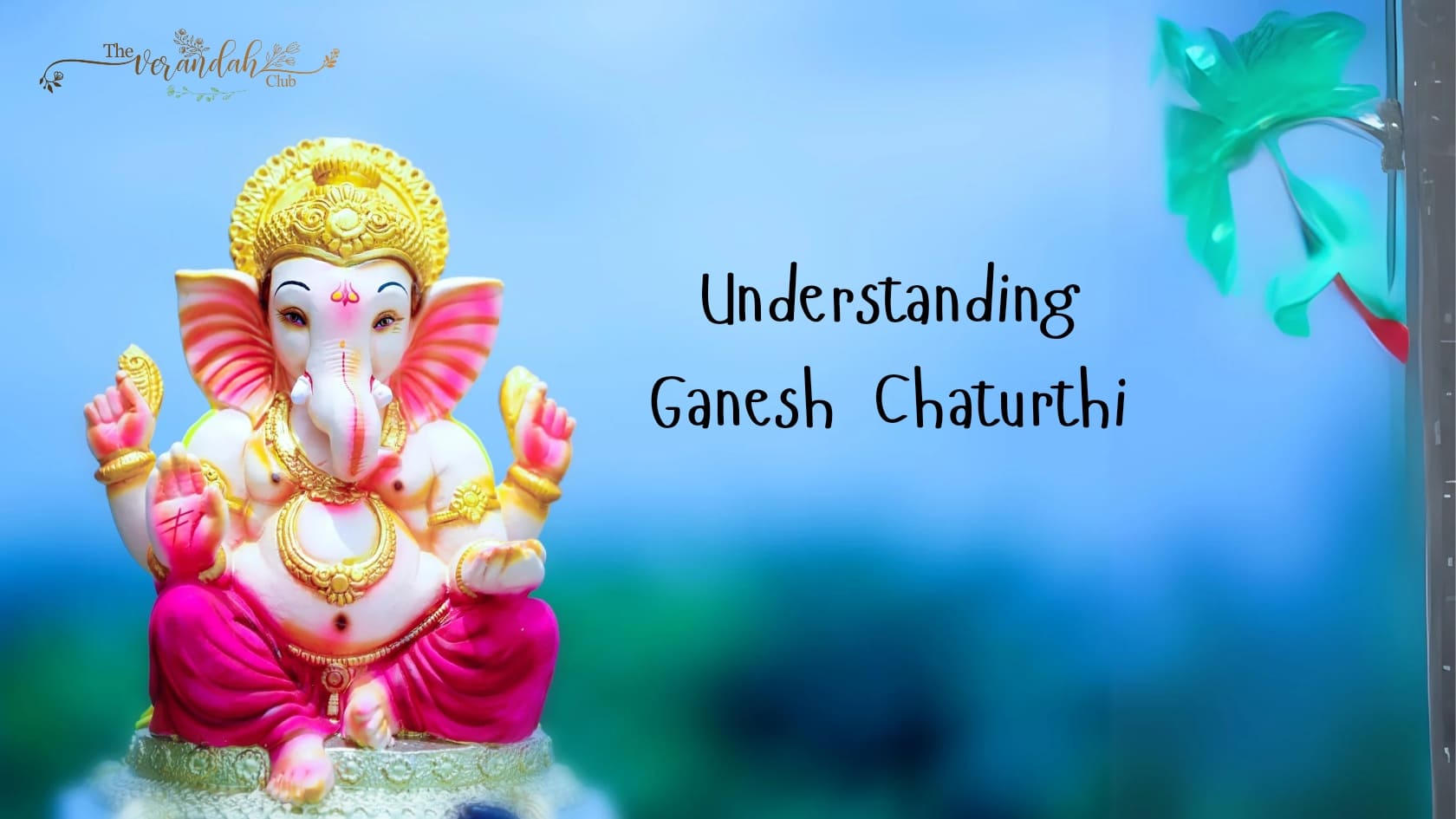
Ganesh Chaturthi, also known as Vinayaka Chaturthi, is a significant Hindu festival that honors Lord Ganesha, the deity revered as the remover of obst...

Verandah Club is an initiative by few like-minds of Coimbatore who are interested to share information on various antiquities of Bharat.
Free download our iOS & Android app
© Copyright 2026, All Rights Reserved.