
Introduction
We are seeing a pan-European protest spread like wildfire across the continent with countries like Spain, Portugal, France, Italy, Germany, Greece and several other countries watching their streets being overrun by violent riots and their institutions crumble under brutal opportunism. Rather than witnessing the political unity among European countries as envisioned during the formation of the European Union, we are witnessing growing cross-border solidarity among the different protest groups, but also the hijacking of these groups by the radical fringe.
In the last few years alone, we have seen three neighbours of India: Sri Lanka, Bangladesh and Nepal rocked and torn apart by nation-wide protests that resulted in widespread unrest, mob violence and carnage. The political fallout was felt across the globe with the Sri Lankan Aragalaya causing President Gotabaya Rajapaksa to flee the country, Nepal’s protests being dubbed ‘the Gen-Z protests’ leading to the resignation of ex-PM K.P. Sharma Oli and the brutal riots in Bangladesh resulting in the July Uprising that led to the exile of ex-PM Sheikh Hasina with India giving her sanctuary.
On the other hand, we have also seen protests play out in various countries like Indonesia, Philippines, Myanmar, Thailand seeking addressal of economic grievances, weeding out of systemic corruption and demanding democratic accountability among others. These protests, despite their widespread discontent and violence didn’t lead to regime changes, but caused major policy reversals related to legislative perks, investigation into governmental corruption and political dismissals.
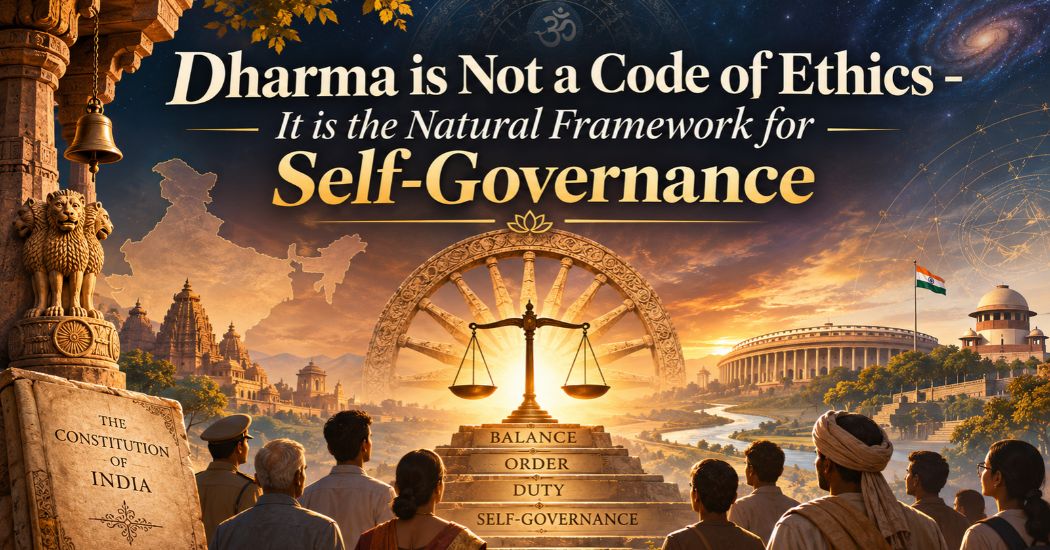
The stirring of these protests are now being felt in India, with protests being led by the Cockroach Janta party and the Opposition-led Congress Party among others. But here is the thing: these protests haven’t devolved into full-blown riots because of the timely intervention and proactive measures of the Central Government and its law enforcement apparatus. While the Right to Protest is a fundamental right under Article 19(1)(a) and 19(1)(b), sacrosanct under the Indian Constitution, when a righteous protest is hijacked by anarchic elements, public order, law and order take precedence. In such cases, there is nothing undemocratic when the Government preemptively moves to put down anything that has the potential to devolve into riots; it is Dharma.
Dharma: The Framework that regulates the Self and Social Order
Justice is the culmination of the ideals of impartiality, fairness and reasonability that the Law and its legal apparatus seeks to achieve. Dharma is neither the compound ideal of Justice, nor is it the human-made legal apparatus that works along the lines of morality and justice. And at the same time, it includes all of them. Dharma is the structure of which a cornerstone is Justice. Dharma is the means, Dharma is the compound ideal upon which the means are adopted and Dharma is the end goal. Confused? Then you are finally thinking about the evolving yet structured nature of Dharma.
Take for example the duties and powers of Bhagwan Vishnu to preserve the balance and harmony of the Cosmos. Bhagwan Vishnu does not actively intervene in the functioning of the world, despite possessing limitless power and authority to do so. He intervenes only when he is needed, through the means of his avataras, who are the embodiment of cosmic balance. It is in the nature of the world to face episodic and periodic upheavals, according to the Kalchakra (Cycle of Time). Hence, the avataras arrive and function within the framework afforded to them by every respective Yuga (time epoch), thereby correcting the imbalances in Bharatvarsha. Once the imbalance is corrected, a new balanced order is established in place of the broken and corrupt old-world order and His unwavering guidance finds place in the hearts and minds of the people .
Therefore, Bhagwan Vishnu does not follow a uniform blueprint to address these upheavals. His avataras tackle the imbalances using ways available to them in the respective Yuga, sometimes adopting the very methods used by the agents of imbalance to counter them. As a result of using the unethical methods to bring balance, his avatara too faces the consequences of that adoption (Karma), thereby absolutely binding him to the cosmic and man-made rules of that time. If He were to needlessly intervene in the World’s functioning, every single time, the World would not function seamlessly; it would simply be operated by him. This would render the Laws of Desire, Effort and Consequence redundant, nullifying the purposes of Dharma, Kama, Artha and Moksha. The World is an eternal self-sustaining entity following a self-regulating progression with an intervening balancing factor inserted only when the progression is threatened or imbalanced. Bhagwan Vishnu knows that Dharma is all about intervening in a certain place, at the opportune timing and allying with attuned people to establish a Dharmic order conducive to the balanced yuga, until its eventual end and the dawn of a new age. This is holistic Dharma in a nutshell. It can be fluid and adaptable like water while possessing the strength and structure of the earth, detachment and freedom of air, the intensity and transformation of fire and it can even be the absence of these attributes like the ether.
Similarly, the Government of India and the State Governments are accorded with the powers and duties by the Indian Constitution and the People of India to intervene only when needed. Otherwise, following the doctrine of minimal intervention, the Government is a cog in the national machinery that ensures a balance between the rights and duties of a citizen, the obligations and powers of the State, the relationship between the State and the citizen and when this relationship is threatened or out of balance, the State or citizen steps up to balance the equation. That is Dharma, enforced at the hands of the right people, at the appropriate time, for the benefit of the country.
Dharma and Democratic Ideals
Our nation India i.e. Bharat seeks to achieve the vision of Viksit Bharat 2047, a hundred years after our Independence on August 15, 1947. In this ground-breaking vision, the key goals of the nation to be achieved are by ensuring a balance among our ancient ethical & cultural codes that serve as the foundation upon which the multi-pronged pathways of minimal government intervention, indigenous digital infrastructure, citizen-centric public systems and transparent business promotion are paved. The outcome from treading these coordinated pathways built upon a solid foundation is the creation of an AtmaNirbhar Bharat that is a just, equitable and fair society, where India’s knowledge, financial and technological economy is self-reliant.
To achieve this, every citizen needs to be aware of our ancient Indian philosophies which serve as our foundation and centre our strength, providing us with the discernment to distinguish between right and wrong. We should be willing to keep abreast of the latest, true and false developments in the World, but remain true to our centre rather than get swept away by these developments. With this discerning acumen and grounded thirst to learn, our commitment to democratic ideals are strengthened. This is our Sva Dharma.
One noteworthy fact is that democratic ideals are largely rooted in Dharmic principles. For instance, one of the core tenets of Dharma lies in the fact that spiritually we are all the same (Atman is the same and a part of Para Brahman). Similarly, this can be seen in the core democratic ideal of equality of citizens before the Law. Then there is the tenet of Rajadharma where a ruler is dutybound to exercise their royal power with responsibility towards their subjects. The ruler was obligated to ensure welfare, protection and prosperity, much like the modern government is dutybound to exercise its political power accountably. Similarly, India i.e. Bharat is a land of several schools of diverse thought flourishing in a pluralistic traditional framework. This serves as the freedom of speech and thought that we enjoy under Article 19 of the Indian Constitution. And then there is the fact that Dharmic prayers often end with “Sarve bhavantu sukhinah, sarve santu niramayah” which is nothing but the root of social, political and economic justice serving the common good.
Conclusion
Whether it is the duty to govern accountably and responsibly or the right to protest for good governance and democratic accountability, there needs to be a fundamental balance between the entitlements and obligations that are afforded and accorded to the State and the Citizen. Harmony is achieved only when a nation stops dealing in absolutes and reasonably harmonises the exercise of political power with the availment of rights. It is for this reason that rights are paired with duties for citizens and State authority is tempered by Constitutional Directive Principles. When the State grows tyrannical, the Citizen must rise to check the State’s abusive exercise of authority. But when the Citizens protesting for their rights find the direction of their protest hijacked by lawless elements or agents of discord, whether domestic or foreign, the citizens must step in to work with the Government to counter such elements to preserve the balance, harmony, integrity and strength of the relationship between the State and the citizenry. That is our Dharma towards our nation, India i.e. Bharat.
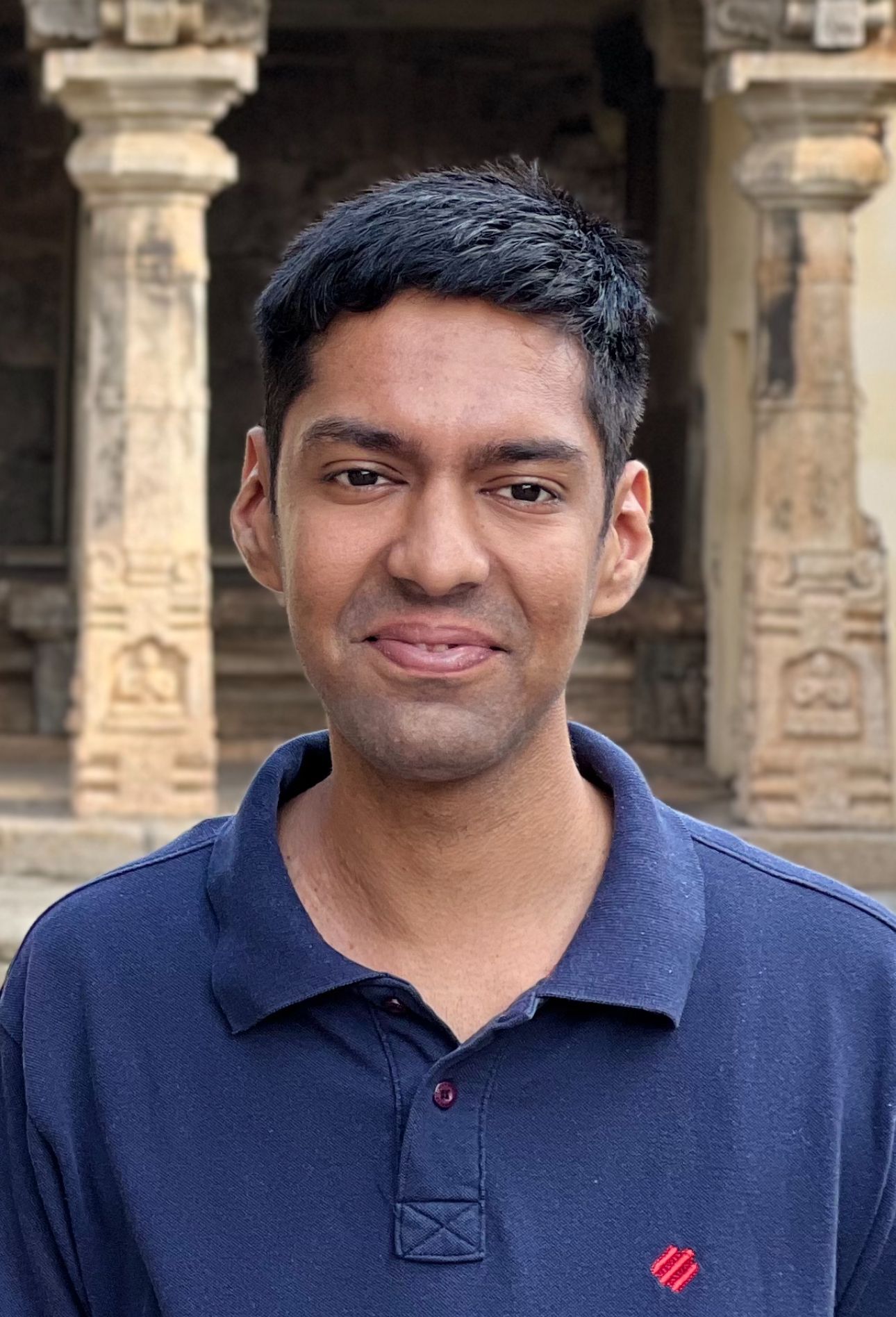 Vignesh Ganesh is a lawyer and writer. He is interested in ancient history and Itihasa and this interest culminated in his first book, "The Pallavas of Kanchipuram: Volume 1", which he co-authored with Mr. K. Ram, a fellow enthusiast of Indian history and culture.
PREVIOUS ARTICLE

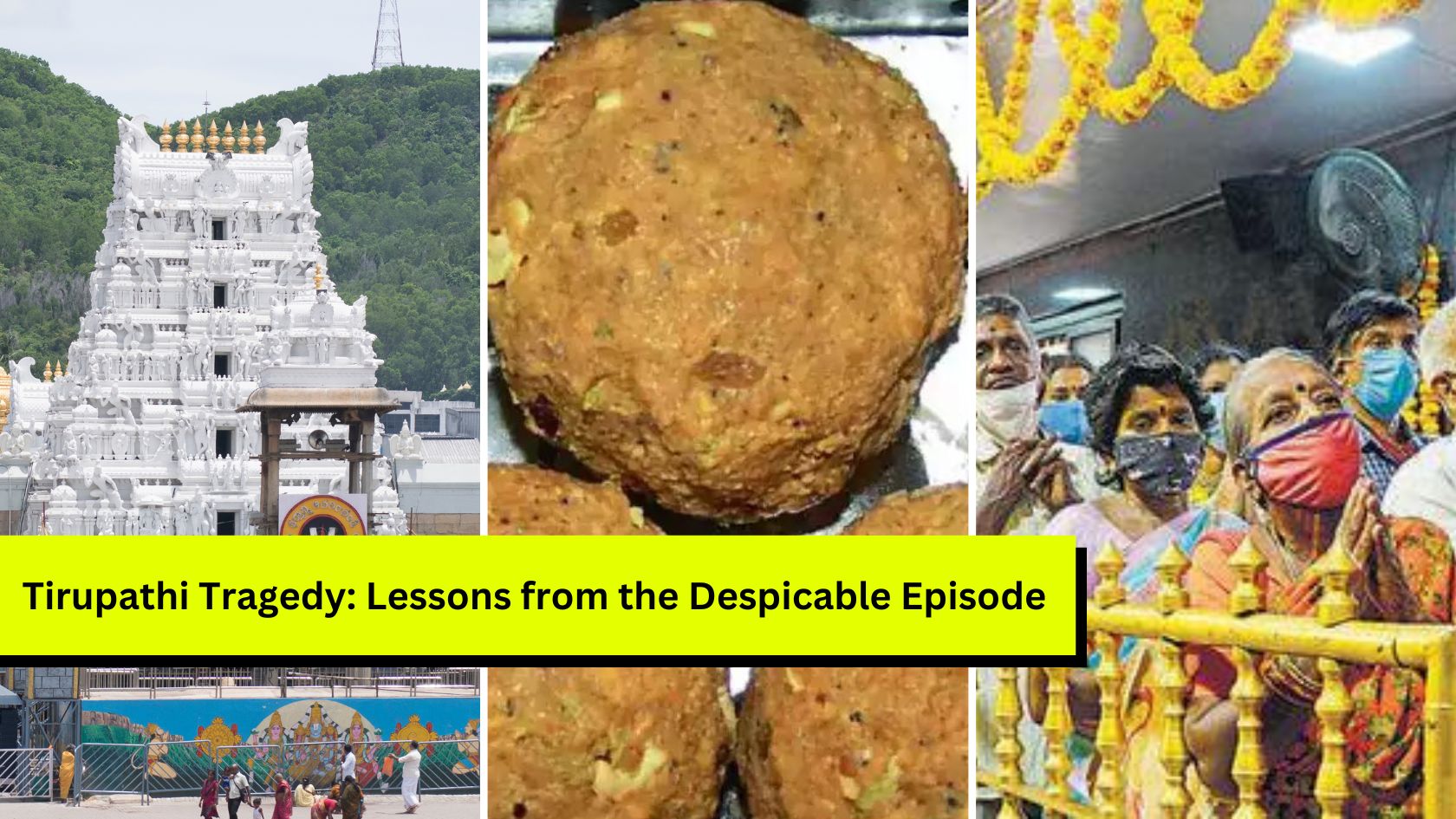
The Venkateshwara Swami Temple in Tirupati is among the holiest places in the world for Hindus. Millions of people throng the temple every year to get...
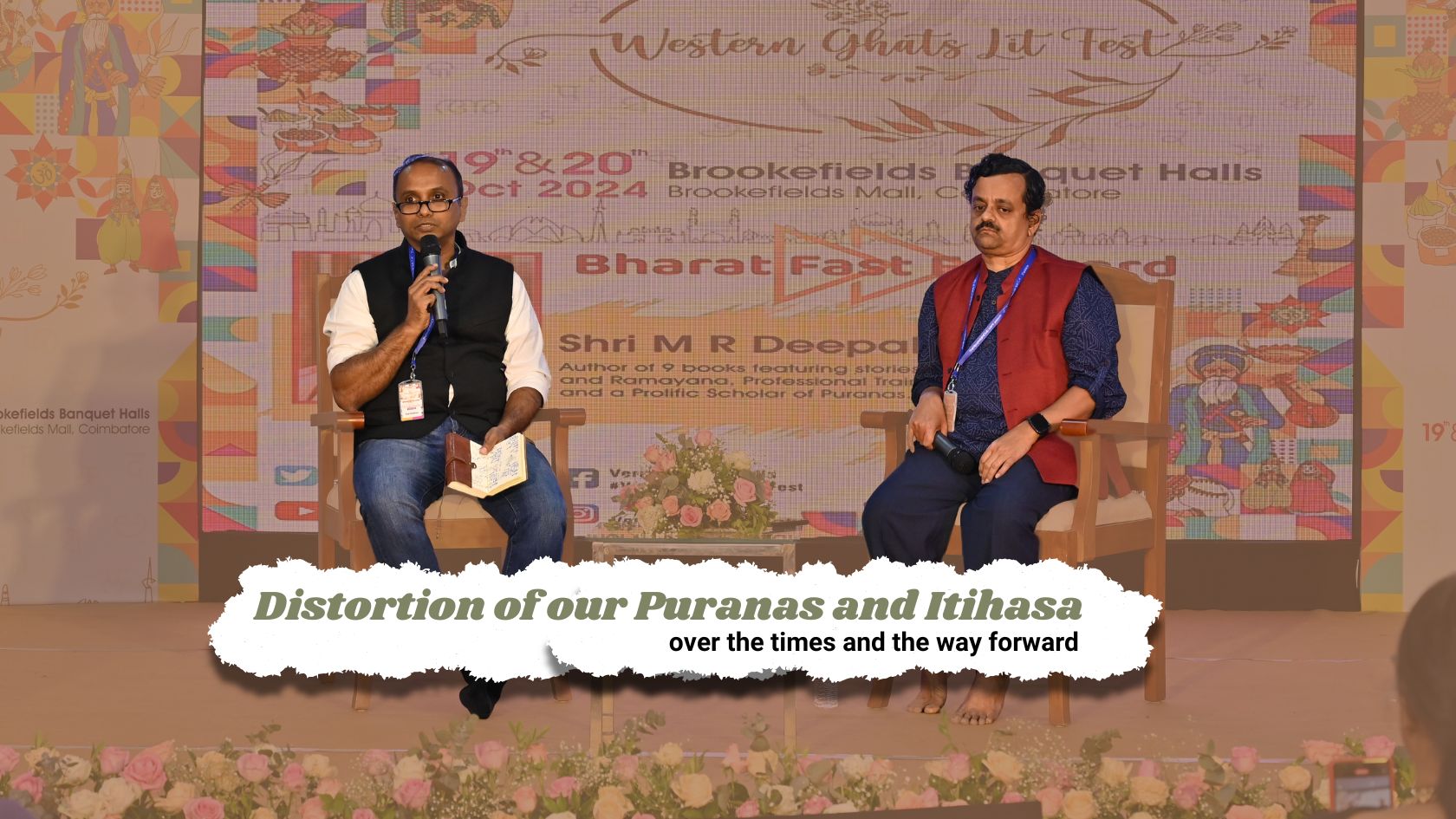
It is a sad reality that our Itihasa and Puranas have been subject to severe distortion over the years. This is not surprising considering how even th...
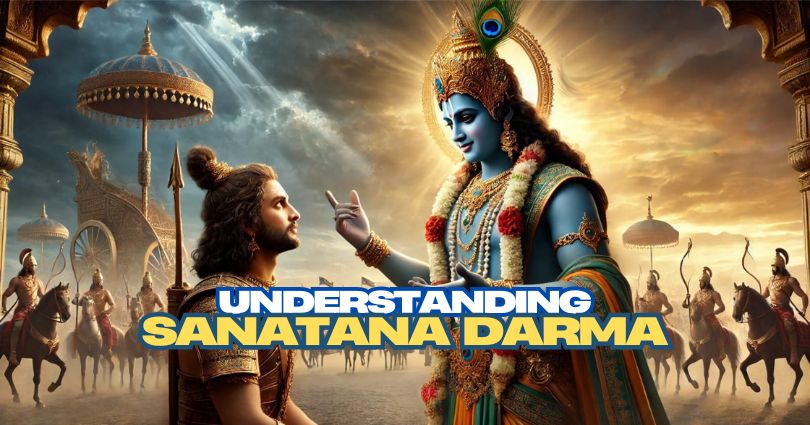
The holy land of Bharat follows Sanatana Dharma. The word Sanatana Dharma is a Sanskrit word meaning, “Eternal law”. It is the indestructible ultimate...

Verandah Club is an initiative by few like-minds of Coimbatore who are interested to share information on various antiquities of Bharat.
Free download our iOS & Android app
© Copyright 2026, All Rights Reserved.