
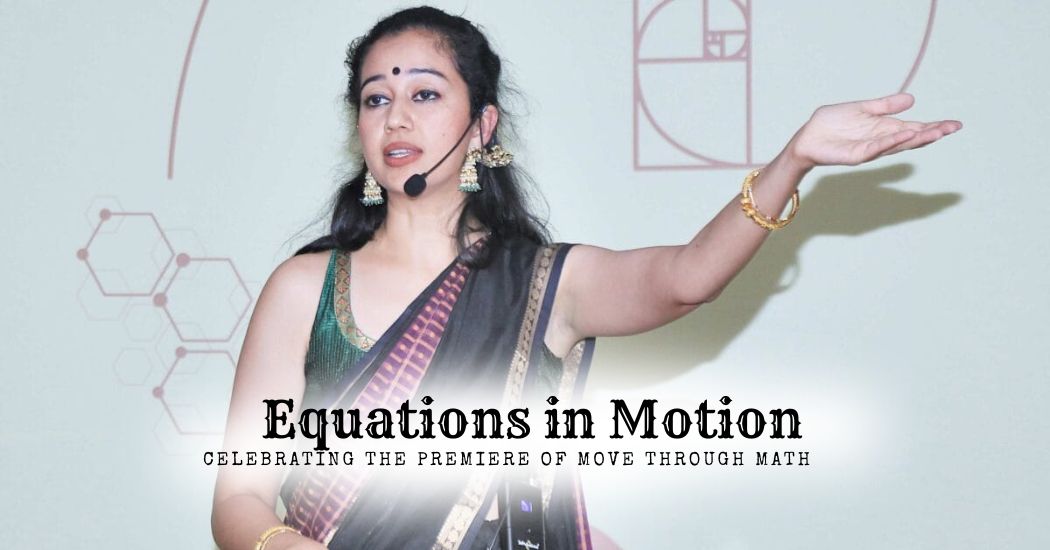
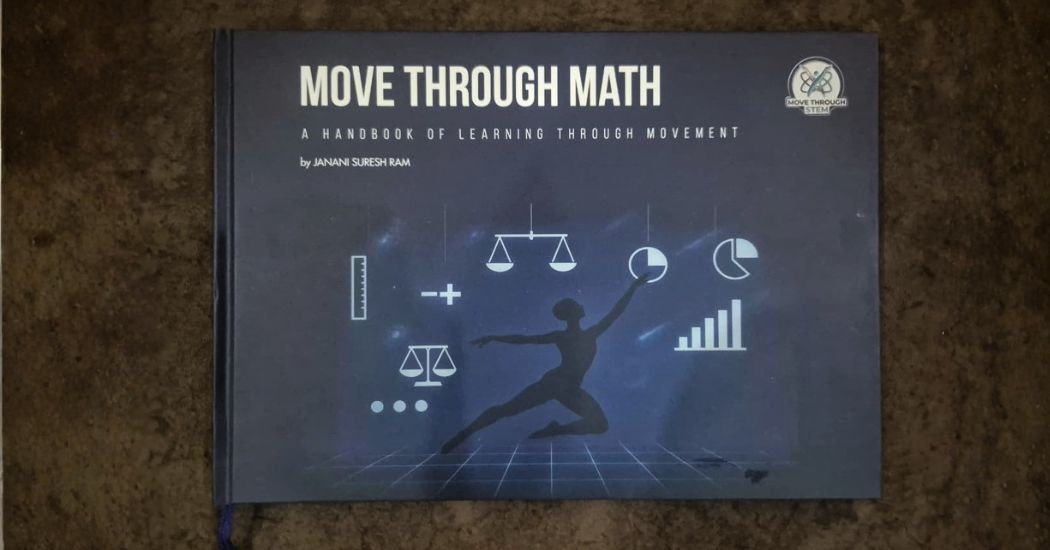
The traditional boundaries of learning are beginning to blur, making way for an era of educational breakthroughs. A powerful testament to this shift occurred at the Cosmopolitan Club’s main hall, where educators, scholars, and artists gathered for the official launch of Move Through Math by Dr. Janani Suresh Ram. This groundbreaking book stands as a bold reimagining of mathematics education, taking abstract numbers off the static blackboard and breathing life into them through the expressive vocabulary of classical Indian dance and embodied movement.
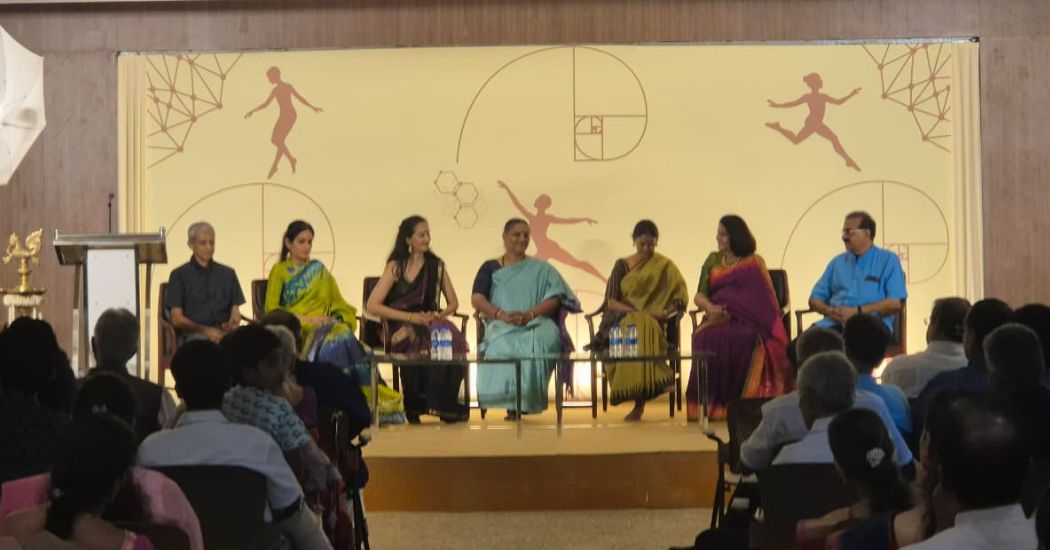
The launch event featured key perspective sharing from distinguished guests, including artist and thought leader Smt. Radhe Jaggi, holistic education pioneer Dr. Manimekalai Mohan, researcher Smt. Smrithi Rekha Adinarayanan, Co-Founder of the Anaadi Foundation, and Dr. Janani's guru Kalaimamani Smt. Lavanya Sankar. The collective discourse highlighted a profound truth: Indian Knowledge Systems (IKS) are once again demonstrating their timeless capability to solve modern pedagogical challenges. We extend our heartfelt gratitude to Dr. J. S. Bhuvaneswaran, Director of PSG Super Speciality Hospitals, for his gracious invitation to this remarkable book launch event.
At the heart of Move Through Math is an innovative paradigm shift. For generations, mathematics has been taught as a rigid, purely logical discipline, leaving many young learners feeling alienated. Dr. Janani Suresh Ram—who uniquely combines the analytical mind of an engineer with the expressive soul of a trained Bharatanatyam dancer holding a doctorate in Performing Arts—has broken this mold.
The book draws deeply from cognitive science and the theory of embodied cognition, which asserts that human understanding is fundamentally shaped by our physical interactions with the world. Move Through Math asks a revolutionary question: "What if math could be felt, seen, and danced?"
Rather than forcing children to memorize abstract formulas, the book turns mathematics into a playful, tactile, and physical experience. By structuring concepts across nine comprehensive chapters—spanning set theory, geometry, patterns, data analysis, and spatial awareness—the curriculum bridges the gap between the concrete and the abstract.
A Bridge Between Body and Mind Movement acts as a powerful catalyst for attention, memory, and cognitive engagement. By transforming mathematical concepts into physical gestures, rhythms, and spatial formations, the book builds a bridge between physical execution and conceptual understanding, allowing children to intuitively grasp complex ideas before translating them to paper.
What makes this work particularly brilliant is how it seamlessly anchors modern cognitive science into the bedrock of ancient Indian traditions. Historically, Indian Knowledge Systems never viewed the arts and sciences as mutually exclusive silos. Sanskrit texts, classical architecture, and ancient treatises consistently intertwined math, astronomy, linguistics, and art.
During the launch, speakers passionately highlighted how classical Indian art forms like Bharatanatyam are inherently built upon sophisticated mathematical foundations: The precise execution of an adavu (dance step) relies entirely on geometric angles, body symmetry, and spatial architecture. The intricate rhythm structures (talas) and rhythmic footwork (tathiththam) require rapid, subconscious mental calculations of permutations, groupings, and temporal divisions. The systemic division of counts—moving seamlessly between groups of threes, fours, fives, and sevens—mirrors the complex fractional structures found throughout advanced arithmetic.
By revitalizing these traditional principles, Move Through Math proves to the world once again that India’s heritage holds the key to holistic, cross-disciplinary education. It shows that ancient methodology was not just about aesthetic beauty, but also about a deep, structural understanding of universal truths.
The creation of Move Through Math deserves immense commendation. Translating the ephemeral, flowing grace of dance into a highly structured, clear educational framework is a monumental task. Dr. Janani’s unique journey as a researcher, educator, and parent shines through every page, offering clear, adaptable activities designed carefully for parents, educators, and curious learners.
The design of the book itself is an interactive triumph. The left-hand pages invite readers to "Look & Observe" using photography and QR codes that link directly to video clips of dancers exploring mathematical concepts. The right-hand pages offer clear "Concept Explanations," followed by "Try This" prompts and fun facts that spark mathematical curiosity. Each chapter beautifully culminates in "Project Time," ensuring that learning remains a hands-on, collaborative adventure.
This book is a vital step forward for global education. It stands as a beautiful reminder that our bodies are powerful instruments of thought, proving that sometimes, the body truly understands long before the mind catches up. The Verandah Club wishes Dr. Janani Suresh Ram immense success with the launch of her groundbreaking book.
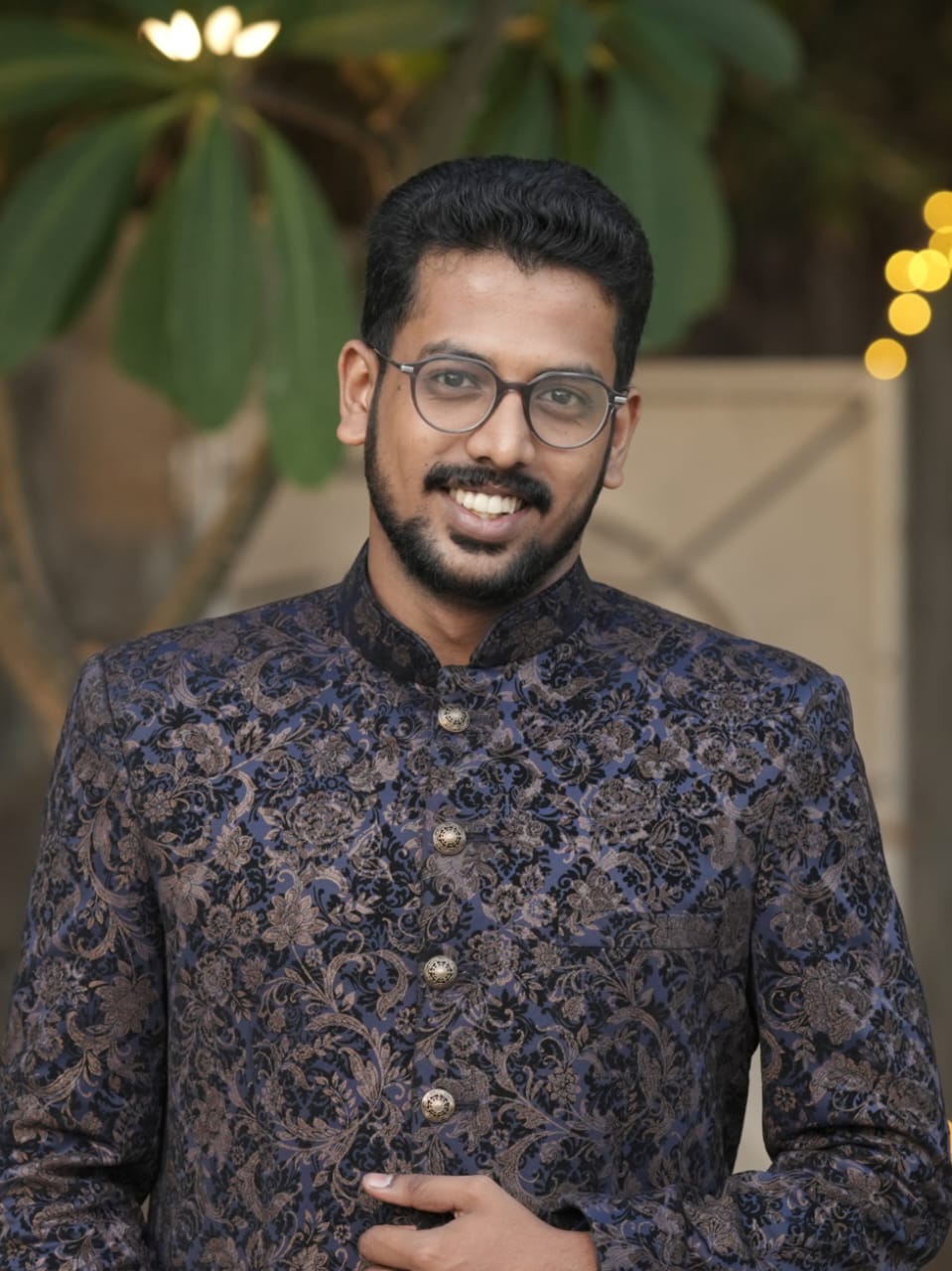 Dr. Vigneshvaran, Senior Correspondent of TheVerandahClub.com is a second generational acupuncture practitioner, a story teller, as well as an avid independent writer driven by his passion. His literary talents extend to crafting beautiful poems and captivating short stories including the Sehwag Tales series. In addition to these creative pursuits, he has also authored a book titled "Halahala," which can be found on Wattpad.
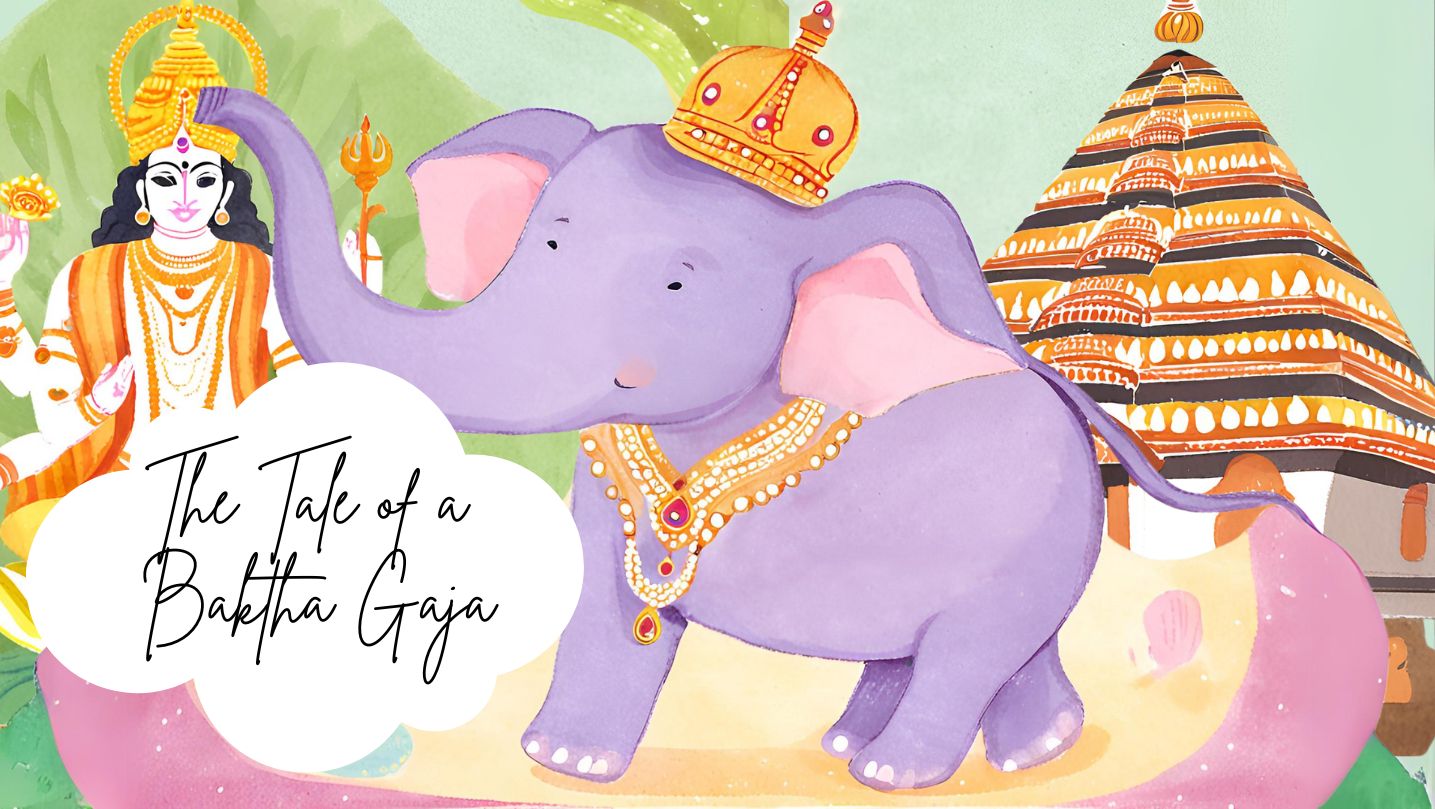


Saiswaroopa Iyer is an author who needs no introduction. She is one of the authors who pioneered Puranic fiction in India with books exploring tales f...
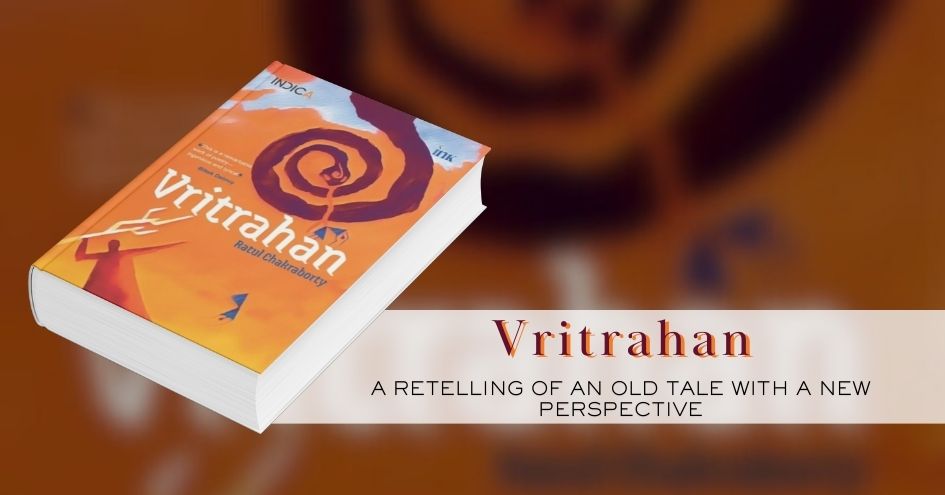
Indra killed Vritra using his Vajra. Once again, good won over evil and dharma over adharma. This is a story most Bharatiyas know. The story is a pa...
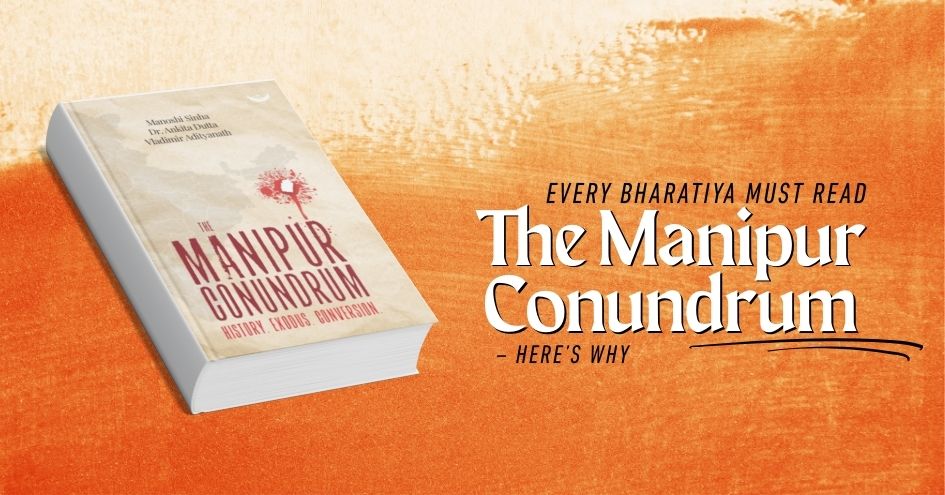
The recently-released book on Manipur titled The Manipur Conundrum – History. Exodus. Conversion. – is the result of tiring efforts by three Bharatiya...
Verandah Club is an initiative by few like-minds of Coimbatore who are interested to share information on various antiquities of Bharat.
Free download our iOS & Android app
© Copyright 2026, All Rights Reserved.