
INTRODUCTION
We have explored the manner in which Mahaprabhu Jagannath of Puri stands as the civilisational anchor of Odisha in earlier articles, where we traced how the pinda of Shree Krishna travelled across the seas of legend to become the Lord of the Universe on Nilachal hill. However, the story of Jagannath is not confined to the timeless mists of myth and Tantra alone. In the modern age, when Bharat lay under the yoke of British colonial rule, the same Mahaprabhu who unites Vaishnava, Shaiva, Shakta and Smarta into one undivided whole was invoked once again — this time not to reconcile Sampradayas, but to awaken a subjugated people to their own dormant strength.
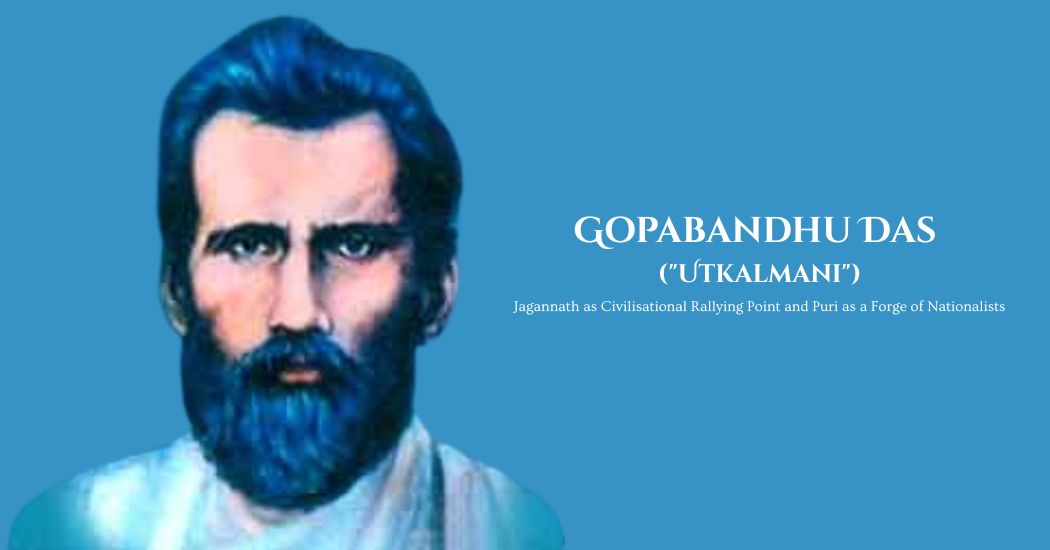
This article deals with one such son of Puri soil who drew directly from the wellspring of Jagannath consciousness to forge a regional awakening and then, with quiet deliberation, poured that awakening into the larger river of Indian nationalism — Utkalamani Pandit Gopabandhu Das, fondly remembered as the “Gandhi of Odisha.”
The making of an Utkalmani in the shadow of the Mahaprabhu
Born on 9 October 1877 in the village of Suando, near Satyabadi in Puri district, Gopabandhu grew up almost within sight of the great temple's shikhara. Orphaned of his mother in infancy, he found in the figure of Jagannath not a distant deity but something closer to a household guardian. On one occasion, urged to rush home to a sick son while he was away in the service of others, he is remembered to have said, “There are many to look after my son, but countless people cry for help. It is my duty to serve them; Lord Jagannath will take care of my boy.” On another, more sorrowful occasion, the very day he received news of his success in the Law Examination at Calcutta also brought him word of his wife's death — grief and achievement arriving in the same breath, met, by all accounts, with the same quiet equanimity. These were not isolated anecdotes of stoicism, but expressions of the emotional grammar in which Gopabandhu thought, spoke and eventually organised a movement.
As a schoolboy at Puri Zilla School, when cholera broke out during the Ratha Yatra and claimed heavy toll among pilgrims gathered for the Lord's own chariot festival, young Gopabandhu did not merely mourn — he organised his friends into the Puri Seva Samiti, his very first experiment in what he would later call seva as sadhana, service as spiritual discipline. It was a formative lesson: that devotion to Jagannath was inseparable from devotion to the suffering of one's own countrymen, and that the temple town's sacred geography could just as easily become a staging ground for social and political awakening as for ritual worship.
Satyabadi: turning Puri's sacred geography into a nationalist forge
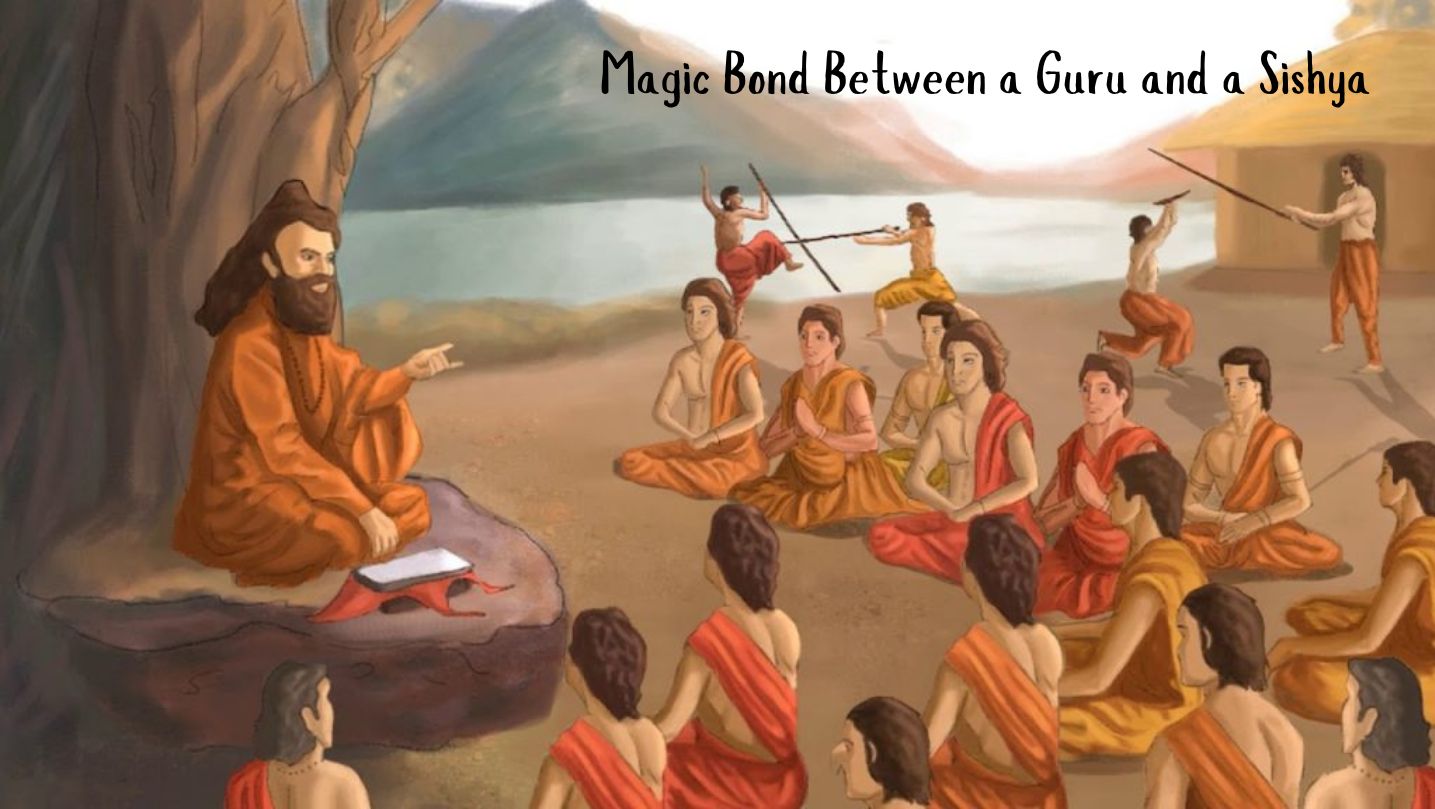
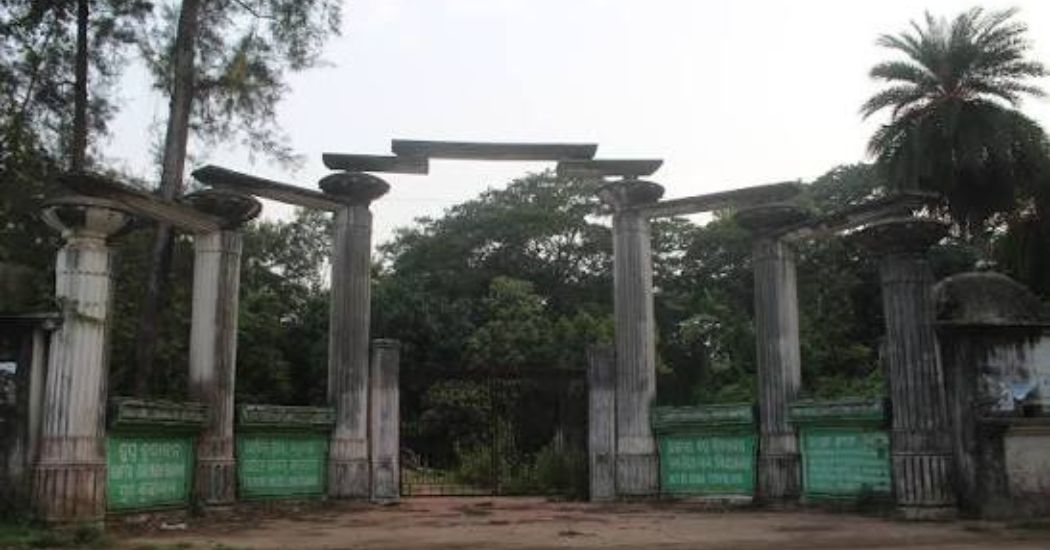
In 1909, inspired by Gopal Krishna Gokhale's Deccan Education Society and carried forward on the rising tide of the Swadeshi movement, Gopabandhu founded the Satyabadi Bana Vidyalaya at Sakhigopal, in the immediate hinterland of Puri — deliberately choosing to root his experiment in nationalist pedagogy within the same sacred belt that had produced the Jagannath cult's syncretic vision of unity across caste and sect. The school functioned as a gurukul under the open sky, where Brahmin and non-Brahmin, high-born and low, sat, dined and studied together in open defiance of orthodoxy — an echo, whether consciously invoked or not, of the Jagannath temple's own Mahaprasad, where caste dissolves the moment food is shared before the Lord.
Alongside luminaries such as Pandit Nilakantha Das, Acharya Harihar Das and Pandit Godabarish Mishra, Gopabandhu built a curriculum steeped in Odia language, history, physical culture and self-reliance, aimed squarely at producing not clerks for the colonial machinery but citizens conscious of their own bondage. When Gandhi launched the Non-Cooperation Movement in 1920, Gopabandhu did not hesitate — he converted Satyabadi into a National School overnight, severing it from government grants, and its alumni went on to become some of the most tenacious fighters against British imperialism in the province. Netaji Subhas Chandra Bose would later call him, simply, the father of the national movement in Odisha.
From Utkal Sammilani to the Indian National Congress: realigning Odia nationalism
Where Madhusudan Das had used Jagannath as the emblem binding scattered Odia-speaking tracts into the demand of the Utkal Sammilani, Gopabandhu — who presided over the Sammilani in 1919 and gave it its most expansive definition yet, declaring that “anyone who wishes well for Odisha is an Odia” — took the further, decisive step of marrying this regional consciousness to the all-India struggle. At the 1920 Nagpur session of the Congress, it was Gopabandhu who proposed the reorganisation of provinces on linguistic lines, a resolution that would echo for decades and eventually shape the map of independent India. He then dissolved the separateness of Odia agitation into the wider current, becoming the first President of the Utkal Pradesh Congress Committee, a post he held until 1928.
It was Gopabandhu who persuaded Gandhi to visit Odisha in 1921 to personally kindle the Non-Cooperation Movement in the land of the Mahaprabhu. Travelling to Calcutta that same year, he addressed the city's Odia labouring population with such force that they laid down foreign cloth and brought Burrabazar's trade to a standstill — proof that the moral energy he had first tapped as a boy organising cholera relief during Ratha Yatra could, decades later, move thousands to defy an empire. Through his newspaper The Samaja, founded in 1919, he carried this same fusion of devotion and defiance into the daily conscience of Odisha, using the vernacular press as Jagannath's temple had once used the shared plate of Mahaprasad — as an instrument that could reach every household regardless of station.
CONCLUSION
Gopabandhu Das never needed to reinvent Jagannath as a political symbol in the manner of an outsider borrowing sacred imagery for convenience — he was, from childhood, a genuine bhakta who happened to also be a nationalist, or perhaps more accurately, a man for whom bhakti and nationalism were never separate categories at all. In his life, the temple town of Puri ceased to be merely a pilgrimage destination and became a training ground for the freedom struggle, its ancient ethic of shared, casteless devotion transmuted into the ethic of shared, casteless sacrifice for the motherland. When he wrote, in what remains among the most quoted lines of Odia patriotic verse, “Let my body mingle with the soil of this land, let my countrymen walk over my back,” he was not merely echoing Gandhian self-abnegation — he was speaking in the idiom of a devotee laying himself, like a pinda, before the Lord of the Universe, trusting that his surrender would be gathered up into something larger than himself: first Odisha, and through Odisha, all of Bharat.
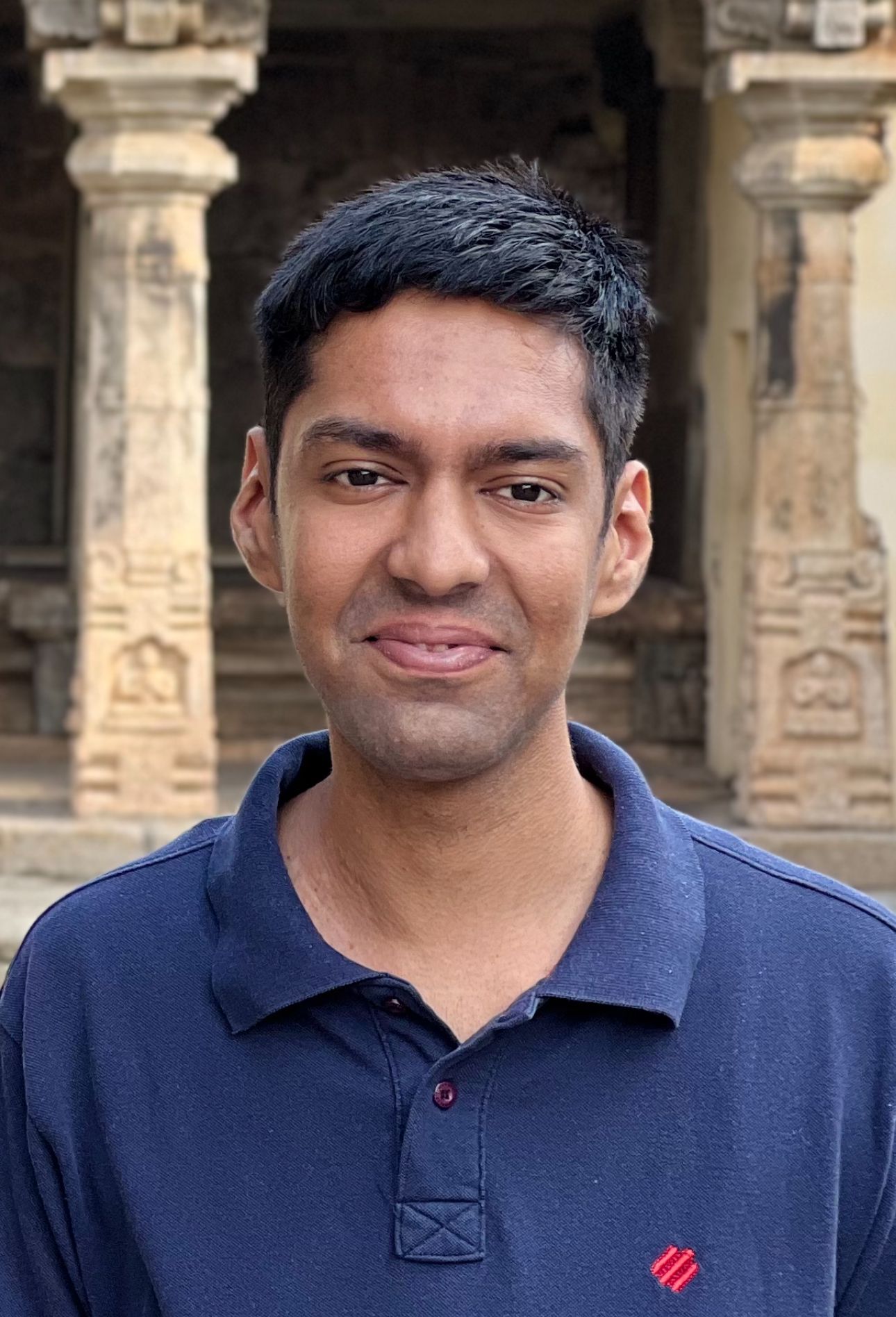 Vignesh Ganesh is a lawyer and writer. He is interested in ancient history and Itihasa and this interest culminated in his first book, "The Pallavas of Kanchipuram: Volume 1", which he co-authored with Mr. K. Ram, a fellow enthusiast of Indian history and culture.
PREVIOUS ARTICLE
NEXT ARTICLE

Shri Ramachandra Prasad's captivating narrative and the hot chai that was served at the right time transported me to ancient Kerala, where the extraor...
Introduction In Bharatvarsha, History is not the account narrated by victors. It is the record left behind by survivors. The study of Indian History...
It is the first-half of the 8th Century C.E. in South India. The Pallava kingdom possesses strength and prosperity with some of the greatest monument...

Verandah Club is an initiative by few like-minds of Coimbatore who are interested to share information on various antiquities of Bharat.
Free download our iOS & Android app
© Copyright 2026, All Rights Reserved.