

Over the past couple of years, I have had the opportunity to attend several family weddings, both in India and the United States. The experience has been unexpectedly instructive—at times heartening, and at other times, unsettling.
Let me explain.
When I lived in India, I rarely paid close attention to the ceremonial or traditional details of a wedding. I suspect this remains true for many people even today. In my circle of family and friends, even in my generation, I do not know many people who have sat with a priest or an elder to understand the meaning of the verses recited during the ceremony. Many elders can tell you that the bride must perform a Gowri Pooja at the start of the wedding, or what dishes belong on a “proper” traditional menu—but very few can explain the profound significance behind these customs.
This is why I was genuinely delighted to see young couples today taking an active interest in understanding these rituals. My nieces, for instance, attended several sessions to learn the meanings and sequencing of the various steps in a Vedic wedding.
At the same time, I have noticed another trend: modern couples often pick and choose which rituals they want performed, discarding others, which I find disquieting. I worry that they may not fully grasp the significance of what they are leaving out. Some of the most profound steps—such as kanyādāna—have acquired a stigma. Many young women assert that they are not commodities to be “given away.” Increasingly, I hear even educated people argue that since Christian weddings also involve the father “giving away” the bride, we should not view the practice negatively—as though a ritual from another culture is inherently more acceptable than our own. That argument is deeply unsettling at so many levels.
In this context, I have been compiling notes, reflections, and readings from the past few years on the Hindu concept of marriage. The following points outline the key ideas and steps of a Vedic wedding and explore their deeper significance.
Modern Weddings
Modern weddings present a range of difficulties and nuances that earlier generations rarely had to confront:
Given these challenges—and many others we may not yet fully recognise—I want to present a concise overview of the ceremonies that a bride and groom undergo in a Vedic wedding. I find the ritual sequence extremely beautiful, and I believe young couples would benefit immensely from understanding the meaning and significance of the verses recited during the ceremony.
The Greatness and Importance of a Householder’s Life
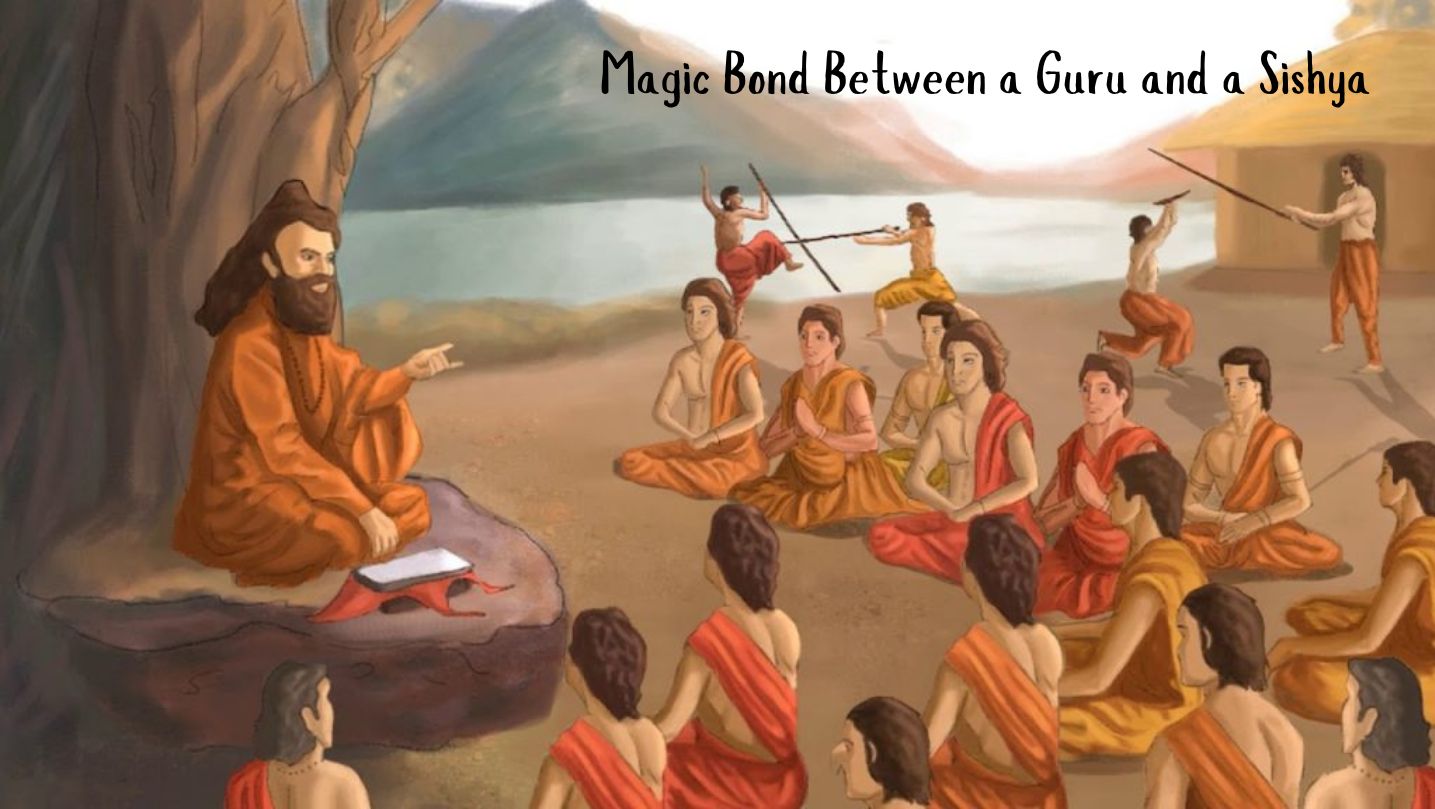
There is a small but highly instructive story in the Mahābhārata. A group of students from a gurukula near Naimishāranya had just completed their education. Their Āchārya blessed them, offered his good wishes, and gave them one final instruction before they departed:
प्रजातन्तुं मा व्यवच्छेत्सीः। “Do not break the thread of your lineage. Find a worthy partner, marry, and raise a family.”
The young men set out for home. But along the way, they began discussing the responsibilities of marriage and the life of a householder. Doubts crept in.
“If we marry,” they said, “we will be trapped in a maze of duties. A householder’s life seems highly restrictive. Should we not pursue a higher purpose rather than get entangled in family, children, and worldly concerns? These things feel trivial compared to spiritual contemplation.”
Convinced by their own reasoning, they turned away from home and headed toward the forest.
At that moment, Indra—the king of the Devas—appeared before them in the form of a bird. Perched on a branch, he called out:
“Cowards! Instead of entering the ocean of saṃsāra and guiding your wife and children through both worldly life and the life beyond, you choose to flee? Your rejection of family life does not arise from wisdom, renunciation, or freedom from desire—it is born of fear.”
The young men were shaken. Realising the truth in Indra’s words, they felt ashamed. They turned back, returned home, married, and eventually lived rich, meaningful, and fulfilling lives.
Curiously, these questions are still debated amongst our young people: should they marry, or isn’t just living together a better option? And if they do get married, should they have children?
In our tradition, marriage and the life of a householder are not merely accepted—they are celebrated. The brahmachārin (student) trains precisely so that he may become a capable gṛhastha (householder). And when the time is right, the householder moves into the next stage, vānaprastha, often with his wife, to pursue spiritual growth.
Crucially, without the householder, none of the other stages of life can function. A famous verse captures this beautifully:
यथा वायुं समाश्रित्य वर्तन्ते सर्वजन्तवः । तथा गृहस्तमाश्रित्य वर्तन्ते चतुराश्रमाः ॥
Just as all living beings depend on air for their survival, so do the four āśramas depend on the householder.
The householder sustains students, renunciates, and even other householders through hospitality, financial support, employment, and by raising the next generation of learners and contributors. In this way, the Gṛhastha becomes the pillar on which the entire social and spiritual order rests.
The Concept of Saṃskāras
Saṃskāras may be described as rites of passage—but more meaningfully, they are celebrations of the key milestones in a person’s life. While every human being in every culture experiences these stages, the conscious recognition and ritual honouring of them are distinctive features of our tradition. Of the sixteen classical saṃskāras, some of the most significant include:
Among all the saṃskāras, the most important is Vivāha, the wedding ceremony, which marks the entry into the life of a householder. Our tradition holds that a married couple becomes a complete entity with “four pādas”—four legs—symbolising stability and wholeness. In other words, an individual attains completeness only upon entering the gṛhasthāśrama.
The Concept of Ṛṇa — Sacred Debt
Our tradition teaches that every human being is born carrying three sacred debts—obligations that shape the purpose and direction of life.
Deva Ṛṇa — Debt to the Devas
Divine forces support the miracle of birth and sustain life. Because our existence is protected and nourished by the Devas, we are born indebted to them.
Pitṛ Ṛṇa — Debt to the Ancestors
From infancy to adulthood, our parents and ancestors nurture us physically, emotionally, and intellectually. They give us life, care, and identity. This creates a profound debt of gratitude toward them.
Ṛṣi Ṛṇa — Debt to the Sages
The wisdom of the Ṛṣis sustains us. Through their insights, teachings, and scriptures, they lead us from ignorance to knowledge, and from darkness to light. Their legacy forms the foundation of our learning and worldview.
How Do We Repay These Debts?
A verse from the Aitareya Brāhmaṇa offers a clear answer:
यज्ञेन देवेभ्यः ब्रह्मचर्येण ऋषिभ्यः प्रजया पितृभ्यः । “To the Devas, through yajña; to the Ṛṣis, through disciplined study; to the ancestors, through worthy children.”
Importantly, only a householder can give offerings to the Devas and the Pitṛs. Thus, the gṛhasthāśrama becomes the central pillar that sustains all three debts.
These three—yajña, knowledge, and lineage—form an unbroken continuum, like a river that flows continually. Individuals may come and go, but the cultural continuity endures.
The Wedding Saṅkalpa: The Purpose of Marriage
The saṅkalpa of a Vedic wedding explicitly states:
देवपितृऋणापकरणहेतु भूतधर्मप्रजोत्पादनार्थम् | “To repay the debt to the Devas and the ancestors through care for all beings, through yajñas, and through the creation of worthy progeny.”
This is the foundational purpose of marriage. A couple enters the state of wedded life with this shared commitment.
What About the Woman’s Role?
At first glance, this may appear like a statement of purpose directed at the man. But our tradition is unequivocal: a man is incomplete without a woman.
As noted in an earlier paragraph, a pāda is a quarter. Each partner, alone, has only two pādas—half of what is needed for completeness. Only together do they form a stable, four-legged entity.
A man cannot perform yajñas, sustain a household, or raise children without a woman.
The duties of the householder—and therefore the repayment of all three debts—are possible only through the partnership of husband and wife. Their union is not merely social; it is cosmological.
What Is Marriage?
Sanskrit offers several evocative words for marriage, each revealing something about how our tradition understands this institution. One of the most common terms, vivāha, literally means “to carry a special weight.” The meaning itself brings a smile, but it is deeply insightful.
In earlier times, society collectively supported the education of a brahmachārin. Students sought bhikṣā—food—from local households. Even a generation or two ago, it was common for students to eat in different homes on different days of the week while living in hostels endowed by generous patrons. Therefore, the householder played a crucial role in sustaining the student while he studied in the gurukula.
Today, universities—whether in India or abroad—may offer scholarships, fee waivers, or research assistantships. But the older model, where householders directly supported students as a sacred duty, has become rare.
When a person marries and enters the life of a householder, he symbolically “takes on the weight” of these responsibilities—toward society, toward all living beings, and toward his own family and children. This is one meaning of vivāha: the acceptance of a sacred burden.
Another interpretation of vivāha is “to carry something precious.” In this sense, the groom carries his bride to her new home after the wedding, an image that reflects both affectionate humour and responsibility.
A related term, udvāha, also refers to marriage as weight but carries an added nuance. It signifies that the bride is “led forth” or “elevated” from her father’s home to her husband’s. This elevation is not hierarchical but spiritual: upon marriage, a woman gains the right to participate in yajñas and to share fully in the responsibilities of the household.
Our tradition is clear: a man cannot perform a yajña or fulfill the duties of a householder without his wife. Thus, udvāha elevates both partners, enabling them to become qualified together to uphold the sacred duties of the gṛhasthāśrama.
For this reason, many ṛṣis—including Yājñavalkya and Manu—prefer the term udvāha to vivāha, emphasizing the shared dignity and spiritual partnership at the heart of marriage.
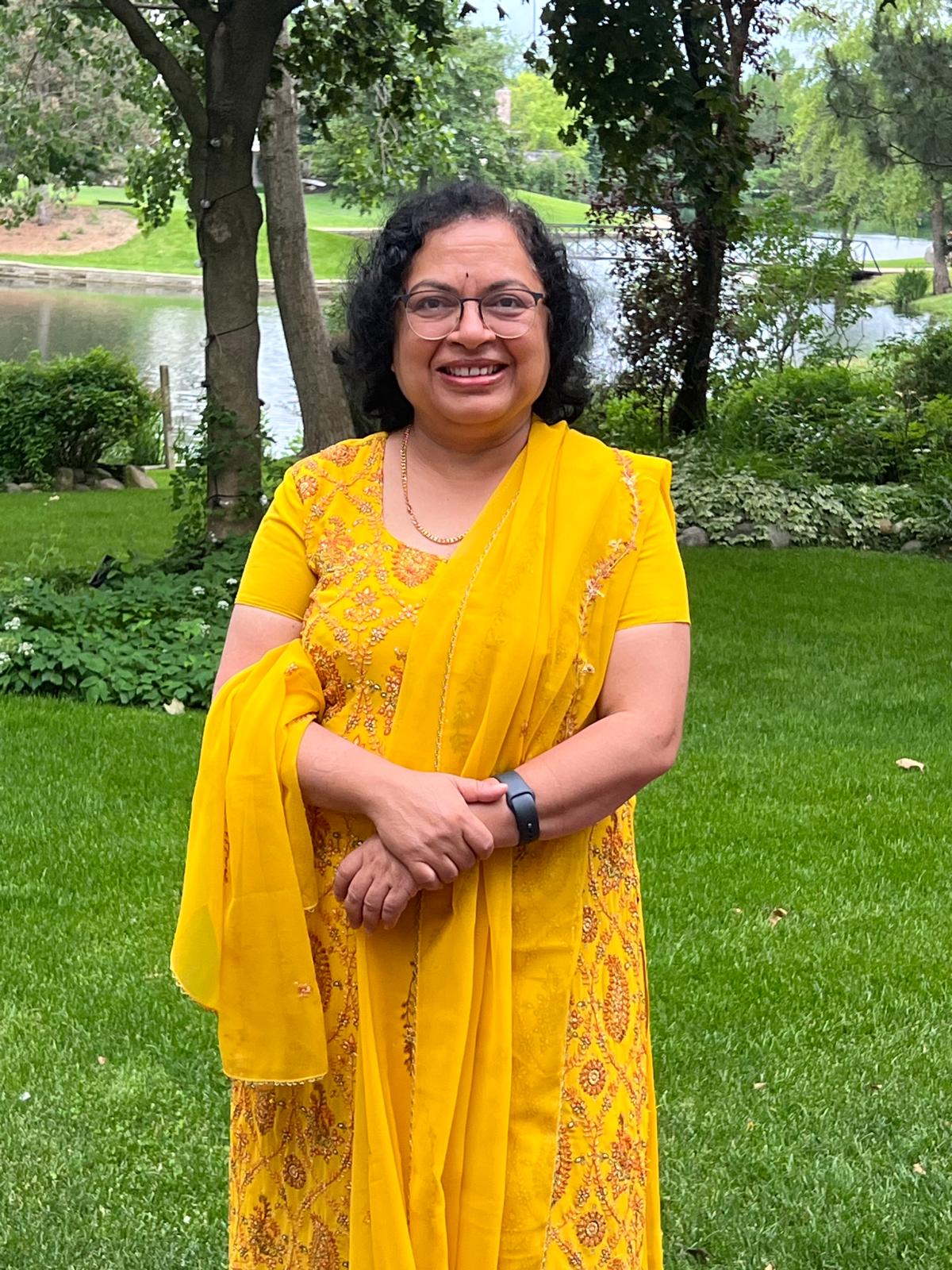 Manjula Tekal is an acclaimed author and translator, best known for her novel Devayani and her translations of historical and political works across Kannada and English. With an engineering background and dual Master’s degrees in management from IIM-Bangalore and UIUC, she transitioned from a career in IT and education to the world of literature. Her diverse body of work includes translating Jagmohan’s My Frozen Turbulence in Kashmir and upcoming English renditions of Savarkar’s novels. She currently resides in Champaign, Illinois, where she continues to bridge cultural and linguistic gaps through her writing.
PREVIOUS ARTICLE
NEXT ARTICLE



Let's take a moment to revisit the meaning of the term “Vivāha”. At its core, it represents the idea of sharing a burden and carrying the weight of li...

Verandah Club is an initiative by few like-minds of Coimbatore who are interested to share information on various antiquities of Bharat.
Free download our iOS & Android app
© Copyright 2025, All Rights Reserved.