
The other day, I was in Bengaluru for the Kannada release of ‘My Name is Gauhar Jaan’ by Shri Vikram Sampath.
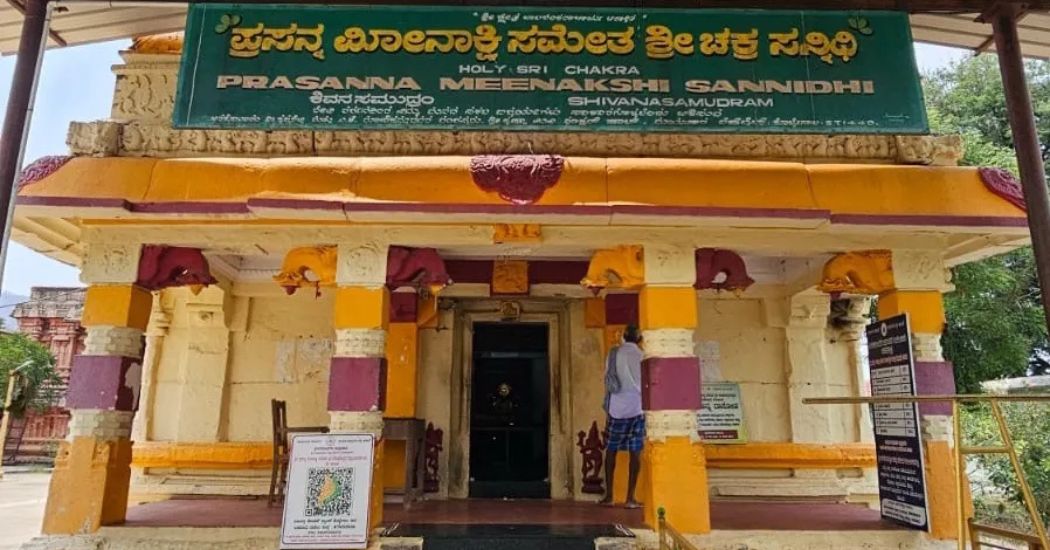
And whenever I visit Bengaluru, I make it a point to travel to the serene Prasanna Meenakshi Temple near Barachukki Falls in Mandya district.
This region itself is a marvel of sacred geography shaped by the Kaveri River. The river forms a beautiful island that houses the temple of Shri Ranganatha Swamy Temple also called as Madhya Ranga. This is part of a divine triad—Adi Ranga at the Ranganathaswamy Temple near Mysuru and Antya Ranga at Srirangam, Tamil Nadu. All three temples are uniquely situated on riverine islands formed by the Kaveri, and one cannot help but wonder how our ancients identified and consecrated these spiritually potent locations with such precision.
Just in front of this island stands the ancient Prasanna Meenakshi Temple, believed to have been consecrated by Adi Shankara. There is a fascinating legend associated with this kshetra. It is said that Bala Shankara performed intense tapas here. The local villagers, witnessing his spiritual power, approached him seeking relief from the fierce and restless nature of the Devi. Responding to their prayers, Shankara invoked the Divine Mother and, through his spiritual mastery, contained her intense energy within a Sri Chakra. The Devi, calmed and pleased, assumed a benevolent form and came to be known as Prasanna Meenakshi.
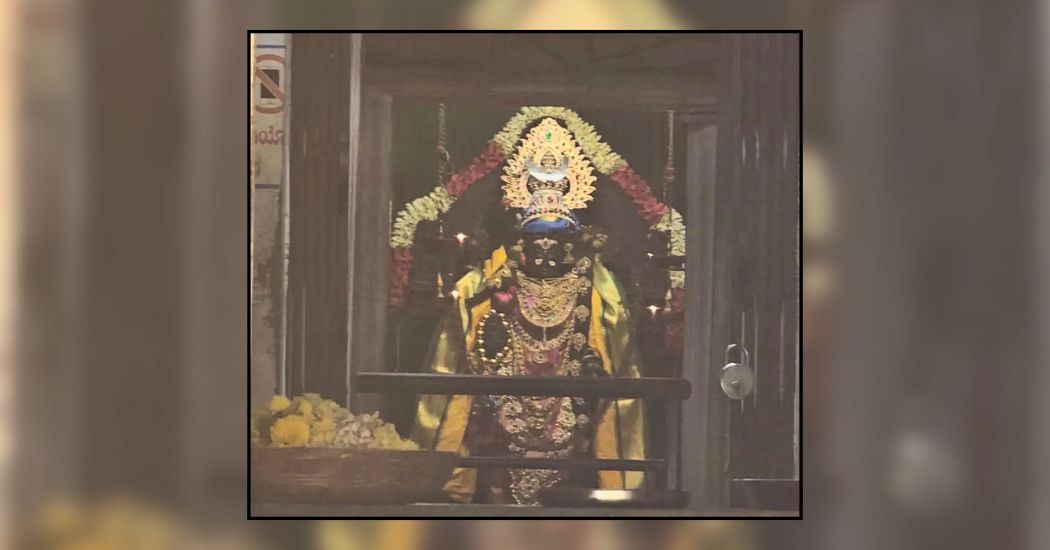
I have visited this temple more than ten times over the last five years, and each visit has been special in its own way. I have also had the good fortune of interacting with the temple priest, who once shared that the late Indira Gandhi had visited this temple during a difficult phase in her life, and soon after, she returned to power as the Prime Minister of India.
But this visit was unlike any other.
I walked into the temple, had darshan of the Devi, and stood before the Sri Chakra she gazes upon. As I stood there, I slipped into a deep, trance-like stillness. Time seemed to dissolve. All external sounds faded away. And then, I began to hear something unusual—a soft, continuous humming sound, like that of a bee.
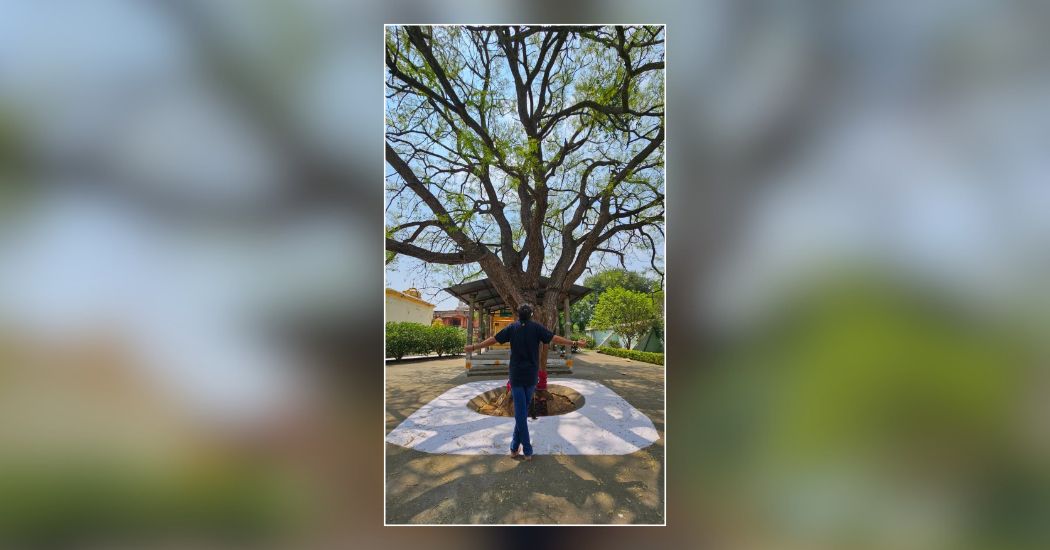
The Shami Tree in the front of Devi
I moved from there and sat quietly for a while, but the sound remained. I proceeded to do pradakshina of the Shami tree which is situated in front of the Temple, and still, the humming persisted. I then went to the Someshwara Linga beside the Devi temple and sat beneath the Matsya within the temple, a sacred spot believed to fulfill the wishes of a true bhakta. Just as I was about to begin my prayers, the same sound returned. I looked for the source from all directions but I couldn’t find it!
At first, I ignored it and continued with my pradakshina around the temples, including the parivara devatas. But even after completing three rounds, the sound was still there—unchanging, steady, and deeply internal.
I have had many profound experiences in temples before, but this felt entirely different—subtle, mysterious, and impossible to rationalize.
Then, as if in response to my unspoken question, a man walked in and casually remarked, “If you are receptive to subtle energies, they sometimes manifest through carriers like insects or bees. In yogic tradition, this is called Bhramara Nāda.”
In that instant, everything fell into place.
He continued, Bhramara Nāda, as described in yogic traditions, is an inner mystical sound—often experienced in deep states of meditation or heightened awareness. It resembles the humming of a bee and is associated with the subtle vibrations of consciousness, sometimes linked to the experience of Anāhata Nāda—the unstruck cosmic sound.
I was left in complete awe.
I simply bowed before the Devi—grateful for an experience I never imagined I would be blessed to receive.
 Rithwik Subramanya is a Content creator and public speaker known for his relatable short-form videos on life, spirituality and dharma. He is also the founder and proprietor of Subbu Publications.
PREVIOUS ARTICLE
NEXT ARTICLE

In the lush, green heart of Kerala lived an elephant who became a living legend - a tale of an elephant turned into a bakth. His name was Keshavan, bu...

The Chaitanya Charitamrita by Shri Krishna Das Kaviraj provides a vivid description of the operations management of Shri Gundicha Yatra during the tim...
The sun beat down on my back as we stepped out of the car, the air thick with the humidity of rural Tamil Nadu. Chinthalavadi, a small village nestled...

Verandah Club is an initiative by few like-minds of Coimbatore who are interested to share information on various antiquities of Bharat.
Free download our iOS & Android app
© Copyright 2026, All Rights Reserved.