
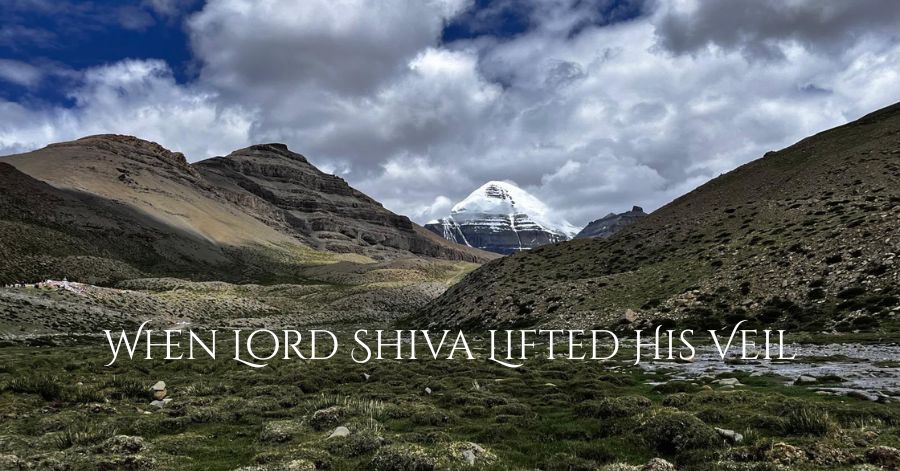
Ashtapad means eight steps. That is what the name promises, a mountain that is a staircase of eight steps, though no one who reaches it ever finds stairs cut into rock. What they find instead is a memory carved into the landscape itself, a memory older than most civilisations we study in our textbooks.
Jain tradition holds that Rishabhanatha, the first Tirthankara, walked this hallowed ground and shed the last weight of karma here, attaining nirvana on this very face of the mountain. His son, the Chakravarti King Bharat, is said to have built a memorial in his honour made of crystal and gemstone, so radiant that the old texts struggle to describe it without reaching for the language of light itself.
Ashtapad sits at nearly five thousand metres, folded into the inner kora, facing the southern wall of Mount Kailash where the mountain shows its most dramatic profile, the one with the third eye of Shiva. Pilgrims of four great faiths have called Kailash sacred for longer than memory can hold. Hindus see Shiva's abode here. Jains see the site of ultimate liberation of Rishabnath, Buddhists see the mountain as Sumeru, the axis mundi and Bons, the followers of the religion of the ancient Tibetans believe that their pantheon of Gods resides on Mount Kailash. Four ancient truths, one mountain, standing there for hundreds of thousands of years.
We had taken a rickety ride from Darchen to Ashtapad. We stopped alongside a stream. A tubby Himalayan marmot sat up on its haunches near a boulder, watching us with the unhurried confidence of a creature that has never needed to run from anything. Small flowers, impossibly delicate for this altitude, pushed up through the gravel of the stream bed, pink, yellow, lilac and red, trembling slightly in the wind. A stream of crystal clear water gurgled in the middle of the valley, surrounded by chortens. So many chortens, stone piled over stone, left there by generations of pilgrims as an offering in the name of their ancestors. The chortens dotted the stream bed like prayers someone had folded into stone so the wind could not carry them away. Each one a small word in a sentence written by centuries of pilgrims before us.
When we arrived, we could see Ashtapad on the left, the Nandi mountain on the right, the faithful Vahana of Lord Shiva, and in the middle was Kailash, but its higher slopes completely obscured by dark, swirling, rain clouds. A thick veil of cloud had wrapped itself around the peak and would not let go. I thought, standing there, how precisely this mirrored everything our scriptures tell us about the veil of Maya.
The real is never absent. It is only veiled. We spend our whole lives standing exactly where we are, certain that something eternal is right in front of us, and unable to see it fully because of the veil that our own delusions and perceptions have thrown over it.
We waited. The clouds did not move. We waited longer. Still nothing. There is a particular kind of patience the Himalayas teach you. It is not the patience of expecting a reward at the end of the wait. It is the patience of simply continuing to sit, breath by breath, with no promise attached to any of it.
At some point, I stopped waiting for the clouds to part. I let go, and in that letting go, something in my chest loosened that I had not even realised was clenched. I took out the stone I had found on the shore of Mansarovar earlier that morning, the one whose shape had startled me into seeing Ganesha in its lines. I placed it on top of one of the chortens, that small deity of stream and stone sitting atop a monument of prayer, and I asked for nothing more complicated than a full darshan. Ganesha, remover of obstacles, resting temporarily on a chorten before an obstacle made entirely of weather and time. A son, requesting his father to show his face.
We simply sat there. In the stream bed. Some in our group closed their eyes and slipped into meditation. Some began to chant, low and steady, the sound carrying in that thin air. I did neither. I sat and waited for grace, if grace was coming, in whatever form it chose.
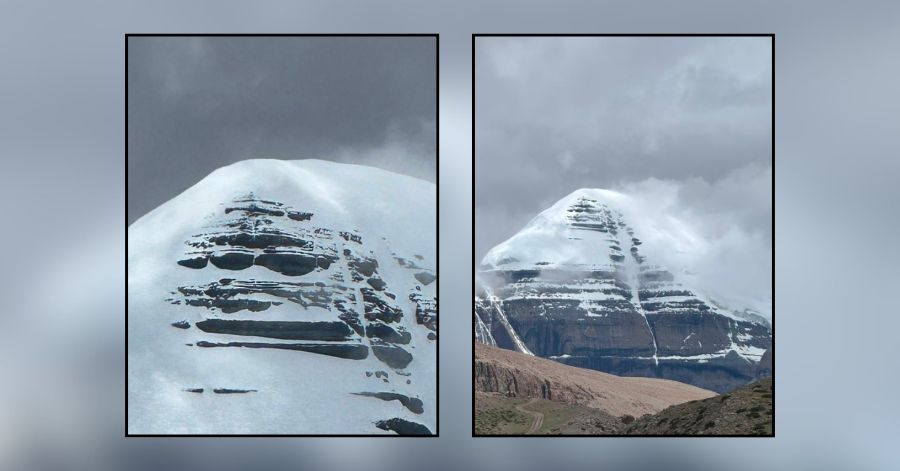
And then, grace came. It began at the edges, the way dawn always begins at the edges before it claims the whole sky. A thinning. A softening in the layer of the swirling dark clouds. The veil of illusion that had seemed so solid, began to fray like an old shawl pulled too many times. And through that fraying, Lord Shiva began to show his face. At one point, it felt like two eyes looked straight at us through the clouds. I shivered, and not just because of the cold.
I do not have adequate words for what happened to the light after that, and I say that as someone who has spent a lifetime working with words. The sun touched the feet of Kailash through the thinning veil and the light spread. The whole peak seemed to glow with a white, pearly, luminosity. It sparkled, genuinely sparkled, as if the mountain itself had been waiting to test us, but could not keep its radiance hidden no longer.
I felt tears in my eyes. I had crossed half a continent, climbed through thin air and thinner certainty, sat at the edge of my own patience for this moment. And here was the reward. Kailash unveiled, sudden and complete, exactly when I had stopped asking for it.
Perhaps that is the lesson Ashtapad has to offer, the same lesson Rishabhanatha is said to have learned on this very slope. Liberation does not arrive because we demand it. It arrives when we finally stop clutching at expectations. The mountain was always there. The truth was always there. We only had to stop pulling at the veil, and let it lift on its own.
I looked at my little Ganesha stone still resting on the chorten, catching the same light that had just set the whole mountain ablaze, before putting it back in my pocket reverently, and I understood, in that thin cold air, why I had carried it in all this way.
#Kailas #Mansarovar #Kailas Mansarovar Yatra #Tibet #Pilgrimage #HarHarMahadev
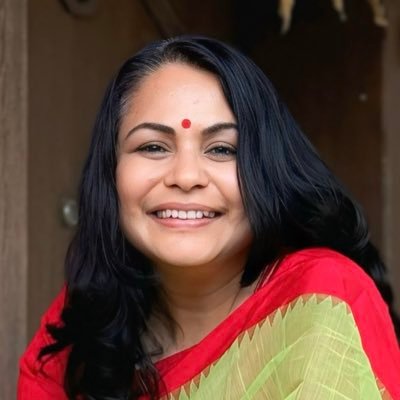
Shefali Vaidya is a well-known Indian author, columnist, and social media personality based in Pune. She is a Director at TheVerandahClub.com and the curator of #WesternGhatsLitFest. She is a multi-lingual writer, proficient in English, Marathi, and Konkani, and contributes to various publications like Swarajya Magazine and OpIndia. Vaidya is recognized for her strong nationalist viewpoints, often writing and speaking on topics of politics, culture, history, and Dharma. She is a prominent voice on social media, known for her commentary on current affairs and for championing civilisational and Hindu causes. She is also a passionate advocate for Indian heritage, particularly handloom textiles, and has served on a special committee for the Ministry of Textiles to promote the sector.

In the lush, green heart of Kerala lived an elephant who became a living legend - a tale of an elephant turned into a bakth. His name was Keshavan, bu...
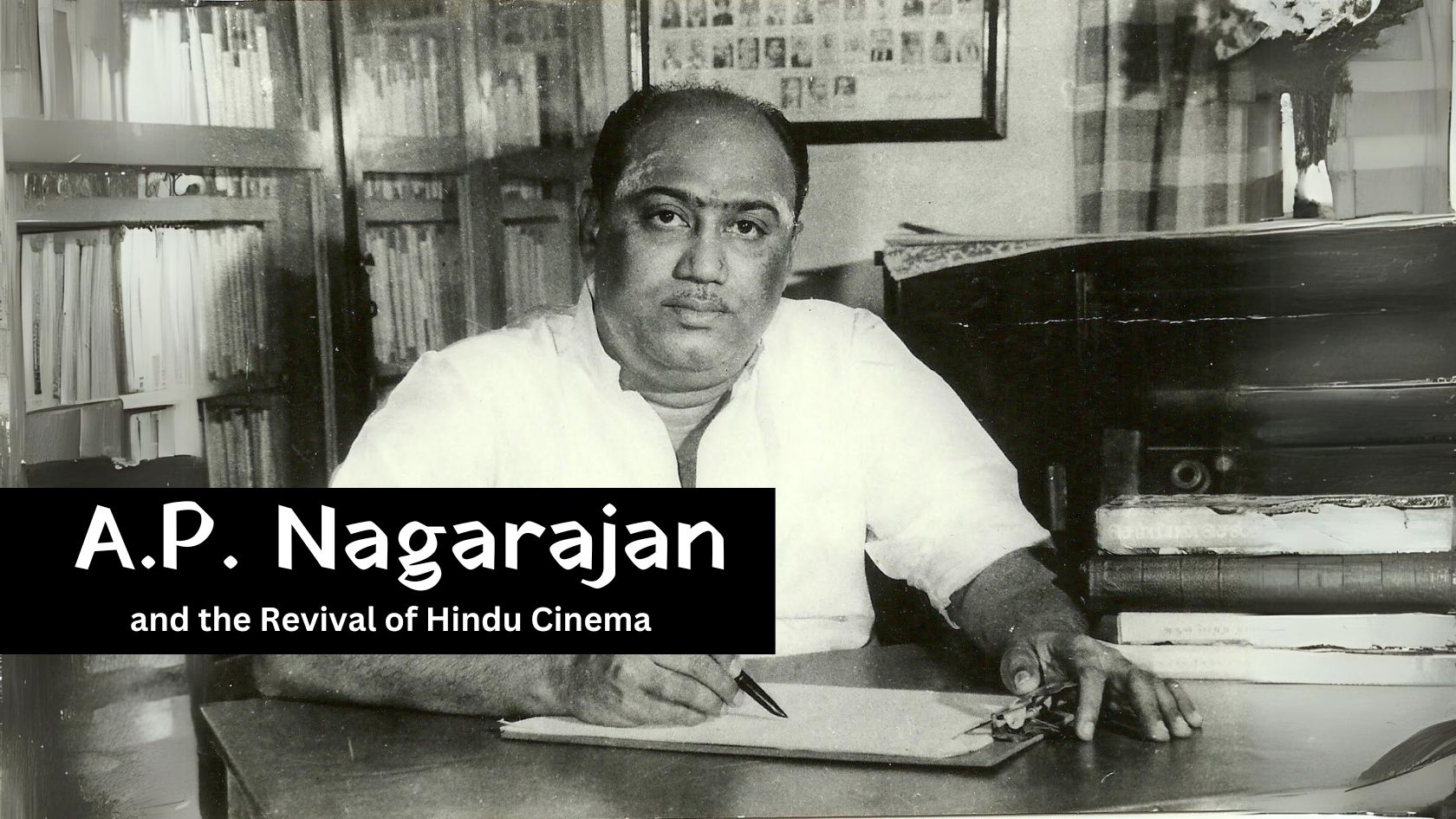
In the early days of cinema, both silent and talkie films thrived on puranas and ithihasas. However, as the years passed, especially by the late 1950s...
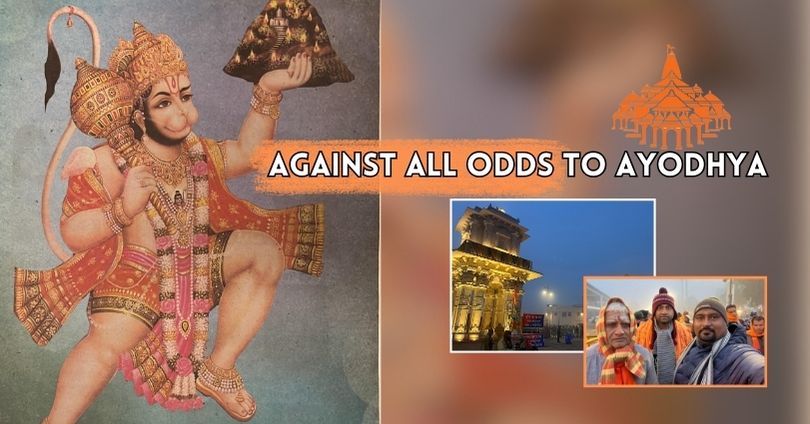
Life often presents us with choices that test our resolve, faith, and priorities. Attending the Prana Pratishtha of the Ram Lalla in Ayodhya had alway...

Verandah Club is an initiative by few like-minds of Coimbatore who are interested to share information on various antiquities of Bharat.
Free download our iOS & Android app
© Copyright 2026, All Rights Reserved.