
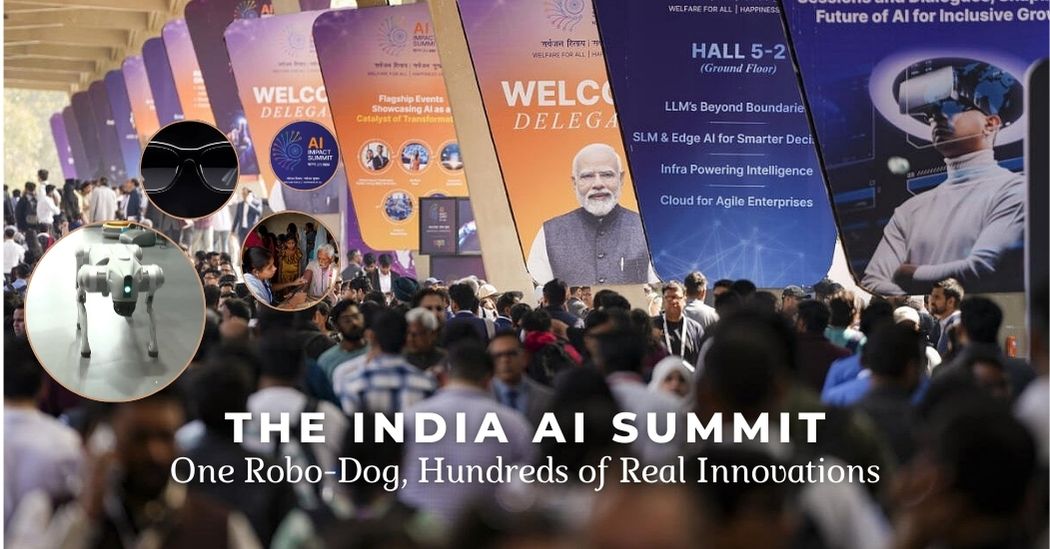
If you judged the India AI Impact Summit 2026 only by your social media feed, you might think it was a chaotic fair of long queues, crushing crowds, and one “infamous” robotic dog. The camera loves a glitch, and this event gave the internet plenty to feast on: people struggling to get in, complaints about mismanagement, and the now-iconic video of a robo-dog trotting around a pavilion. A month after the viral clips faded from our feeds, the true legacy of the India AI Impact Summit 2026 is finally becoming clear: it wasn't about a robot dog, but the quiet revolution that followed.
What the camera doesn’t show as easily is intent, depth, and the sheer volume of serious work that was actually on display.
Let’s start with the robo-dog. Galgotias University showcased a four-legged robot they called “Orion,” presenting it as their own innovation from the university’s Centre of Excellence. Very quickly, technologists and online sleuths identified it as a Unitree Go2, a commercially available robotic dog made by Chinese company Unitree Robotics. After the clip went viral, government officials asked Galgotias to dismantle its stall, and the university was effectively booted from the expo. Galgotias first called the backlash a “propaganda campaign”, then issued an apology, saying the professor who spoke on camera was “ill‑informed” and not authorised to make such claims.
Was this embarrassing? Of course. Should it raise questions about due diligence and authenticity at a national AI platform? Absolutely.
But should one misrepresented Chinese robo-dog be allowed to eclipse the work of hundreds of serious Indian teams building real, indigenous products? That is where I part ways with the loudest critics.
Walk a few steps away from that now‑vacant stall, and a very different India is visible. Across more than 300 curated pavilions and over 600 startups, the summit focused on AI already deployed in the real world: robots in hospitals and factories, drones in farms, wearables for frontline workers, and software quietly transforming governance.
Consider just a few examples:
Sarvam Kaze AI glasses – Sarvam AI (Bengaluru)
Prime Minister Narendra Modi tried on Sarvam Kaze, a made‑in‑India AI wearable developed by Sarvam AI. The sleek, spectacles‑like device listens to the user, understands commands, responds in real time, and captures what the user sees through an onboard camera. It is designed for voice and visual interaction—offering live transcription, contextual assistance, and future chat capabilities built on Sarvam’s own Indian language models. For a country that wants AI in everyday public services, this is not a gimmick; it is a concrete step towards accessible, ambient intelligence.

Healthcare and frontline worker wearables
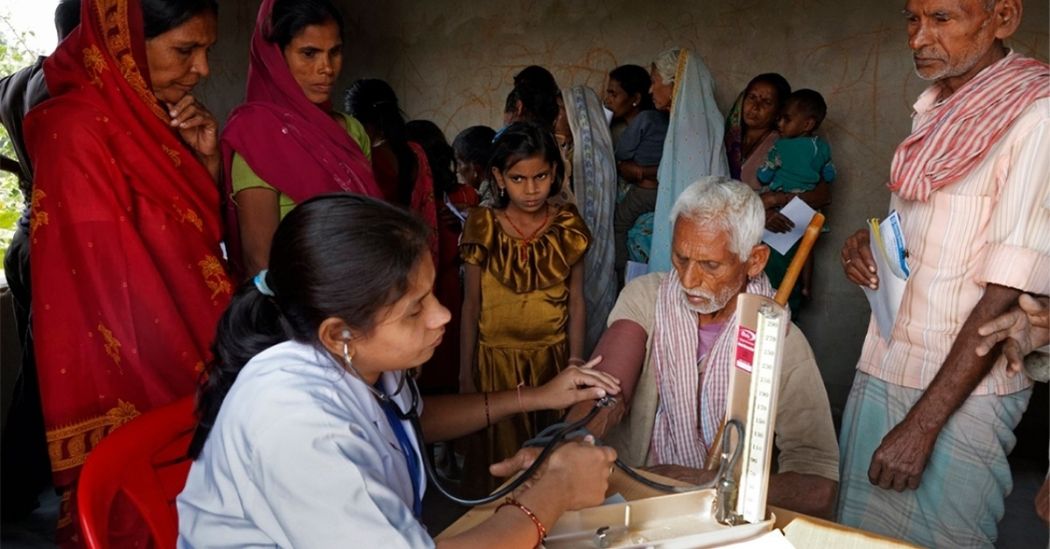
Several Indian teams demonstrated AI‑powered wearables that help ASHA and other frontline health workers capture patient data, receive decision support, and triage cases in the field. These devices run models that can flag high‑risk conditions early, standardise basic protocols, and reduce the burden on overstretched doctors in rural and semi‑urban areas. Here, AI isn’t a buzzword; it is an extra pair of eyes and ears where the system is thinnest.
Agriculture drones and crop intelligence
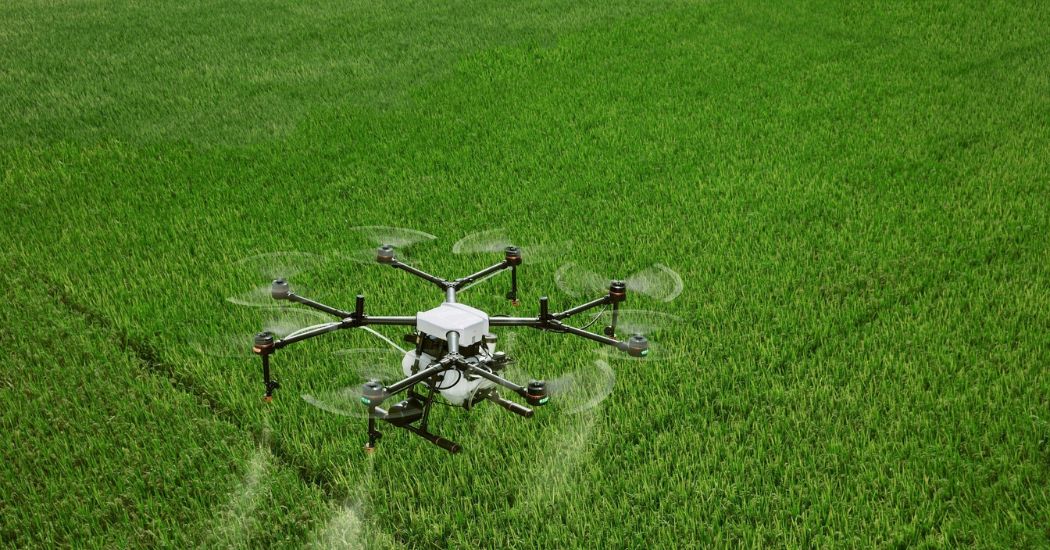
Autonomous drones scanned fields to detect crop disease, water stress, and nutrient deficiencies, feeding data into AI systems that recommend interventions to farmers. These platforms promise better yields and more efficient use of inputs, directly affecting livelihoods in a way no robo‑dog meme ever will.
Industrial and factory robots – Tata Group and others
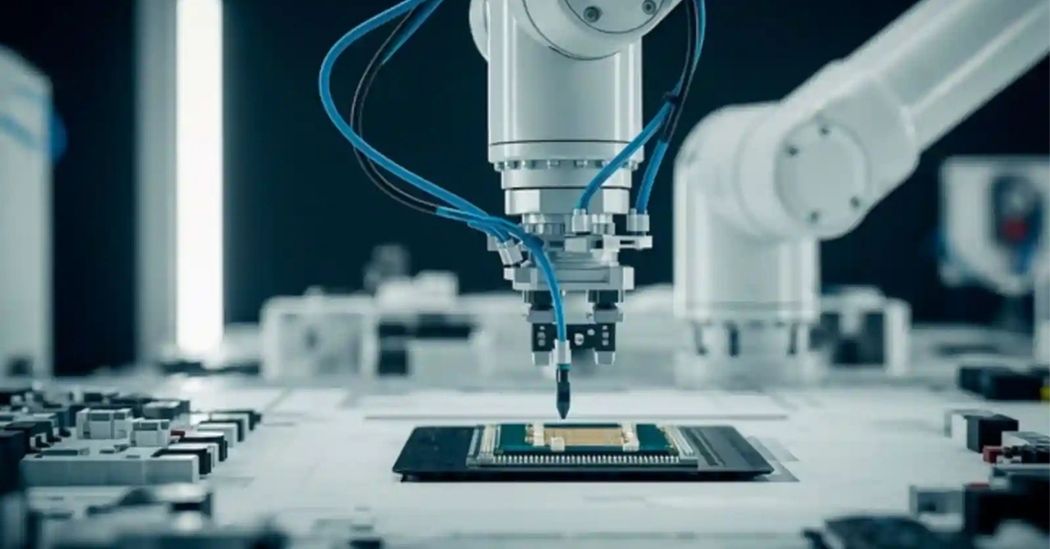
Tata Group’s pavilion highlighted industrial robots and AI‑driven predictive maintenance systems embedded in manufacturing lines. These systems anticipate equipment failures, optimise throughput, and reduce downtime, bringing traditional industries into an AI‑enabled future.
Language and governance tools
AI tools were shown translating court judgments and government documents into Indian languages, making the law and state communication more accessible to ordinary citizens. Combined with indigenous language models from players such as Sarvam AI, this stack has the potential to fundamentally democratise information.
Were there long queues, crowds that were hard to manage, and people angry they couldn’t get passes? Yes. But there’s another way to read that: the demand simply outstripped the capacity. People wanted in. Students, founders, researchers and policy makers wanted to see what India is building, to stake their own claim in this emerging landscape. In a country where apathy is often the default, the scarcity of passes is a strange metric to use as proof of failure; it is, if anything, a backhanded compliment to the summit’s relevance.
None of this is an argument against scrutiny. The robo‑dog incident shows why we need stricter curation, better vetting of exhibits, and a clearer boundary between genuine innovation and rebranded imports. Logistics must improve if India wants to host events of true global standing. Constructive criticism is not just welcome; it is necessary.
But there is a difference between criticism that corrects and criticism that consumes. When commentary reduces a sprawling showcase of Indian AI—spanning healthcare, agriculture, manufacturing, language tech and wearables—to a single Chinese robot dog and some mismanaged queues, is that still truth, or is it distortion? One welcomes critique. The real question for all the loudest voices is this: should criticism be so all‑encompassing that it completely overshadows the good—and if it does, is that not a deliberate deviation from the fuller truth?
 Pooja Sriram has an LLM degree in International Business Laws from Sorbonne University in Singapore who keenly follows news and international affais. She's currently in Singapore.
PREVIOUS ARTICLE
NEXT ARTICLE


The Venkateshwara Swami Temple in Tirupati is among the holiest places in the world for Hindus. Millions of people throng the temple every year to get...
It is a sad reality that our Itihasa and Puranas have been subject to severe distortion over the years. This is not surprising considering how even th...

The holy land of Bharat follows Sanatana Dharma. The word Sanatana Dharma is a Sanskrit word meaning, “Eternal law”. It is the indestructible ultimate...
Verandah Club is an initiative by few like-minds of Coimbatore who are interested to share information on various antiquities of Bharat.
Free download our iOS & Android app
© Copyright 2026, All Rights Reserved.