
Hello dear readers, happy 1st February, 2026 and a Budget Day to all of you!
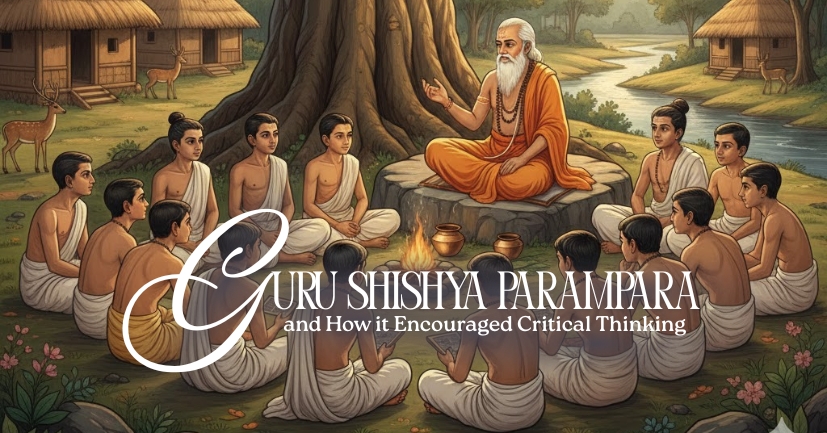
That is how far the mention of the Budget will go in this article, for this article is on another topic. Recently, I came across an article in Scroll.in titled, ‘How the traditional guru-shishya system undermined critical thinking in India,’ written and published on January 27, 2026. It was quite a well-written article, but it got me thinking about the subject matter. And then on January 31st, 2026, there came the coherent point by point rebuttal in the article titled, ‘No, The Guru-Shishya Parampara Was Not About Blind Obedience,’ in the Swarajya web magazine.
The authors of the articles have each put forth well-reasoned arguments in favour of their observations, with each being entitled to their respective opinions.
And this where I seek to highlight the essential departure of this article from the conclusion that has been derived by the author of the article published in Scroll and that is the Guru-Shishya parampara is an obstacle and not a support system. One of the reasons Sanatana Dharma has survived for millennia at a stretch is that it fostered a healthy culture of debate, discussion and reasoning that led to the mushrooming of several schools of thought each challenging and yet co-existing with each other in one land.
A Guru’s knowledge is not treated as absolute, but is instead tested at every level by students who are curious and thirsty for knowledge, their questions derived from observations made by their senses and cognitively framed by their minds.
Take for instance the tale of the shishyas, Indra, Virochana and the guru being Prajapati, provided to us in the Chandogya Upanishad. Indra and Virochana, the respective monarchs of the Devas and Asuras, approached Prajapati, the great authority in the Universe for getting answers to the greatest question of all, “What or who is the Atman or Self?”
Prajapati accepted them as shishyas and promised to impart this knowledge to them, if they stayed with him as Brahmacharis for 32 years. The two kings accepted and lived as disciples with Prajapati for the entire duration, soaking in what he had to teach them. After the cycle was over, Prajapati gave them vague answers that showed only part of what the Atman was. Virochana, satisfied with the explanation, went back to the Asuras and imparted this incomplete knowledge to them, thereby never truly discovering the answers to the question. On the other hand, Indra, troubled by doubts and questions from observations made by him through his senses and then analysed by his mind, made his way back to Prajapati, the Guru and sought more answers. Prajapati asked Indra to repeat the cycle of staying and Indra did so. Every time, one such cycle of learning ended, Prajapati revealed another angle of the ultimate truth of the Atman, sending Indra on his way. But Indra returned again and again, driven by inquisitiveness to know the entire truth. It was only when Prajapati finally revealed the entire truth about the Atman to Indra that the King of the Devas was finally satisfied and returned to impart the same to the Devas.
In this tale there is a clear focus on the growth and development of the Shishya by fostering his curiosity and spirit of inquisitiveness over the mere teaching style of the Guru. Multiple such instances arise in our Upanishads like the dialogue over the nature of Brahman between Gargi and Yajnavalkya in King Janaka’s great yajna explained in the Brihadaranyaka Upanishad, where Gargi constantly challenges and questions Yajnavalkya on how we perceive reality and its metaphysical aspects, prodding Yajnavalkya to reveal the reasoning behind his description of the Brahman being the underlying basis of all existence and reality.
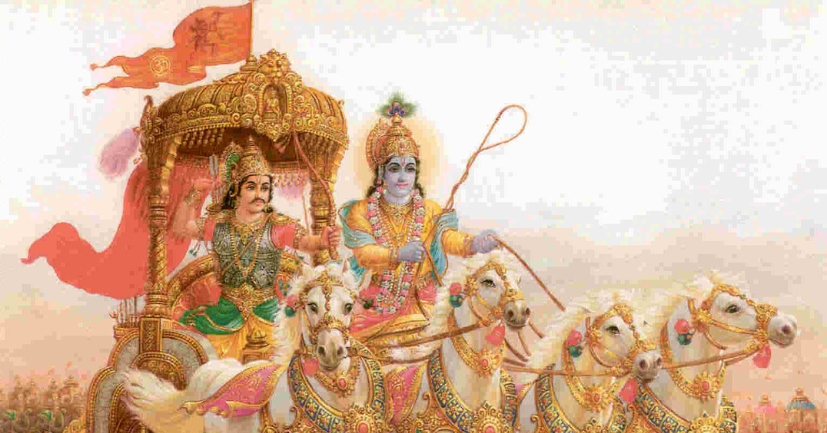
And there is another tale which is familiar to all of us–that of the Bhagavad Gita. Shri Krishna is held to be the Ultimate Guru, accepted at various instances in the Mahabharata itself, before the knowledge of the Bhagavad Gita is imparted to Arjuna by Shri Krishna. Despite the widely accepted notion that Shri Krishna is the ultimate Guru, the Bhagavad Gita is not a monologue, but a dialogue between the Guru i.e. Krishna and Shishya i.e. Arjuna.
Arjuna keeps questioning Shri Krishna throughout the dialogue, urging his guide to explain why he should fight against and shed the blood of his own family. For example, Arjuna, while praising Shri Krishna, asks pointed questions on the nature of knowledge, action, devotion and a variety of other aspects, getting Shri Krishna to systematically explain Yoga as Bhakti Yoga, Karma and Jnana Yoga in detail. The very nature of a dialogue is to foster intellectual debate and address differences of opinions, rather than the mere acceptance of the Guru’s word blindly.
The Upanishads are rife with examples of these exchanges and dialogues, clearly showing the addressal of doubts, differences and questions of the shishya as the primary focus of the guru. The mere fact that the Upanishads were transferred by oral tradition, testing memory is merely one albeit important aspect about them. Another important aspect about them was that their body of work was constantly updated and added to with additions made as late as the 15th Century C.E.
The wonder and paradoxical nature of the truth and answers in the Vedas coexisting with the questions and interpretations added to that truth in the Upanishads is what defines Sanatana Dharma and also lays down the basis of the Guru-Shishya parampara. While divine attributes are attached to the Guru, that is because of the respect accorded to him as someone who makes the life of a student by imparting valuable guidance of living life and holistic teachings. By that example, even the doctor today is considered as a person who is the representative of the divine due to their abilities to save lives. It does not literally mean that they are living gods, beyond reproach or the realm of doubt and dissent. It is a part of Bharatiya culture to see divine attributes in all those who give, save or teach us how to live our lives like our mother, father, doctor and teacher.
It isn’t that we consider the Guru to be beyond reproach. For instance, there is an interesting tale where the Sukla Yajurveda realised by Yajnavalkya was due to a fallout between the shishya- Yajnavalkya and guru-Vaishampayana, teacher of the Krishna Yajurveda. The fallout was due to Yajnavalkya constantly questioning his guru and seeking corrections in what Vaishampayana taught, thereby being ordered to leave the guru’s ashram by the guru. Yajnavalkya went on to realise the knowledge of the Yajurveda through other means, seeking out Surya, the Sun God himself as his guru. This search, learning and realisation led to the Sukla Yajurveda.
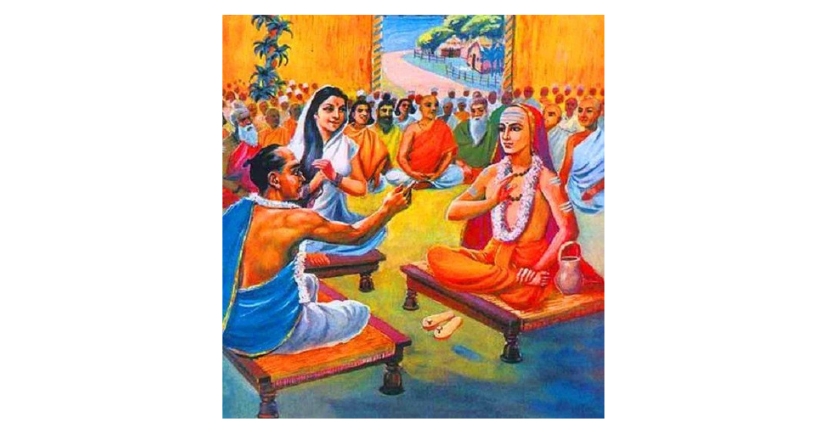
Our history and Itihasa are rife with such dialogues and debates for instance between Acharya Ashtavakra and King Janaka, Bhishma and Yudhistra, Yajnavalkya and Maitreyi and so many more. In fact, in a way, legendary debates between Adi Sankaracharya and Vyasa and Adi Sankaracharya and Mandana Mishra too can be considered an integral part of the parampara and therefore added to its everlasting lustre.
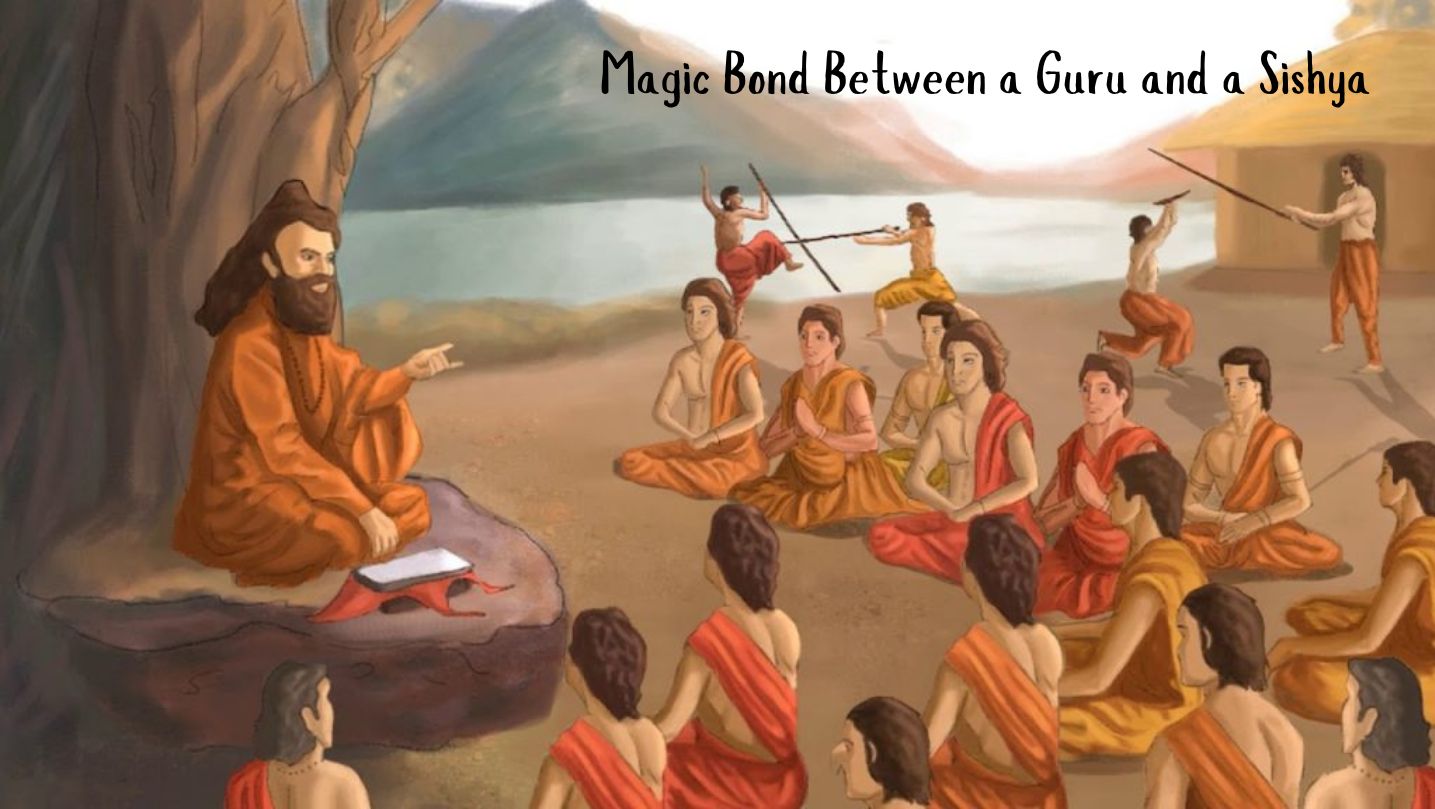
As a conclusion, I would like to highlight one important fact that I had read in an earlier article titled, ‘Magic Bond Between a Guru and a Sishya,’ by Vaishnavi Gurusankarji which was published online on the Verandah Club website. There is a line which states that:
Bharath has always been a land that revered its Gurus. There is a well-known adage which goes:
Matha, Pitha, Guru, Deivam.
In a land where this is the norm, even the obstacles that fall in our way, we can easily cross these obstacles and surge ahead in this age if we have the blessings of our revered Gurus and never forget our roots from where we hail.
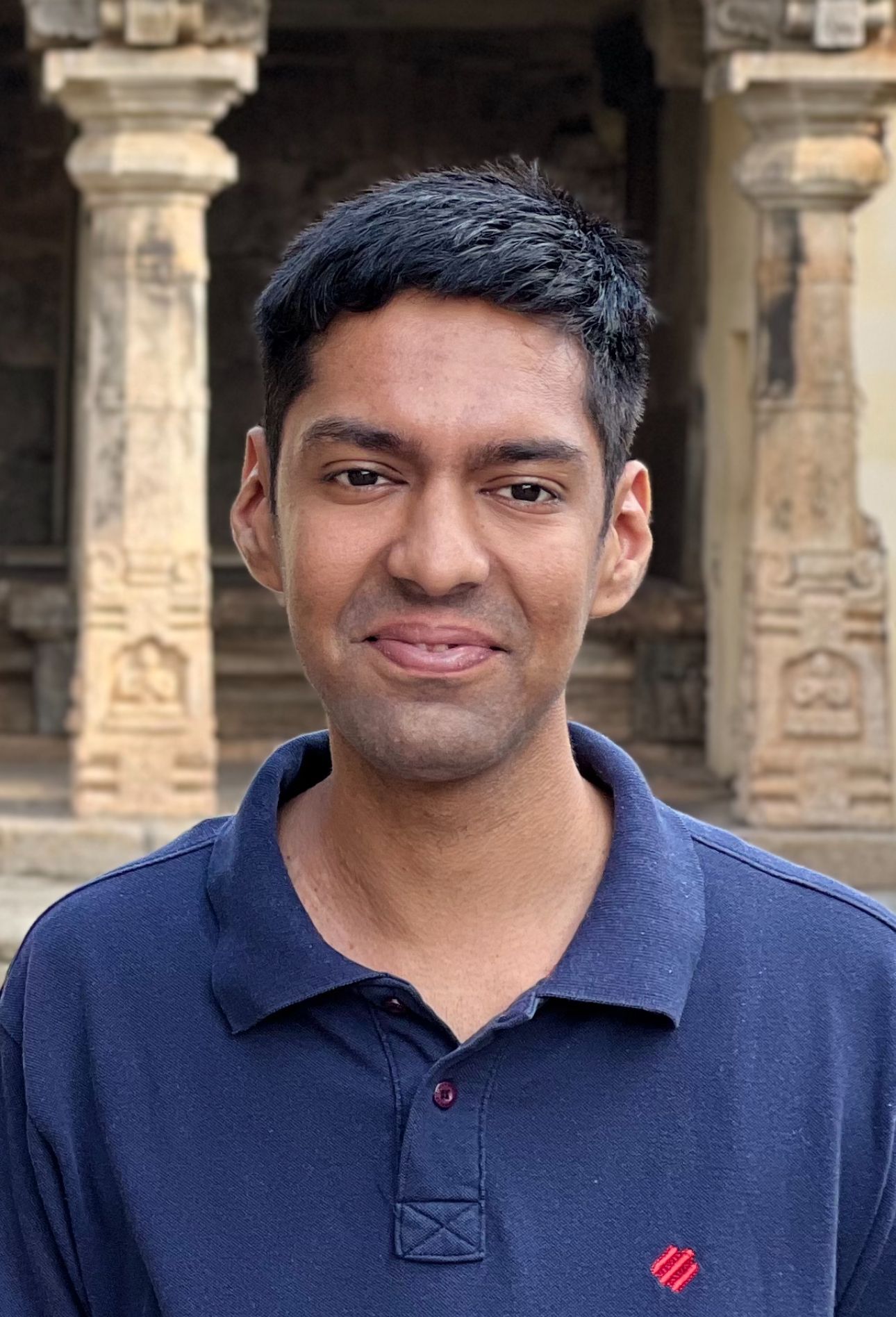 Vignesh Ganesh is a lawyer and writer. He is interested in ancient history and Itihasa and this interest culminated in his first book, "The Pallavas of Kanchipuram: Volume 1", which he co-authored with Mr. K. Ram, a fellow enthusiast of Indian history and culture.
PREVIOUS ARTICLE

The Venkateshwara Swami Temple in Tirupati is among the holiest places in the world for Hindus. Millions of people throng the temple every year to get...
It is a sad reality that our Itihasa and Puranas have been subject to severe distortion over the years. This is not surprising considering how even th...
The holy land of Bharat follows Sanatana Dharma. The word Sanatana Dharma is a Sanskrit word meaning, “Eternal law”. It is the indestructible ultimate...

Verandah Club is an initiative by few like-minds of Coimbatore who are interested to share information on various antiquities of Bharat.
Free download our iOS & Android app
© Copyright 2026, All Rights Reserved.